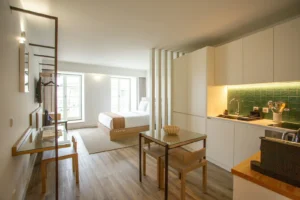
You signed the lease, walked into the empty studio, and clocked the wall you cannot drill into. The long one across from the kitchenette, the one your couch has to live against. Everything you put on that wall is going to be either Command-strip light, or it is not going up at all. And the part of the lease about “no holes larger than a standard picture nail” still feels vague enough that you would rather not test it.
Renter-friendly wall decor is the workaround. Done well, it makes a builder-beige rental feel like your apartment for two years, then peels off in an afternoon when you move and leaves the wall exactly as you found it. Done badly, it eats your security deposit in slow motion. Knowing which methods hold what, and which corners of the room each one likes, is most of the work.
A wall decor method earns the renter-friendly label if it meets three quiet rules. It goes up without a hole. It comes off without peeling paint with it. And it does not leave behind sticker residue, oily transfer, or that telltale dull rectangle of cleaner wall around where the frame used to live.
The number on the back of a Command Picture Hanging Strips package is worth memorizing. The large size holds up to 16 pounds per pair on smooth, painted drywall, cleaned with rubbing alcohol, and left to cure for one hour before any weight goes on. That covers a framed 20×30 print with mat and glass, which is most rental art. The catch is the surface. Command does not hold on textured wallpaper, brick, unsealed wood, or freshly painted walls that have not cured for at least 30 days. Cold rooms (below 50°F) and high humidity weaken the adhesive on first contact, which is why winter installs sometimes fail by week two.
Everything below assumes a normal painted drywall rental in normal climate. If your walls are plaster, brick, concrete, or weirdly textured, scan the room-by-room section for swaps.
Renter-friendly wall decor ideas, by method
Nine methods, ranked roughly by how easy they are to undo.
1. Command picture-hanging strips for framed art
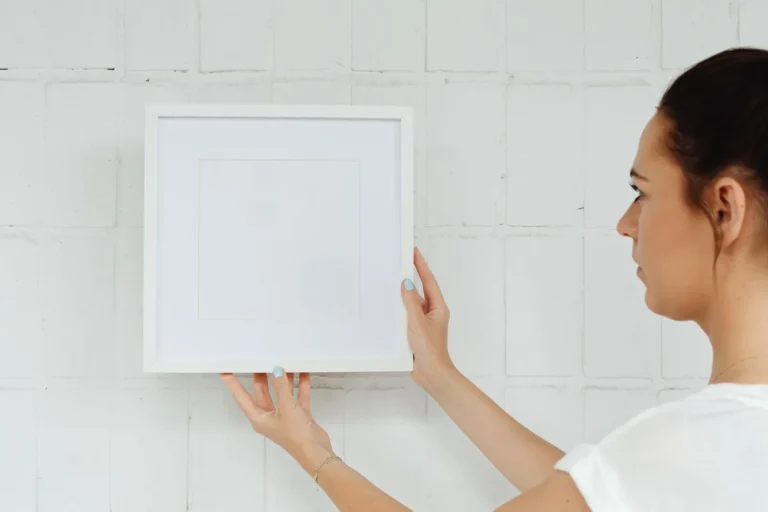
These are the default move. Velcro-style adhesive strips lock the frame to the wall, then release with a downward pull on a hidden tab. Use the large pair for anything over 8×10 inches and under 16 pounds. Strips also let you reposition before the bond fully sets, so the frame stays level on the second try.
Where they shine: gallery walls of light frames, single statement pieces, anything you might want to swap seasonally.
2. Adhesive hooks for wreaths and lightweight wall objects
Command Hooks and their cousins (Scotch, generic 3M-style hooks) hold 3 to 15 pounds depending on size and rating. Big ones swallow a coat plus a tote. Small ones handle a wreath or a hanging plant under five pounds. Press for the full 30 seconds the package tells you to, then wait an hour before hanging anything. Most failures trace back to people skipping that wait.
3. Peel-and-stick wallpaper as a focal wall
A roll of removable wallpaper turns one wall into the whole personality of the room. It goes up like a giant sticker, repositions while you smooth out bubbles, and lifts off in long strips when you move. Best for one feature wall, not a whole room, and best on smooth drywall that has been painted for at least 30 days. We round up our favorite brands in best peel-and-stick wallpaper, and if you are looking for places to use it beyond an accent wall, our list of peel-and-stick wallpaper ideas covers stair risers, closet interiors, and dresser drawers.
4. Washi tape for outlines, faux frames, and gallery anchors
Washi is the lowest-stakes wall decor on this list. Rice-paper backing, low-tack adhesive, comes off without pulling paint or leaving residue when applied to a cured surface. Wall use cases are mostly graphic: faux frames around posters, geometric accent shapes, faux chair-rail molding, gallery anchors that replace nails on very lightweight prints. Get the full method playbook in our washi tape wall decor guide.
What it cannot do: hold weight. If a piece is heavier than a postcard, washi is decoration, not structure.
5. Tension-mount shelves and rods
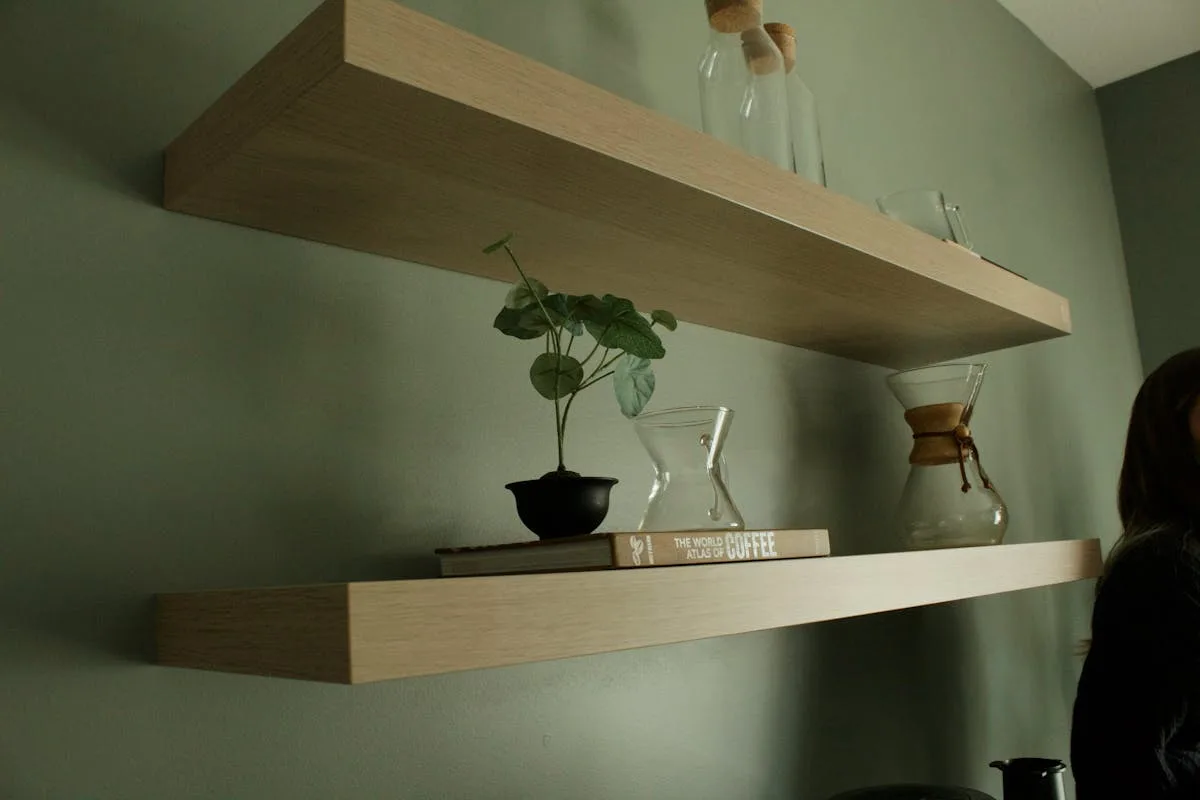
Spring-loaded between two surfaces, no fasteners required. A tension rod can turn a window frame into a curtain rail, a closet into more closet, or a kitchen corner into a coffee-station shelf. Brands like Umbra Conceal and floating tension shelves carry a few pounds of books or styled objects without ever touching the wall. They work best when you have two parallel surfaces to push against. They work worst on irregular walls and on surfaces that move; some doors will torque a tension rod loose over weeks, which you notice the day a book lands on your foot.
6. Lean, do not hang
A four-foot floor mirror leaning against the wall does more for a small space than three smaller mirrors hung at eye level. Zero stress on the drywall. Same logic for large framed prints, canvas pieces, and shallow ladder shelves: lean it, secure the top with a small adhesive bumper or museum putty so it does not walk, and call it done.
Laziest move on this list. Also one of the best, especially for renters who move every twelve months.
7. Magnetic-strip displays
A magnetic strip mounted with adhesive backing (or wedged into a tight kitchen corner) holds small metal-backed objects. Knives in the kitchen. Small framed prints with magnetic backers in a bedroom. Postcards in an office nook. The combo of magnetic strip plus adhesive mount means you can rotate what is displayed every week without touching the wall once.
8. Fabric panels and removable banners
A wall hanging, a quilted panel, or a length of fabric does what wallpaper does, in cloth. Hang it with adhesive hooks at the top corners, or run a tension rod through a sewn channel and tension-mount the whole panel between window frames or shelves. Big visual lift for very little money. Rolls up in 30 seconds on the way out.
9. Over-the-door art rails
The back of a door is free vertical surface most renters never touch. Over-the-door hooks (the curved metal kind that hooks over the top of the door) hold a small framed piece, a wreath, or a hanging organizer. Two side-by-side make a mini display. No adhesive, no holes, comes off in three seconds.
If a method does not appear on this list, it is probably because it leaves residue, pulls paint, or pretends to be temporary and then refuses to come off (looking at you, foam-tape “removable” brackets).
Renter-friendly wall decor by room
Same nine methods, different priorities depending on what the room needs.
Living room
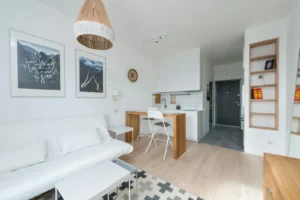
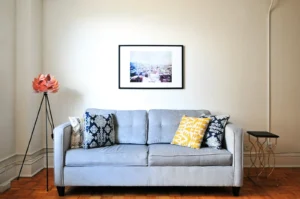
The living room usually has one long wall the couch lives against, plus a corner that wants something taller. Lean one large piece (mirror or framed print) behind the couch instead of hanging a gallery. A single focal piece reads more grown-up than a busy six-frame grid, and a leaning floor mirror bounces light, which a 600-square-foot studio always needs more of.
For the corner, tension-mount a narrow shelf between two existing surfaces (a bookcase and the wall, two short bookcases facing each other) and style it with three objects, not seven. Use Command strips for one or two smaller framed pieces above the couch if the lean alone does not fill enough vertical space.
Bedroom
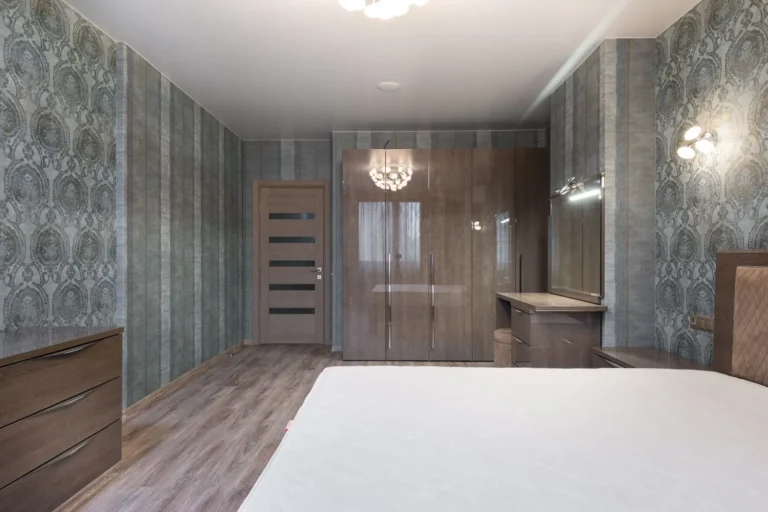
Above the bed, the rule is lightweight and no glass. Anything that drops in an earthquake or an enthusiastic mattress flip will land on a sleeping person. A washi-tape faux frame around a poster, a fabric panel hung with adhesive hooks, or a removable wallpaper rectangle as a faux headboard all hit the look without the risk.
Skip heavy framed prints above the bed entirely. If you want one, lean it against the dresser across the room instead.
Kitchen
Rental kitchens are short on display surface. A magnetic strip mounted with adhesive backing holds a knife block worth of tools and frees counter space. Peel-and-stick wallpaper turns a dated tile or stained wall behind the stove into a mini-backsplash. Adhesive hooks on the side of an upper cabinet hold mugs, dish towels, or a small herb planter.
Skip washi tape and Command strips on greasy or condensation-prone walls (above a stove, next to a sink). Adhesion fails fast in those zones.
Bathroom
Humidity changes everything in here. Adhesive strips lose grip faster, washi tape lifts at the edges, and removable wallpaper sometimes bubbles along seams. The renter-safe options are tension rods (over the toilet for a storage shelf, in the shower for a curtain), leaning frames propped on the vanity, and adhesive hooks rated for damp environments (Command makes a clear “outdoor” line that holds in bathrooms).
If you really want wallpaper on a bathroom wall, do the small side panel near the vanity, not the wall directly behind the shower.
What to avoid (the deposit-killer list)
Five mistakes that turn renter-friendly intentions into deposit charges.
A 20-pound mirror on medium-rated Command strips will fail. It might hold for two weeks before it lets go, which is somehow worse than failing on day one. Match the strip rating to the actual weight, and round up if you are unsure.
Skipping the rubbing-alcohol wipe before any adhesive is the second one. Skin oil and dust kill bond strength on contact. Two seconds with an alcohol pad is the difference between a strip that holds for three years and one that falls in October.
Putting anything adhesive on walls painted in the last 30 days is the third. Fresh paint is still off-gassing and curing. The adhesive bonds to the paint film, not the wall, and when you pull, the paint film comes with it.
Using painters tape, masking tape, or duct tape as wall decor adhesive is the fourth. Painters tape stays on for about 14 days before adhesive transfer starts. Duct tape pulls paint on day one. Neither was designed to hang a poster for two years.
And the toothpaste-in-the-nail-hole trick is the fifth. It does not blend, it does not match paint, and your move-out manager finds it on the first sweep with a flashlight. If you already have a nail hole, just mention it up front. Most landlords do not care about pinholes when you tell them.
The cleanest deposit-protection move is to commit to one method per surface (do not mix Command strips, washi tape, and removable wallpaper on the same wall) and to take everything off carefully the week before you move, not the day of.
Every method on this list got tested against the manufacturer rating and against the team’s own moves in and out of rentals, which is why a few promising-looking tricks (foam mounting tape, suction cups on textured walls, decorative magnets on non-magnetic drywall) did not make the cut.
Done right, that long wall across from the kitchenette ends up with a single leaned mirror, a washi-tape outline above the couch, and a peel-and-stick accent panel by the doorway. It weighs nothing on your deposit when you leave. For the rest of the apartment, our renter-friendly decor hub covers floors, curtains, and small fixes; if you have specific things to hang, our no-nail hanging guide is the practical follow-up. And if you are still building out the basics, our first apartment checklist covers the rooms past the walls.
Frequently asked questions about renter-friendly wall decor
Can I really decorate a rental wall without making any holes at all?
Yes, and most renters can do an entire apartment this way. Between Command strips, peel-and-stick wallpaper, washi tape, tension rods, and the lean-don’t-hang move, every wall in a typical one-bedroom can carry decor without a single fastener.
How heavy can Command strips actually hold?
Command Picture Hanging Strips in the large size hold up to 16 pounds per pair on smooth, painted, cured drywall, applied per the instructions (alcohol wipe, 30-second press, one-hour cure before loading weight). Most framed prints under 20×30 inches fall well below that.
What is the safest renter wall decor for a freshly painted apartment?
Wait at least 30 days after any new paint job before applying anything adhesive. In the meantime, lean larger pieces, use tension rods between fixed surfaces, and over-the-door hooks. Once paint has cured, Command strips, peel-and-stick wallpaper, and washi tape all become safe options.
Will peel-and-stick wallpaper damage my walls when I take it off?
Not if the wall is smooth, painted, and the paint has cured for at least 30 days before you applied the wallpaper. The vinyl peels off cleanly when you pull at a low angle (close to the wall, not straight out). If the paint is uncured or already chipped, removal can pull paint. Test a sample roll in a corner first.
What is the cheapest way to make a blank rental wall look styled?
A large framed thrift-store print, leaned against the wall, beats almost anything you can buy new. Leaning costs nothing in adhesive, takes 10 seconds, and somehow always reads more intentional than three small Command-strip frames trying to fill the same space. Skip Target’s wall-art aisle on your first apartment move; check Goodwill, an estate sale, or the curb-alert section of your local Buy Nothing group first.
Get the renter's first-apartment checklist
Small-space decor ideas for renters, straight to your inbox.
The roll of peel-and-stick wallpaper just got delivered, you sized it for the accent wall behind your bed, and standing in front of that wall you are now thinking the bedroom does not actually need an accent wall. The pattern is too good to return, the bedroom is too tired for it, and you are…
Peel-and-stick wall decals are the rental-safest decor category there is. Eight picks for nurseries, kid rooms, home offices and entryways, plus three to skip.
You are standing in the middle of your rental holding a framed print, you do not own a drill, and the lease says no holes larger than a picture nail. Maybe the apartment has plaster walls and the last person who tried to push a tack into one chipped the corner. Maybe your kitchen wall…
Nine housewarming gift basket ideas for a new apartment, from a kitchen starter basket to a coffee lover basket, plus how to pack a basket so it looks full.
This post contains affiliate links. If you buy through one I may earn a small commission at no cost to you. The rental bathroom floor was a grid of small peach-pink tiles from sometime around 1996, set in yellowing white grout, and the landlord had said in the lease walkthrough that I was welcome to…
Peel-and-stick crown molding adds high-end ceiling trim to a rental with no saw, no nails, no miter cuts. Six picks that hold and an install walkthrough.
Manage Consent
To provide the best experiences, we use technologies like cookies to store and/or access device information. Consenting to these technologies will allow us to process data such as browsing behavior or unique IDs on this site. Not consenting or withdrawing consent, may adversely affect certain features and functions.
Functional
Always active
The technical storage or access is strictly necessary for the legitimate purpose of enabling the use of a specific service explicitly requested by the subscriber or user, or for the sole purpose of carrying out the transmission of a communication over an electronic communications network.
Preferences
The technical storage or access is necessary for the legitimate purpose of storing preferences that are not requested by the subscriber or user.
Statistics
The technical storage or access that is used exclusively for statistical purposes.The technical storage or access that is used exclusively for anonymous statistical purposes. Without a subpoena, voluntary compliance on the part of your Internet Service Provider, or additional records from a third party, information stored or retrieved for this purpose alone cannot usually be used to identify you.
Marketing
The technical storage or access is required to create user profiles to send advertising, or to track the user on a website or across several websites for similar marketing purposes.