This post contains affiliate links. If you buy through one I may earn a small commission at no cost to you.
You walk into your first studio and the math hits you fast. The bed, the couch, the desk you work from, the place you eat, and the spot where you drop your keys all have to share one room. There is no bedroom to close the door on, no second wall to hide the laundry rack behind. The whole apartment is the room you are standing in, and it has to do every job a normal home splits across four.
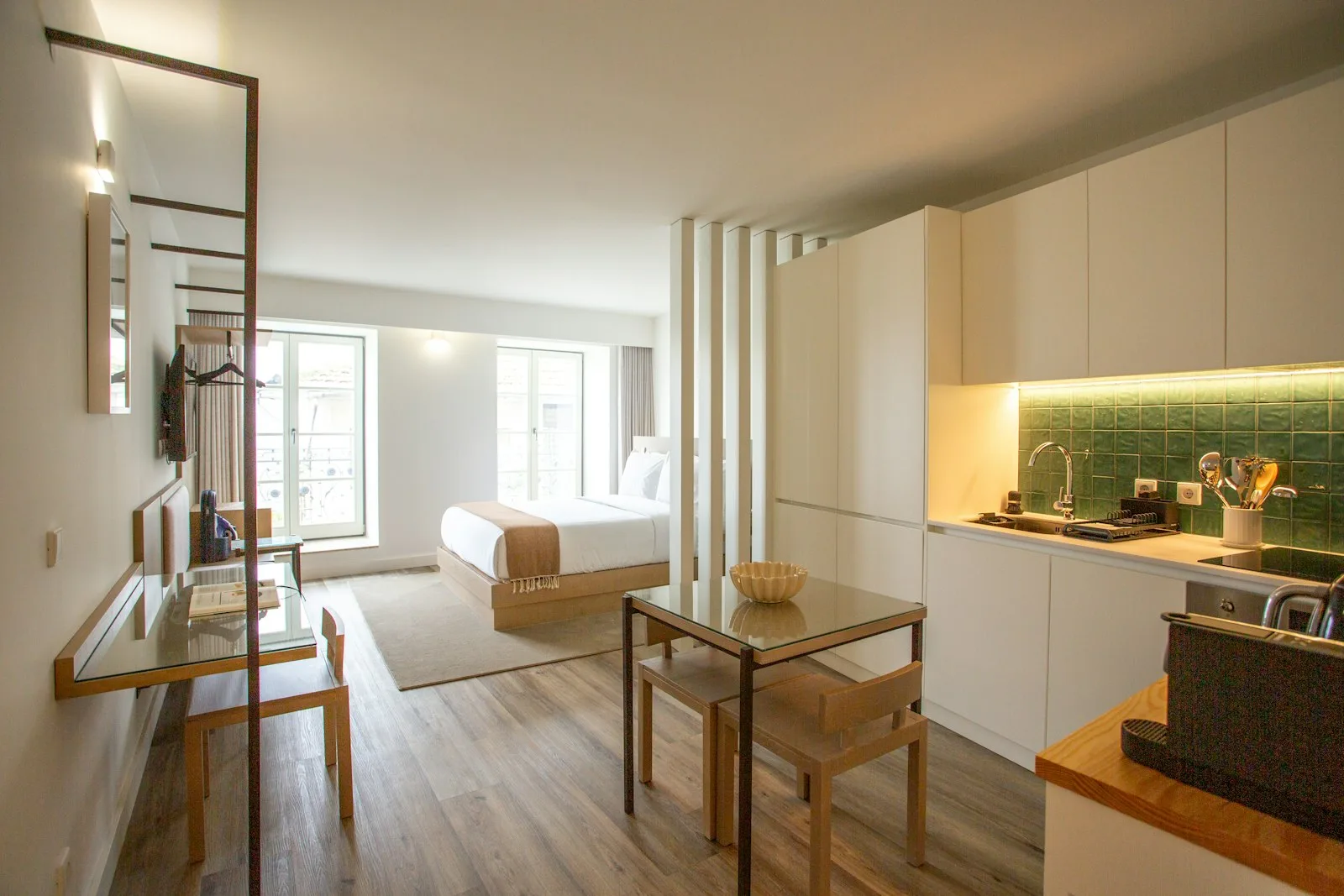
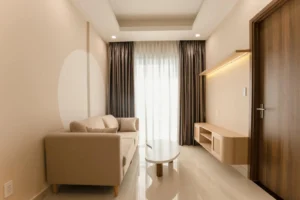
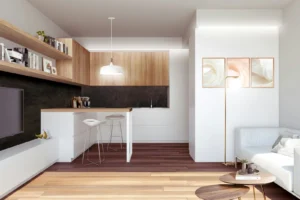
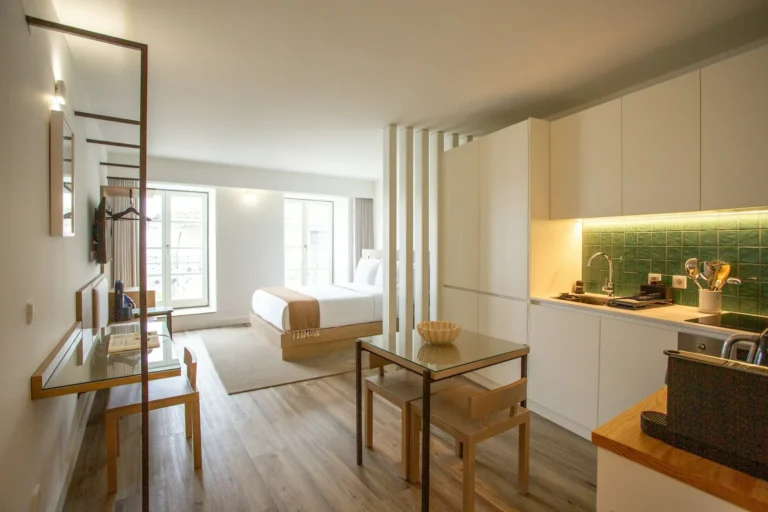
That sounds like a problem until you live in one for a while. A good studio is not a cramped apartment that is missing rooms. It is a single room that has been talked into doing five jobs at once, and the trick is mostly about where things go, not how much you own. Below is the full playbook: how to zone one open room into separate areas, which furniture earns its keep, how to find storage where there is none, and how to make 400 square feet read as calm instead of crowded. Most of it works whether you rent or own, and none of it asks you to drill into a wall you do not own.
The short version: divide the room into zones with a rug, a shelf, or the back of your sofa instead of a wall. Buy furniture that does two jobs at once, like a bed with drawers under it or a table that folds flat. Push storage up the walls and onto the backs of doors. Keep the palette light and the floor as clear as you can, and the room will feel twice its size.
A studio works when each part of the room has a clear job and a clear edge, even though there are no walls between them. A space feels bigger and calmer the moment you can tell where the sleeping area ends and the living area begins. The whole game is creating those edges without building anything.
The second thing that makes a studio work is restraint with the floor. In a one-room apartment, visible floor is the single biggest signal of space. Every piece of furniture that sits on legs, every bag that lives on a shelf instead of in a corner, every surface you keep clear buys you the feeling of room you are paying rent for. If you are setting up your first place from scratch, our first apartment checklist covers the buy-once basics so you do not over-furnish a room this size on day one.
Zone the room without building a wall
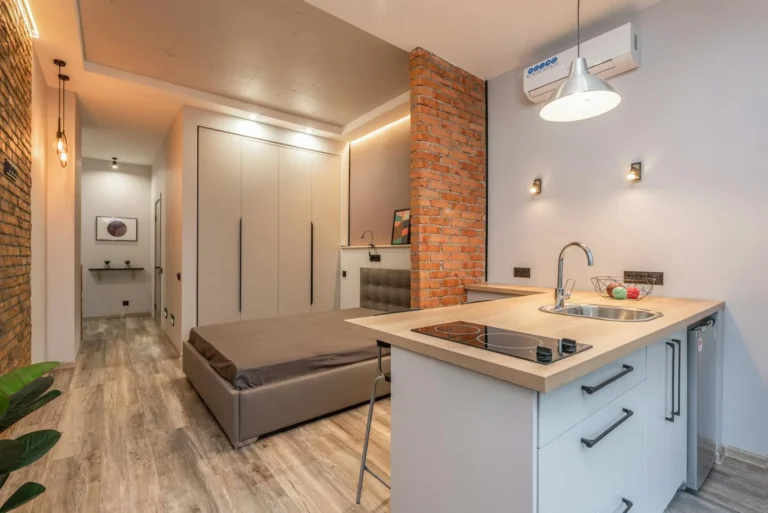
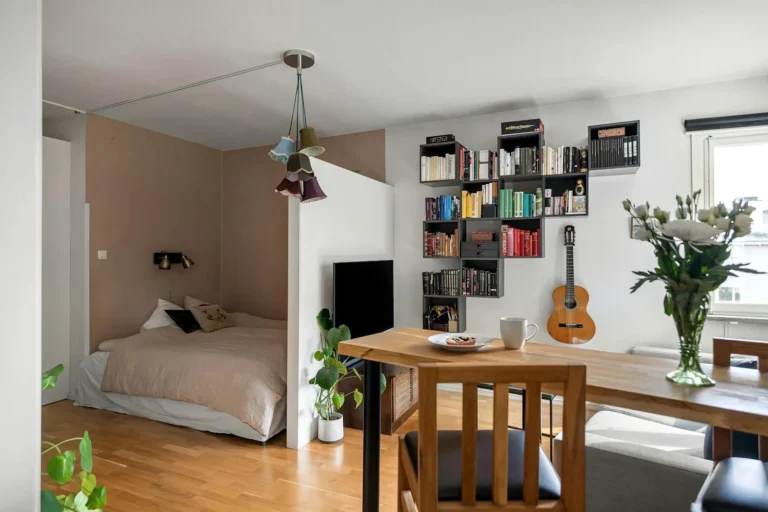
The most useful thing you can do in a studio is split it into a sleeping zone and a living zone that feel separate even though they are ten feet apart. You do this with sightlines and floor cues, not construction.
A few ways that work in a rental:
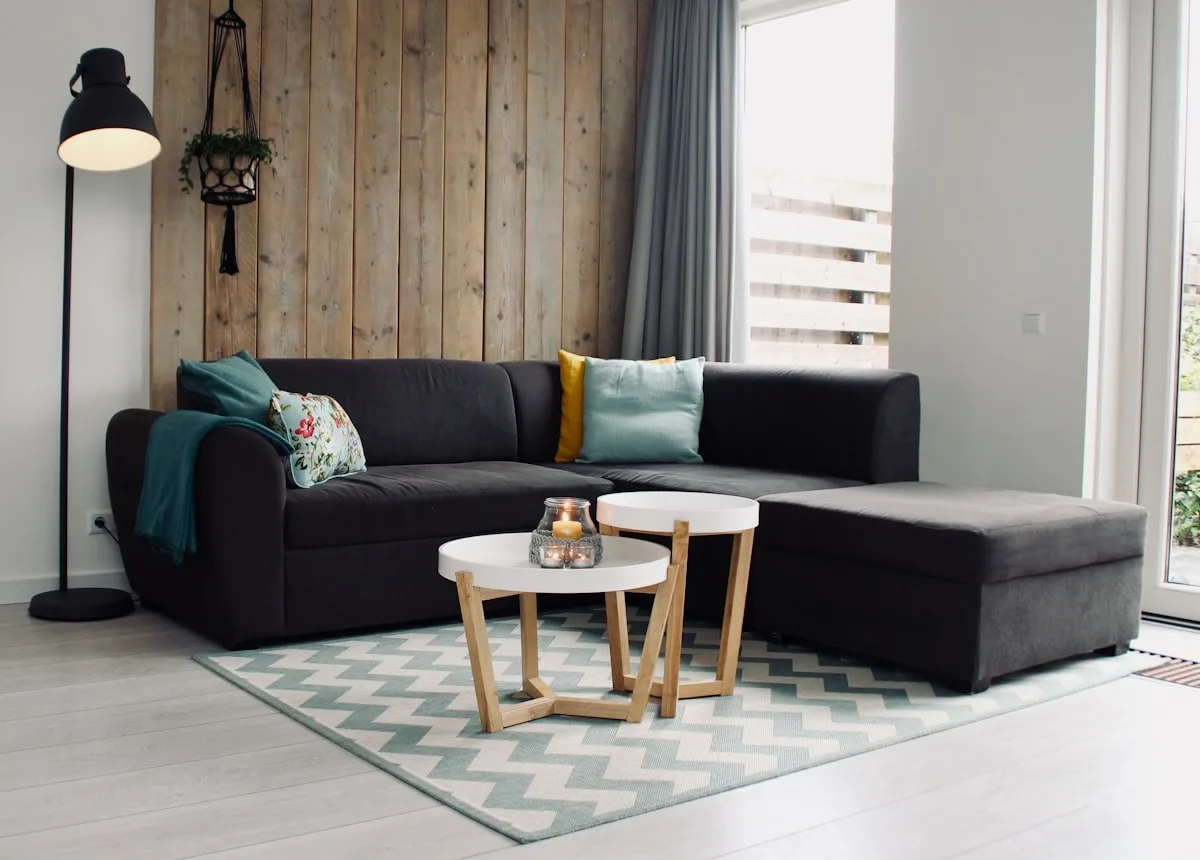
A large rug under the living area draws a clear box around it. The bed sits on bare floor or its own smaller rug, and suddenly the eye reads two rooms.
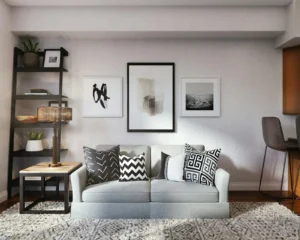
The back of your sofa becomes a wall. Float the couch a foot or two off the actual wall, facing the living zone, and its back becomes the edge of the bedroom behind it.
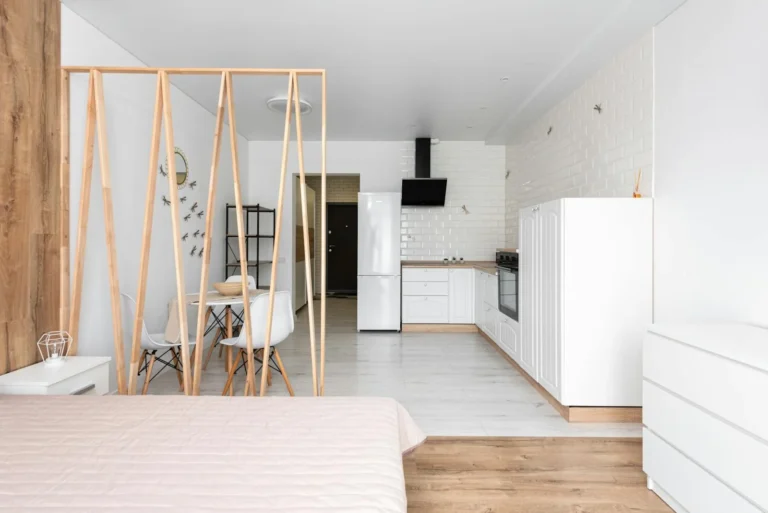
An open shelving unit splits the room and stores things at the same time. Open backs let light through so you do not box yourself in.
A curtain on a tension rod or a room divider screen gives you a real visual break for the nights you want the bed hidden, and folds away the rest of the time.
The full version of this, with measurements and layout maps for the most common studio shapes, lives in our studio apartment layout ideas guide. If you want a harder separation, dividing the room with a tall bookcase and a curtain goes a step further without anything permanent.
Furniture that does two jobs
In a room this size, every piece either earns its place by doing more than one thing or it is quietly stealing square footage. This is where a studio rewards you for buying less but choosing carefully.
The pieces worth the money:
A storage bed with drawers built into the base can hold most of a dresser’s worth of clothes under where you already sleep. In a studio this is close to non-negotiable.
A murphy bed folds up into the wall and hands the floor back to you every morning, turning the bedroom into a living room for the daytime. It is the single biggest space move you can make in a studio, and we break down the styles, the renter-friendly freestanding versions, and what they actually cost in our murphy bed ideas guide.
A lift-top coffee table rises to dinner height so the couch doubles as your dining chairs, and the hollow base hides blankets and clutter.
A drop-leaf or folding dining table collapses against the wall when you are not eating, so you are not giving a four-top permanent residence in a room that has other plans for that corner.
A storage ottoman is a footrest, an extra seat when friends come over, and a box for the throw blankets all at once.
If your ceilings are tall enough, a loft bed frees the entire footprint under the mattress for a desk or a small sofa, which is how a lot of 400 square foot apartments fit a real workspace. Big pieces like sofas and beds are mostly sold by retailers rather than reviewed by blogs, so the move is to measure your room first, then shop the multi-use versions of each thing rather than the prettiest one.
Find storage where there is none
A studio almost never has enough closet, so the storage has to come from the room itself. The rule is the same one that runs through the whole apartment: when you run out of floor, go up the walls and onto the backs of the doors.
The storage hides in four spots most studios ignore:
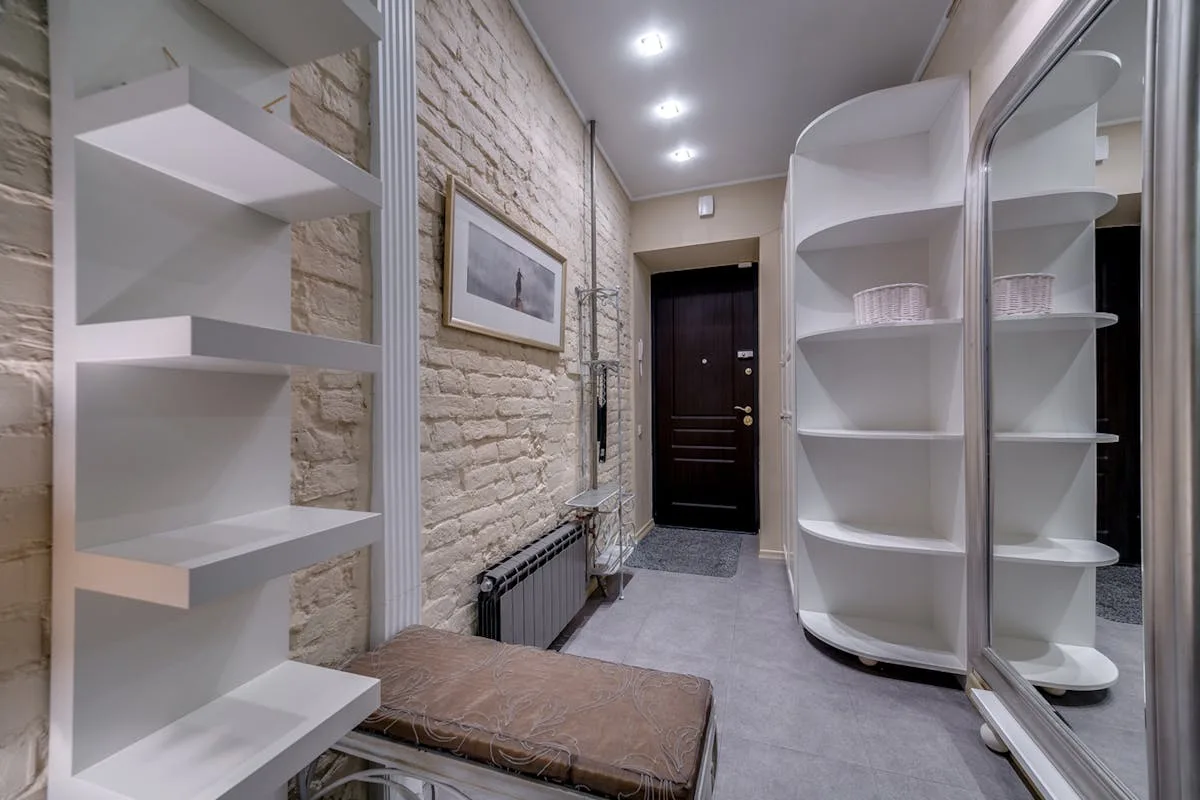
The vertical wall above eye level is dead space in most studios. Tall, narrow shelving uses it without eating floor.
The area under the bed is the biggest hidden storage in the apartment. Use the drawers if you have a storage bed, or slide in flat under-bed storage bins if you do not. Our under-bed storage ideas guide has the full breakdown.
The backs of doors hold an over-the-door rack for shoes, cleaning supplies, or pantry overflow, all with zero drilling.
A bedroom-less studio still has a kitchen and a bathroom, and both can carry organizers that take pressure off the main room.
For the room-by-room version, the small apartment storage ideas hub covers every surface in a small place, and most of it scales straight down to a studio.
Make one room feel bigger than it is
Once the layout and storage are handled, a few visual moves make the same square footage read as larger. None of them cost much and all of them are renter-safe.
Light does most of the work. Keep the walls and the largest pieces of furniture in a light, consistent palette so the eye is not stopped by hard color breaks every few feet. A big mirror leaned against the wall bounces daylight around and makes the room read noticeably deeper. It is the cheapest square footage you will ever buy.
Lift the eye upward. Hanging curtains close to the ceiling rather than at the top of the window makes the whole wall feel taller, and floor-to-ceiling drapes that just clear the floor stretch the room vertically. Keep the floor as clear as the furniture allows, choose a few pieces that stand on legs so light passes underneath, and the apartment breathes. If you want the full visual language for a small place, the apartment aesthetic guide covers the styles that suit one room best.
Renter-friendly upgrades for a studio
Most studios come a little plain or a little dated, and since the whole apartment is one view, anything ugly is always in frame. You cannot renovate a rental, but you can change how the room reads for the price of a couple of takeout nights, and take it all back down before you hand over the keys.
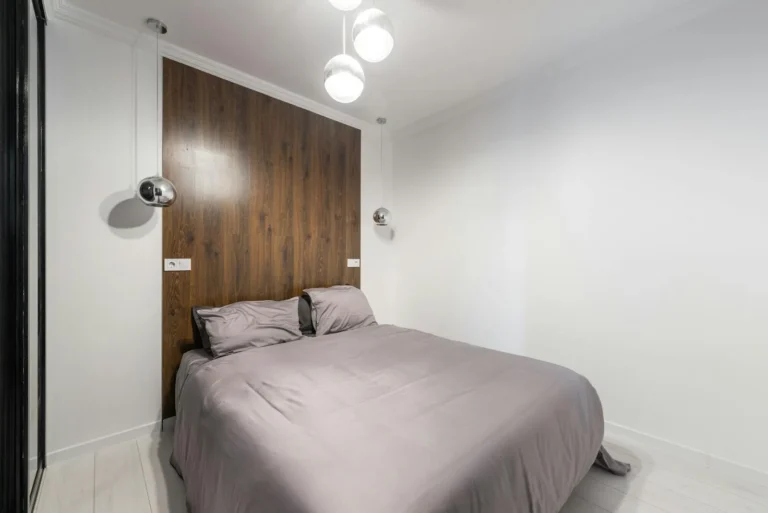
Peel-and-stick wallpaper on one wall behind the bed creates an accent that does the job a headboard would, and marks the sleeping zone at the same time. Removable hooks and rail systems hang art and plants without a single nail hole. For the kitchen and bathroom corners that show, peel-and-stick tile and contact paper cover dated surfaces and come off cleanly. Our renter-friendly decor guide is the full menu of no-damage upgrades, all chosen to leave the deposit intact.
Living small in a 400 square foot apartment
A 400 square foot studio, on the small end of the range, is where these rules stop being optional. The difference between 400 and 600 square feet is usually the dining set and the second armchair: at 400 the folding table replaces the four-top for good, and the murphy or loft bed earns its keep instead of just being clever. Multi-use is no longer a preference, it is the only way the room holds everything.
The trade is real but it cuts both ways. A tiny studio is faster to clean and cheaper to furnish, heat, and light than anything bigger, and a well-planned one reads as a small home you chose rather than a place you settled for. That is worth getting the layout right before you carry a single box in.
Frequently asked questions
How do you arrange furniture in a studio apartment?
Start by deciding where the sleeping zone and the living zone go, usually with the bed against one wall and the sofa floating to face away from it. Use a rug to anchor the living area and the back of the sofa as a soft divider. Keep walkways clear, push storage up the walls, and let visible floor do the work of making the room feel larger.
How do I separate my bed in a studio apartment?
Without building a wall, you separate the bed with a divider you can remove: an open bookshelf, a curtain on a tension rod, a folding screen, or the back of a floated sofa. Each one gives the eye a clear edge between sleeping and living areas while still letting light move through the room.
What furniture do I actually need in a studio?
A bed, somewhere to sit, a surface to eat and work at, and storage. The trick is buying versions that combine those jobs: a storage bed, a sofa that faces the living zone, a folding or lift-top table, and an ottoman that doubles as seating and a storage box. In a studio, multi-use pieces beat single-purpose ones every time.
How can I make my studio apartment look bigger?
Keep the palette light and consistent, lean a large mirror against the wall to bounce light, hang curtains high and long to stretch the walls upward, and choose furniture on legs so light passes underneath. Above all, keep the floor as clear as you can, since visible floor is the strongest signal of space in a one-room apartment.
Can you decorate a studio without damaging the walls?
Yes. Peel-and-stick wallpaper, removable hooks and rail systems, and contact paper cover the worst of a dated rental and come off cleanly when you leave. Stick to removable materials, test them on a hidden corner first, and you can change how the whole room reads without risking the deposit.
One room, done right
A studio is never going to grow another wall, and it does not need to. Give each part of the room a clear job and a clear edge, choose furniture that pulls double duty, send the storage up the walls, and keep the floor in view. Do that and the one room you were nervous about becomes the kind of small home you are actually glad to come back to, which is more than a lot of people get out of a place with doors.
Get the renter's first-apartment checklist
Small-space decor ideas for renters, straight to your inbox.
How to divide a studio apartment without building a wall: rugs, floated furniture, freestanding screens, and ceiling-track curtains that all move out with you.
The best studio apartment furniture does two jobs at once. Sleeper sofas, storage ottomans, drop-leaf tables, and renter-friendly picks that save floor.
Manage Consent
To provide the best experiences, we use technologies like cookies to store and/or access device information. Consenting to these technologies will allow us to process data such as browsing behavior or unique IDs on this site. Not consenting or withdrawing consent, may adversely affect certain features and functions.
Functional
Always active
The technical storage or access is strictly necessary for the legitimate purpose of enabling the use of a specific service explicitly requested by the subscriber or user, or for the sole purpose of carrying out the transmission of a communication over an electronic communications network.
Preferences
The technical storage or access is necessary for the legitimate purpose of storing preferences that are not requested by the subscriber or user.
Statistics
The technical storage or access that is used exclusively for statistical purposes.The technical storage or access that is used exclusively for anonymous statistical purposes. Without a subpoena, voluntary compliance on the part of your Internet Service Provider, or additional records from a third party, information stored or retrieved for this purpose alone cannot usually be used to identify you.
Marketing
The technical storage or access is required to create user profiles to send advertising, or to track the user on a website or across several websites for similar marketing purposes.