This post contains affiliate links. If you buy through one I may earn a small commission at no cost to you.
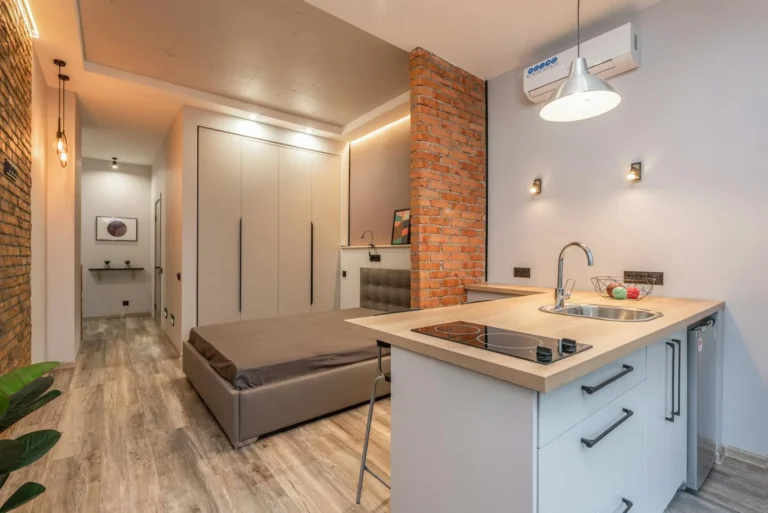
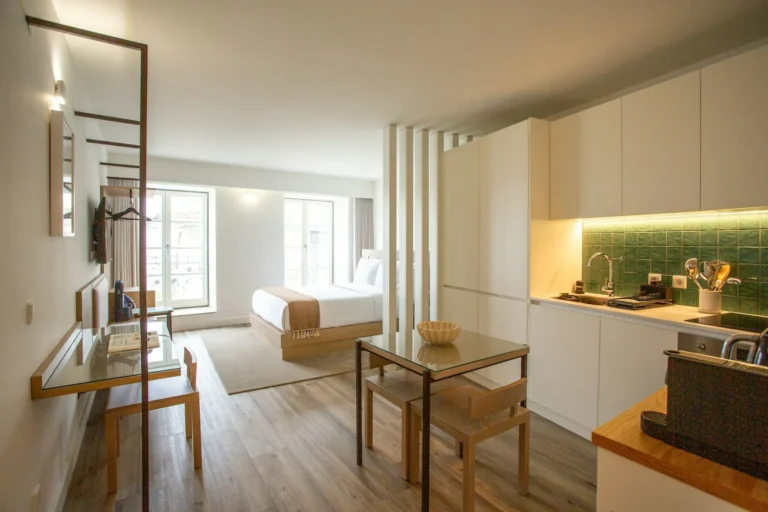
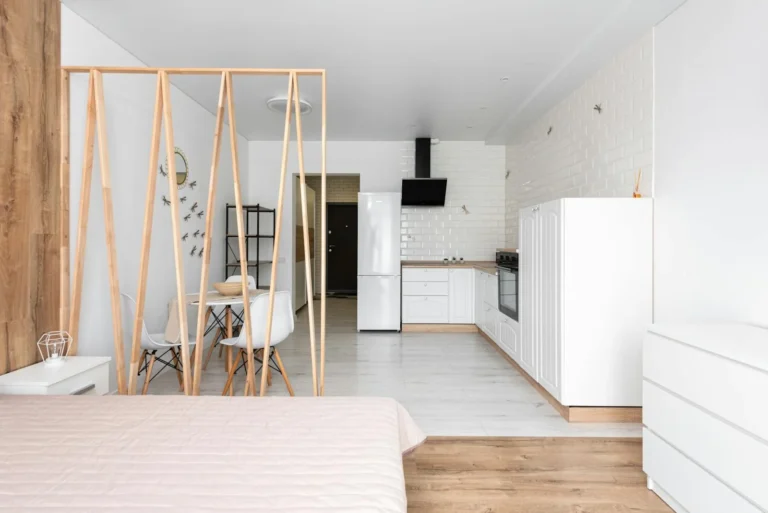
The hardest part of a studio is not the size. It is the blank slate. One open rectangle, a kitchen along one edge, a bathroom door, maybe a closet, and the rest is up to you. Push the bed to the wrong wall and the whole place feels like a dorm room. Get the layout right and the same square footage reads as a small, deliberate home.
The good news is that studios come in a handful of common shapes, and each one has a layout that works better than the rest. Below is how to read your own room, six floor plans that actually function, and the zoning tricks that make one space feel like two. None of it requires moving a wall, and all of it works in a rental.
The short version: measure the room and find your fixed points first. Put the bed in the quietest corner away from the door, float the sofa to face the living zone, and use a rug plus the back of the couch to draw the line between them. Keep a clear path from the front door to the bathroom, and you are most of the way there.
You lay out a studio by deciding where two zones go, sleeping and living, and then arranging everything else to serve them. The bed wants the calmest spot, usually a back corner away from the entry. The living area wants the light and the view. Once those two anchors are set, the table, storage, and walkways fill in around them.
The principle underneath every good studio layout is the same one from our studio apartment ideas hub: give each part of the room a clear edge, even with no walls between them. The layouts below are just different ways of drawing those edges depending on the shape of your particular box.
Map your room before you move anything
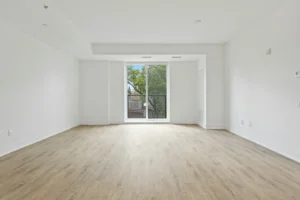
Before you drag the bed anywhere, spend ten minutes with a tape measure. You are looking for the things you cannot change, because the layout has to bend around them, not the other way around.
Mark down:
Where the windows are, since the living zone usually wants the natural light.
Where the front door and bathroom door are, because the path between them has to stay clear.
Where the outlets and the cable or internet jack sit, since the desk and the TV want to live near them.
The one wall with no door, window, or radiator on it. That uninterrupted wall is almost always where the bed belongs.
Sketch the rectangle on paper or in a free room-planner app and move furniture around on the page first. It is a lot easier than discovering your sofa blocks the closet after you have already carried it across the room.
Six studio layouts by room shape
1. The square studio: bed corner, living center
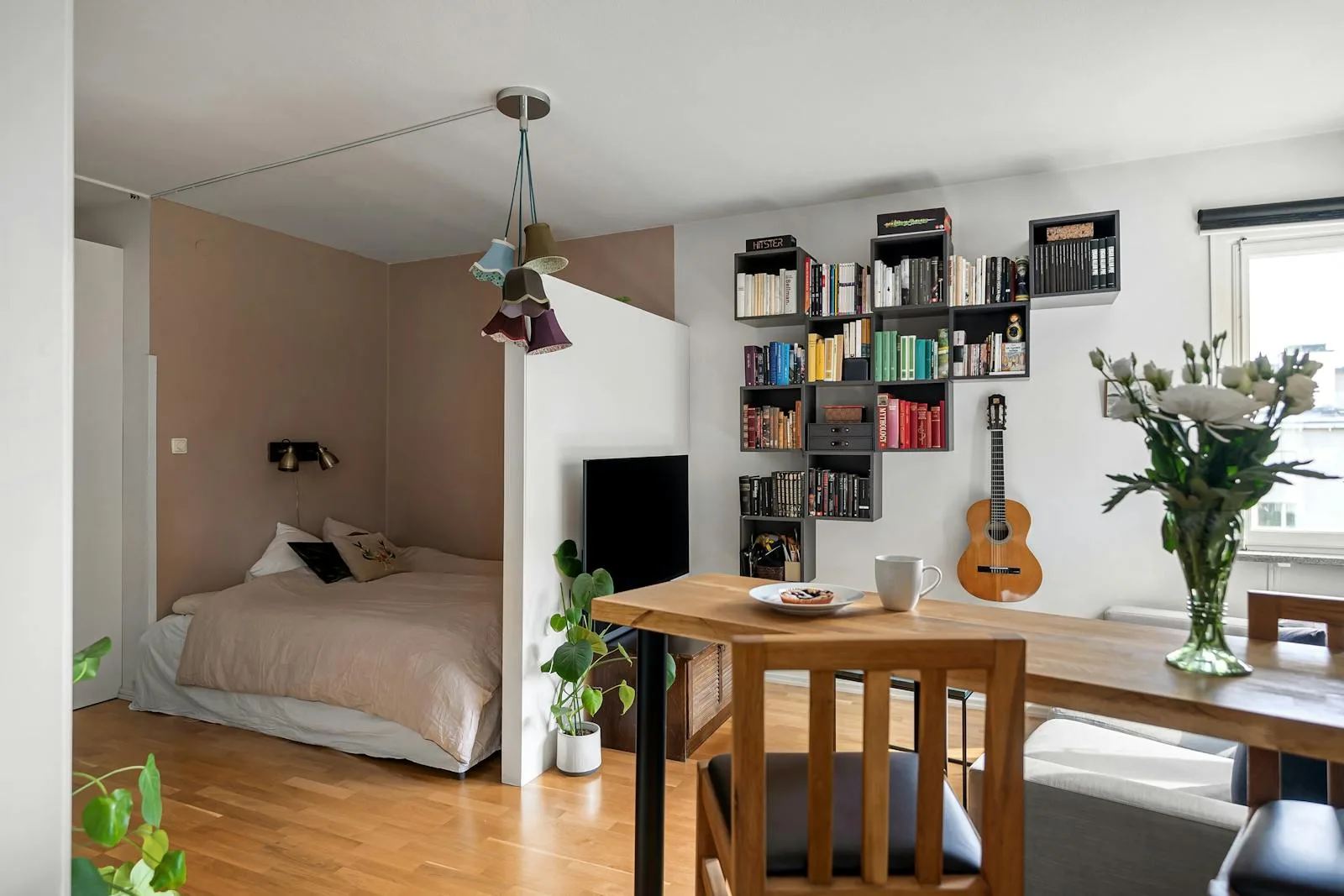
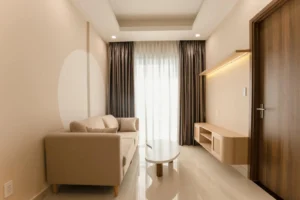
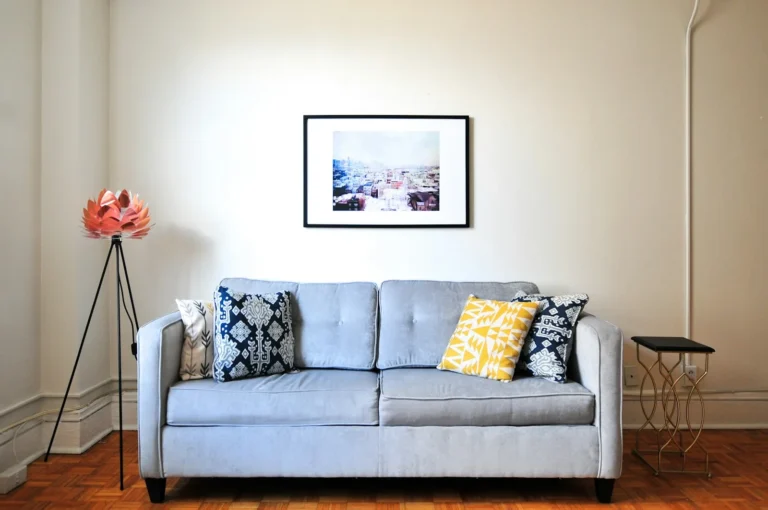
A roughly square room is the most forgiving. Put the bed in the back corner farthest from the door, float a sofa in the middle of the room facing away from the bed, and let the back of the sofa become the divider. A large area rug under the living set draws the box around it. The kitchen edge stays the kitchen, and you have three clear zones in one square.
2. The long narrow studio: zones in a row
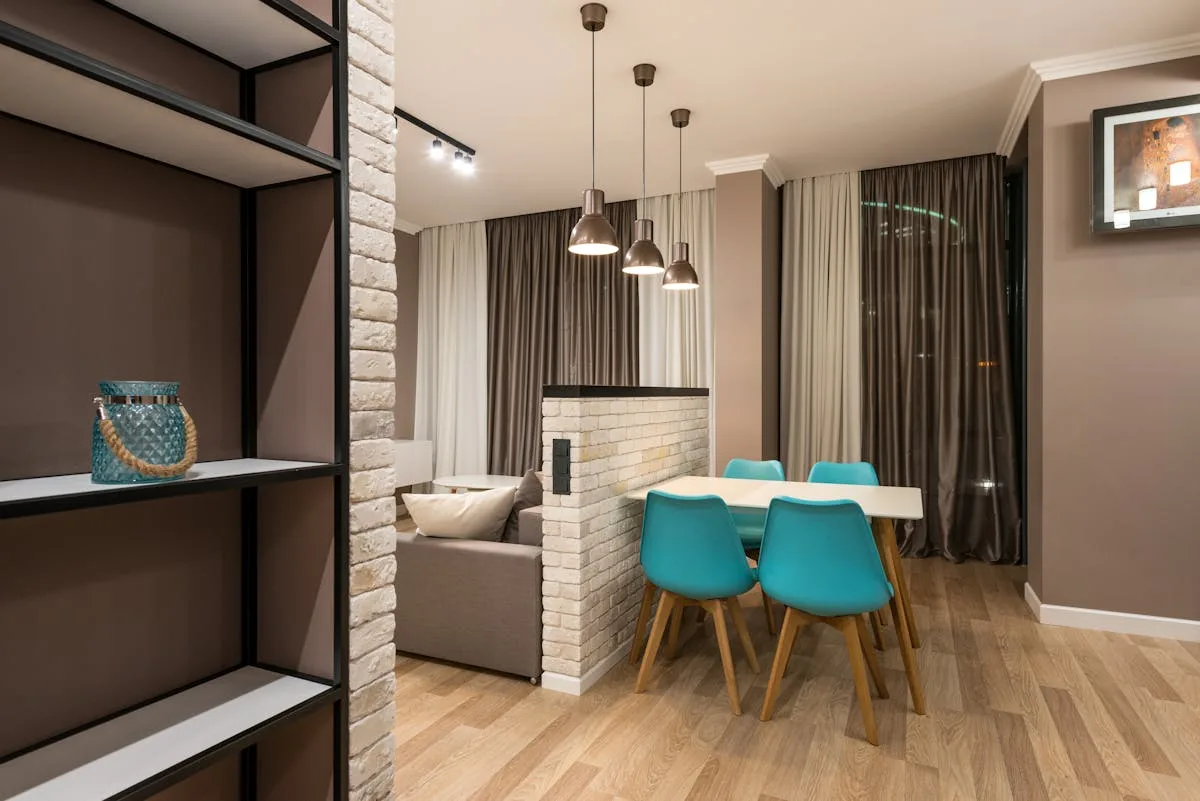
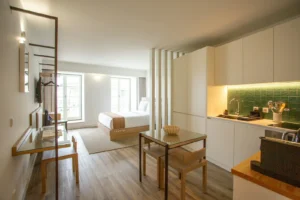
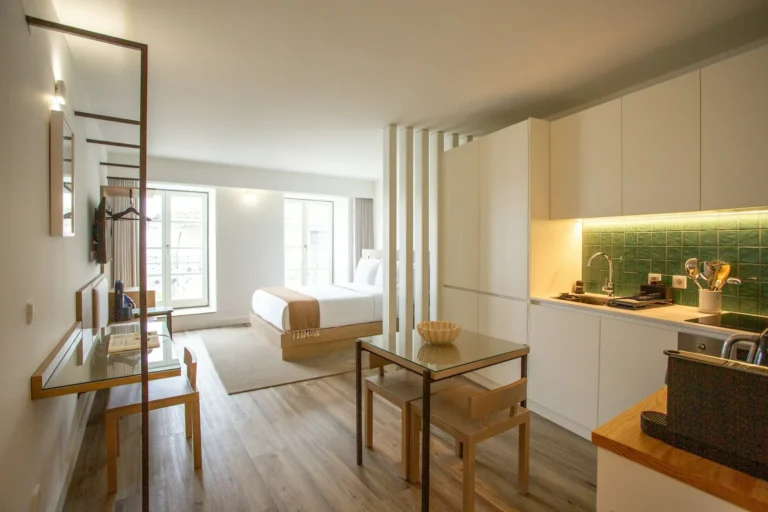
A long rectangle is the classic railroad studio, and the move is to stack zones front to back like train cars. Bed at the far quiet end, living area in the middle, kitchen and entry up front. An open bookshelf placed across the room, partway down, splits sleeping from living without blocking the light from the far window. This is the shape where a bookshelf room divider earns its place twice, once as a wall and once as storage.
3. The L-shaped studio: use the elbow
Some studios have an alcove or an L-shaped bend, and that little wing is a gift. Tuck the entire bed into the short arm of the L and you get a near-bedroom with three sides already defined. The main body of the room becomes a pure living and dining space, and the bed is out of the sightline from the front door.
4. The alcove studio: the built-in bedroom
If you are lucky enough to have a sleeping alcove, your layout is half done. The bed goes in the alcove, a curtain on a tension rod closes it off when you want, and the open room is yours for everything else. Treat the alcove as its own small room and decorate it that way.
5. The studio with a murphy bed: one room, two modes
The most flexible layout of all hides the bed entirely during the day. Stand the wall bed against the longest wall and float a sofa a few feet in front of it, facing the windows. At night the bed folds down into that gap; by day it folds up and the living area is the whole room again. The one fixed rule is keeping the fold-down clearance in front of the cabinet permanently clear, so the coffee table has to be a light piece you can nudge aside in a second. It is how the smallest studios keep both a real sofa and a real bed on the same floor. We cover the freestanding, renter-friendly versions in our murphy bed ideas guide.
6. The 400 square foot studio: vertical everything
In the very smallest studios, the layout goes up instead of out. A full-height loft bed wants roughly nine-foot ceilings to sit and dress under comfortably, and the floor it frees underneath becomes a desk nook, a loveseat, or a dresser-and-rail wardrobe. Tall, narrow shelving claims the dead wall above eye level for everything else. The floor plan barely changes, but you have stacked a sleeping zone on top of a living one instead of asking them to share.
Draw the zones without building anything
Whatever shape you have, the same four dividers draw the zones, and every one of them is renter-safe:
A rug under the living area is the simplest zone marker there is.
The back of a floated sofa is a soft wall that also gives you a console surface behind it.
An open shelving unit splits the room and stores things, with the open back keeping the light moving.
A curtain or folding screen gives you a real visual break on demand and folds away the rest of the time.
For the storage side of the layout, slide flat bins into the dead space under the bed. Our under-bed storage ideas guide covers how to turn that footprint into a dresser you never see.
Layout mistakes that make a studio feel smaller
A few common moves quietly shrink the room. Pushing every piece of furniture flat against the walls leaves a lonely empty square in the middle and actually makes the space feel smaller, not larger. Blocking a window with a tall piece kills the light that was making the room feel open. And running a clear path that cuts straight through the living zone means you are walking through your own couch arrangement every time you head to the bathroom. Keep the walkway along the edge of the zones, not through the middle of them.
Frequently asked questions
Where should the bed go in a studio apartment?
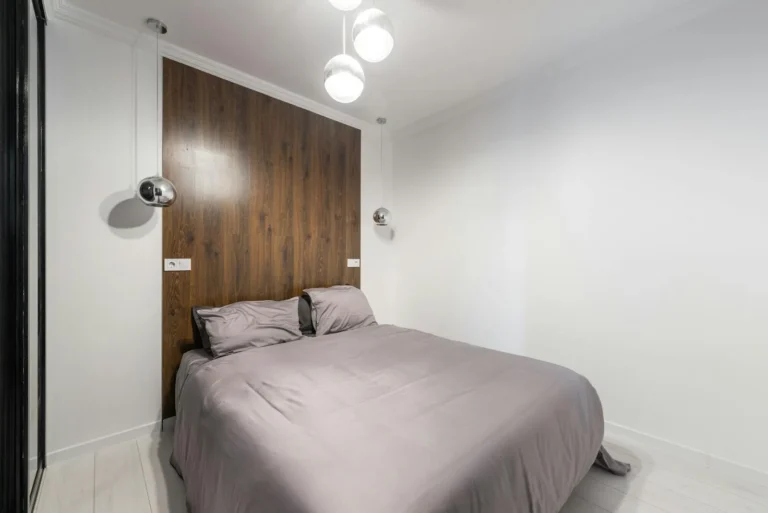
In the quietest corner, against the longest uninterrupted wall, and as far from the front door as the room allows. That keeps the sleeping zone out of the immediate sightline when you walk in and leaves the brighter, more open part of the room for living and dining.
How do you divide a studio apartment without walls?
Use a rug to anchor the living zone, float the sofa so its back becomes a soft divider, and add an open bookshelf or a curtain on a tension rod for a harder break between sleeping and living areas. Each one signals a separate room while still letting light pass through the space.
What is the best layout for a small studio apartment?
It depends on the shape. Square rooms work best with the bed in a back corner and the sofa floated in the center. Long narrow rooms stack zones front to back. Alcove and L-shaped studios use the bend as a ready-made bedroom. The constant is keeping walkways along the edges and the floor as clear as possible.
How do I arrange a studio so it does not feel like a dorm?
Float the furniture instead of lining it up against the walls, define zones with a rug and a divider, and choose a few full-size pieces over lots of small ones. A studio reads as a real apartment when each area has a clear purpose and a clear edge, rather than a single bed shoved in a corner with everything circling it.
Can you fit a dining table in a studio apartment?
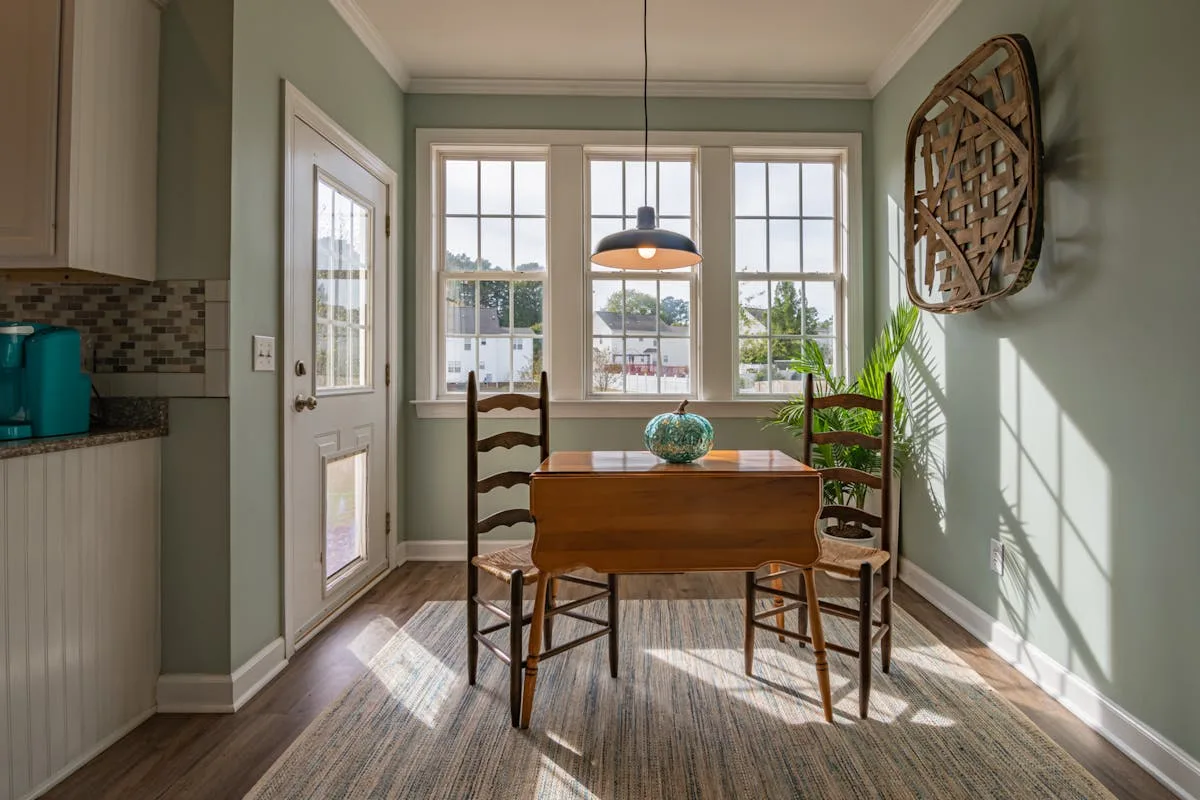
Yes, if it folds. A drop-leaf or wall-mounted table collapses flat when you are not eating, so it borrows space from the living zone only at mealtimes. Pair it with chairs that tuck fully under or stack, and the dining area appears and disappears as you need it.
Start with the floor plan
The furniture is the fun part, but the layout is what makes a studio livable. Measure first, anchor your two zones, draw the edges with a rug and a divider, and keep the walkways out of the middle of the room. Once the floor plan works, everything you put in the room gets easier. For the full picture of furnishing and styling the space, head back to the studio apartment ideas guide.
Get the renter's first-apartment checklist
Small-space decor ideas for renters, straight to your inbox.
The best studio apartment furniture does two jobs at once. Sleeper sofas, storage ottomans, drop-leaf tables, and renter-friendly picks that save floor.
How to divide a studio apartment without building a wall: rugs, floated furniture, freestanding screens, and ceiling-track curtains that all move out with you.
Manage Consent
To provide the best experiences, we use technologies like cookies to store and/or access device information. Consenting to these technologies will allow us to process data such as browsing behavior or unique IDs on this site. Not consenting or withdrawing consent, may adversely affect certain features and functions.
Functional
Always active
The technical storage or access is strictly necessary for the legitimate purpose of enabling the use of a specific service explicitly requested by the subscriber or user, or for the sole purpose of carrying out the transmission of a communication over an electronic communications network.
Preferences
The technical storage or access is necessary for the legitimate purpose of storing preferences that are not requested by the subscriber or user.
Statistics
The technical storage or access that is used exclusively for statistical purposes.The technical storage or access that is used exclusively for anonymous statistical purposes. Without a subpoena, voluntary compliance on the part of your Internet Service Provider, or additional records from a third party, information stored or retrieved for this purpose alone cannot usually be used to identify you.
Marketing
The technical storage or access is required to create user profiles to send advertising, or to track the user on a website or across several websites for similar marketing purposes.