This post contains affiliate links. If you buy through one I may earn a small commission at no cost to you.
Most rentals do not have an entryway. They have a door that opens straight into the living room, and a two-foot strip of floor just inside it where keys, shoes, bags, and mail land in a daily heap because there is nowhere to put them. You drop everything the second you walk in, because the alternative is carrying it across the room, and by Friday the strip is a pile you step over.
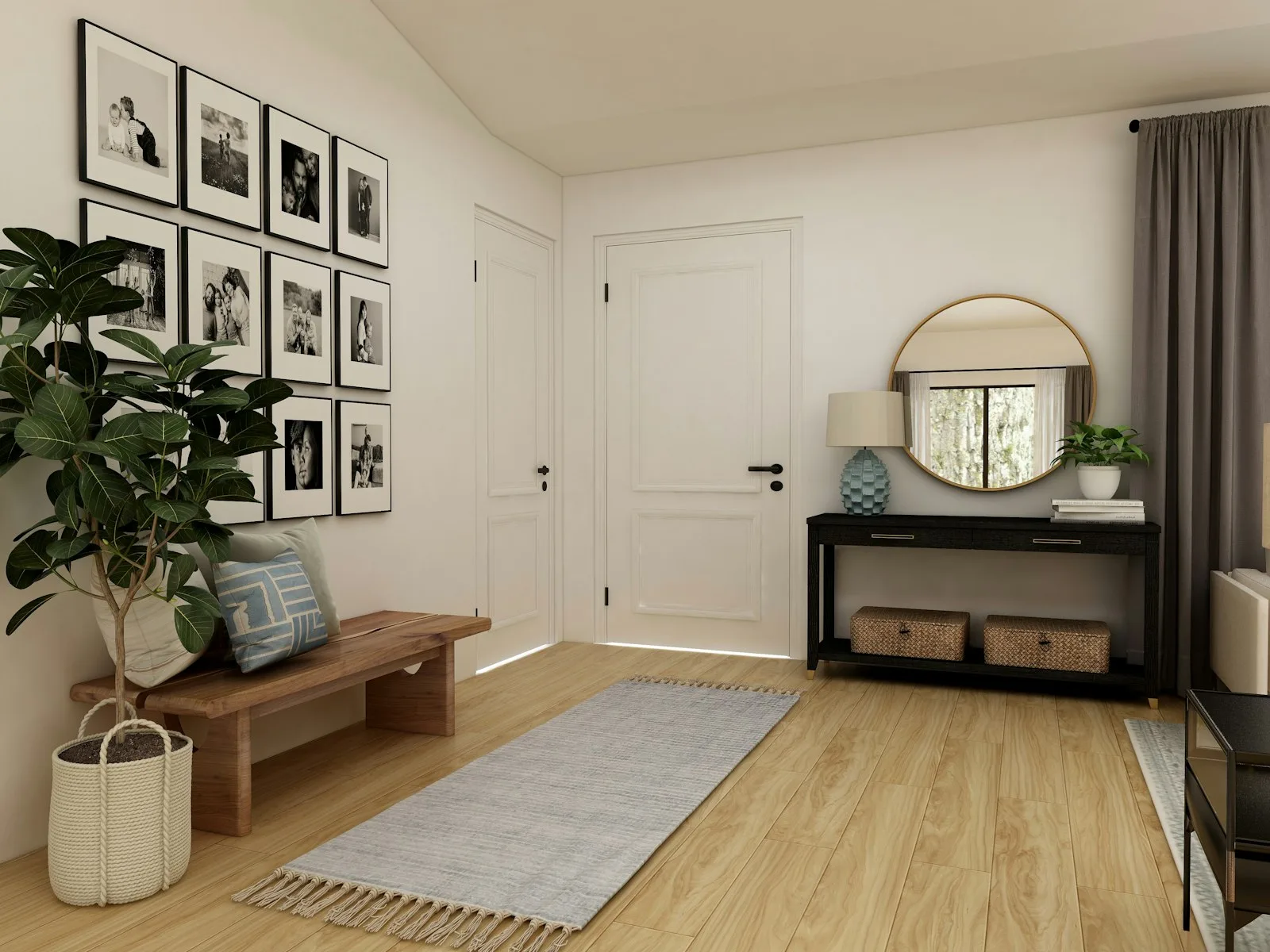
The fix is to build a drop zone in that strip, and the whole job has to happen without a drill. No foyer means no built-in bench, no coat closet, no wall of hooks the last tenant left. You are carving an entryway out of nothing, with freestanding pieces and adhesive hooks, in a footprint that cannot block the door swing. The trick is to stack the storage vertically, because the floor space is the one thing you do not have.
I have built a drop zone in the doorway of five rentals, including one where the front door cleared the radiator by about four inches and nothing wider than a shoe rack would fit. Below are the seven picks that turn a chaotic strip of floor into a functioning entryway, the order to add them in, and the one that does the most in the least space.
What to watch: measure the depth against your door swing and the walkway, since a console that fits the wall can still clip the door or pinch the path. Look for one no deeper than the door handle protrudes, so nothing snags as you come and go.
What to watch: use the weight-rated and water-resistant version, give them the full hour of cure time on a clean, dry wall before loading, and do not overload them. A coat-rated hook holds a coat; a key hook does not. The how to hang things without nails guide breaks down which adhesive holds what.
What to watch: a bench needs floor depth you may not have, so measure before you commit, since this is the bulkiest pick here. If the doorway is too tight for a bench, a slim shoe rack plus a separate stool does the same two jobs in a smaller footprint.
What to watch: it needs a door it can hook over, and a thick or louvered door may not take a standard hook. If the front door opens against the organizer or has a deadbolt in the way, hang it on the coat-closet or a nearby interior door instead.
What to watch: pick a size that tucks fully under the console or onto the shelf without sticking into the walkway. Two smaller baskets often beat one big one, since you can sort by category and pull just the one you need.
What to watch: tilt-out cabinets hold fewer pairs than they look like they should, and tall boots usually will not fit the shallow tilt bays. Count the pairs you need stored daily against the stated capacity, and keep boots in a taller bin or on the floor of a closet.
What to watch: if you go with an adhesive-mounted version, check the total weight of a full mail slot plus keys against the strip rating, and mount it on a clean, smooth wall. A loaded mail organizer is heavier than it looks, and that is what pulls a cheap strip off the wall.
The one I would skip
A full freestanding hall tree, the tall combined unit with a bench, hooks, and an upper shelf all in one. It looks like the perfect all-in-one entry solution, and in a house with a real foyer it is. In a rental where the door opens into the living room, it is a bulky piece that eats the floor and the visual space, blocks the door swing as often as not, and locks you into one layout. The same jobs get done better by separate small pieces you can place where they actually fit: a slim console here, hooks there, a shoe rack under it. Buy the hall tree if you have the foyer for it. In a no-entryway apartment, it is the piece that looks right in the photo and wrong in the room.
The order to build it in
If you are starting from a bare strip of floor, add the pieces in the order they pay off. The adhesive hooks and the key-and-mail organizer go up first, because they are cheap, they go on the wall instead of the floor, and they end the two worst daily failures, lost keys and coats on the chair. The slim console is next, for the drop surface that makes the zone a zone. Then shoes, where a bench, a slim rack, or a tilt-out cabinet depends on how much floor you have. The catch-all basket is the finisher, tucked under the console. The whole drop zone ties back to the small apartment storage ideas hub, which maps the rest of the apartment so the entryway is the first solved zone, not the only one.
The moves that make a no-foyer entry work
Build up the wall, not out into the room. Hooks, an over-door rack, and a wall organizer store the daily stuff without taking a step of walkway. Save the floor for the one or two pieces that have to be on it.
Protect the door swing. Measure the arc of the open door before placing anything, since the most common entryway mistake is a piece that fits the wall but stops the door. Nothing goes in the swing.
Define the zone visually. A small rug or runner under the drop zone tells the eye where the entryway is, even when it is just a strip of the living room. It is the cheapest way to make a carved-out entry read as intentional.
Mount adhesive on clean, smooth walls and respect the ratings. Coat hooks and a loaded mail organizer pull off a dirty or textured wall. Clean it, let the adhesive cure, and keep to the weight rating. For the full no-damage toolkit, the renter-friendly decor guide covers protecting your deposit while you set the place up.
Frequently asked questions about entryway storage
How do I create an entryway in an apartment with no foyer?
Carve a drop zone out of the two-foot strip just inside the door using freestanding and adhesive pieces: a slim console for a surface, wall hooks for coats, a shoe rack or bench for footwear, and a small rug to define the zone. Build up the wall rather than out into the floor, since the walkway is the space you cannot spare.
What is the best entryway storage for a small space?
A slim console paired with adhesive wall hooks does the most in the least room. The console gives you a drop surface and a hidden drawer at eight to twelve inches deep, and the hooks claim the wall above it for coats and bags. Add a slim shoe rack or a tilt-out cabinet for footwear if the floor allows.
How do renters add entryway storage without drilling?
Use adhesive hooks and wall organizers for the vertical storage, and freestanding pieces, a console, a bench, a shoe cabinet, for everything else. None of it needs a screw, and the adhesive releases clean at move-out. Over-door racks add storage on the door itself with no mounting at all.
How do I store shoes by the front door in a small apartment?
Pick the footwear piece to the floor you have. A bench with a shoe rack works if there is depth for it; a slim vertical rack or a tilt-out cabinet stores pairs in a tighter footprint; and an over-door organizer holds the overflow on the door. The goal is getting the daily pile off the walkway.
Is a hall tree good for a small entryway?
Usually not in a no-foyer apartment. A hall tree is bulky, blocks the door swing, and locks you into one layout, and it tends to look right in a catalog and wrong in a room that opens straight into the living space. Separate small pieces placed where they fit do the same jobs without dominating the space.
A rental without a foyer still has an entryway; you just have to build it in the strip by the door. Start on the wall with hooks and a key organizer, add the console for a surface, then solve the shoes to the floor you have. For the rest of the place, the small apartment storage ideas hub maps every room, and the over-the-door storage guide goes deeper on the door-back move that saves the floor by the entry.
Get the renter's first-apartment checklist
Small-space decor ideas for renters, straight to your inbox.
A small apartment feels cramped because the stuff has nowhere to live. 9 organizing principles, from going vertical to keeping surfaces clear, that make a tiny rental feel twice its size.
This post contains affiliate links. If you buy through one I may earn a small commission at no cost to you. You took a shower in the rental bathroom, walked out to brush your teeth, and noticed the seam above the toilet. The roll you put up six weeks ago, the one that looked perfect…
This post contains affiliate links. If you buy through one I may earn a small commission at no cost to you. The first kitchen where I tried this was a one-bedroom in Austin with a galley layout and a builder-grade off-white wall behind the stove that had been catching pasta-sauce spatter for years. The previous…
The dual-purpose furniture that earns its footprint twice in a small rental: 8 storage picks from ottomans to ottoman beds, the one set to skip, and the buying checks that separate lasting from landfill.
Manage Consent
To provide the best experiences, we use technologies like cookies to store and/or access device information. Consenting to these technologies will allow us to process data such as browsing behavior or unique IDs on this site. Not consenting or withdrawing consent, may adversely affect certain features and functions.
Functional
Always active
The technical storage or access is strictly necessary for the legitimate purpose of enabling the use of a specific service explicitly requested by the subscriber or user, or for the sole purpose of carrying out the transmission of a communication over an electronic communications network.
Preferences
The technical storage or access is necessary for the legitimate purpose of storing preferences that are not requested by the subscriber or user.
Statistics
The technical storage or access that is used exclusively for statistical purposes.The technical storage or access that is used exclusively for anonymous statistical purposes. Without a subpoena, voluntary compliance on the part of your Internet Service Provider, or additional records from a third party, information stored or retrieved for this purpose alone cannot usually be used to identify you.
Marketing
The technical storage or access is required to create user profiles to send advertising, or to track the user on a website or across several websites for similar marketing purposes.