Peel-and-Stick Ceiling Tiles for Renters: 6 Picks That Cover the Popcorn (and Three That Don’t)
This post contains affiliate links. As an Amazon Associate I earn from qualifying purchases.
You came home at eleven on a Tuesday, switched the kitchen light on, and the popcorn ceiling did the thing it does: a thousand small stipple shadows, one yellow water stain shaped like Texas above the stove, and a smoke-detector LED winking off the worst of it. The cabinets are fine. The floor is fine. The ceiling is the eyesore that pulls every other surface in the room down by association, and your lease has another fourteen months on it.
Peel-and-stick ceiling tiles are the rental category that solves a problem most renters have not been told is solvable. A clean install covers popcorn, stipple, water stains, and the previous tenant’s smoke-shadow without a single drilled hole or a hired painter. A bad install lifts at the corners in three weeks, telegraphs the popcorn through cheap foam, and pulls a strip of ceiling paint off when you remove it on move-out day.
This is a category where the labels lie a little. Most of the well-known ceiling-tile brands (A La Maison Ceilings, Ceilume) ship glue-up tiles or drop-in panels, not true peel-and-stick. The actual peel-and-stick options come from a smaller set of specialty retailers and acoustic-felt brands. Below are the six I would actually order, the three categories I would not, and the install moves that decide whether the ceiling holds the full lease.
What “peel-and-stick ceiling tile” actually means
The phrase covers four product families. They all promise damage-free removal, but the materials and the visual results are not interchangeable.
Foam ceiling tiles (true peel-and-stick) are the rental-safe pick. Lightweight polystyrene foam, around 5 to 8 mm thick, sold in tile or panel formats with factory acrylic adhesive on the back. Sourced primarily through specialty retailers like Decorative Ceiling Tiles (decorativeceilingtiles.net), since the big-box channel for ceiling foam leans toward glue-up. Patterns range from flat coffered to ornate Victorian medallion to faux-tin lookalike.
PVC ceiling panels are thinner (around 2 mm thermoformed vinyl), printed and embossed, usually 2 by 2 foot panels. Marketed as washable and kitchen-rated. Installs flat against a smooth ceiling and reads as faux tin from across the room. The install demands a smoother ceiling than most rentals offer.
Acoustic PET felt panels are the newest entry: peel-and-stick felt panels in tile or hex format, designed for ceiling installs that want both visual texture and a measurable acoustic effect. The brands that publish NRC test data on the product page (Felt Right, SoundAssured) are the ones worth ordering; the unbranded acoustic-felt listings on Amazon publish a number without naming a certifying lab.
Drop-in ceiling panels are the category outlier. These are decorative inserts meant to drop into a metal grid, not stick to a ceiling. If your apartment has a drop ceiling (basement units, old converted offices), the grid swap is faster than any peel-and-stick install. If your apartment has a flat ceiling (the other ninety percent of rentals), these are not the product. Ceilume’s Stratford line is a quality drop-in option in this category, but it is not peel-and-stick.
Two specs that separate the picks from the duds
Tile thickness matters more on a ceiling than on a wall because gravity is pulling at the adhesive bond every second. Foam at 8 mm hides texture (popcorn, stipple) and holds bond steady for years; foam at 3 mm telegraphs the texture below and lifts at corners within months. PVC at 2 mm is fine on a smooth ceiling and a disaster on a stippled one.
Fire rating is the spec the unbranded Amazon listings hide. Foam ceiling tiles installed across a whole room are a meaningful fire-load surface. Brands that publish a Class A or Class B rating are safe; brands that publish “fire retardant” without a class number should not go above your head.
The 6 picks
What to watch: the specialty retailer ships in business-days lead time rather than Amazon-Prime speed; order two boxes more than your square footage requires before starting the install, because reordering mid-install adds a week. Paintable surface means you can match the rest of the ceiling color, which solves the bright-white tile mismatch the cheaper foam brands cause.
What to watch: the surface below needs to be smooth (skim-coat drywall or previously painted flat ceiling). Light stipple shows through, and popcorn is not the right ceiling for this product at all. The premium price means a 10-by-10-foot kitchen ceiling lands around $500 to $900 in tile alone, which is real money for a rental.
What to watch: this is a wall panel that doubles as ceiling material rather than a ceiling-specific product. Heavy popcorn or a ceiling that already has water staining is the wrong substrate; on the right ceiling (smooth or lightly stippled, primed if there are stains), the cost-to-coverage math is the strongest in the roundup. Seasonal pattern rotation also means the box you reorder in November may not match the box you bought in March.
What to watch: NRC numbers on any PET felt product depend on mount. A peel-and-stick ceiling install sits closer to direct-mount than to the cavity-mount lab test, so the real-world absorption is at the lower end of the published range. The effect is still genuinely audible in any small apartment with hard floors. Skip any felt brand that does not publish the test standard or the certifying lab.
What to watch: hexagons need a tighter alignment plan than square tiles because the six-sided geometry makes misalignment more visible. Lay the entire accent zone out on the floor first (peel none yet), photograph the layout, then install in the same pattern. The hex format also wastes more material at cut edges if you are building anything other than a regular hexagonal field.
What to watch: decals do not hide texture, stains beyond the immediate fixture zone, or popcorn. They are a point-solution for a point-problem. For a whole-ceiling fix, this is the wrong product; for a single fixture, this is exactly the right amount of effort. The full roundup of where to source decal medallions sits in the peel-and-stick wall decals guide.
What I would actually skip
Three categories underperformed for me or for installs I followed, and I would not order any of them again.
The first is unbranded Amazon “3D ceiling tiles” under $1.50 per tile. These are usually 3 to 4 mm foam with rubber-based adhesive, often imported with no fire rating documentation. Foam this thin telegraphs the ceiling texture below it, lifts at corners during the first summer in any kitchen, and the rubber adhesive frequently pulls ceiling paint off on removal. The price gap between cheap unbranded and branded foam is roughly $40 to $80 for a small room. Against a deposit charge of $200 to $500 for ceiling repair, the cheap tier is the false economy.
The second is wallpaper-style “ceiling paper” sold as a ceiling-tile alternative. Adhesive class is lighter than ceiling-rated foam, the paper sags in any humid room (bathroom, kitchen) within months, and corner lift is almost universal. If you want a printed ceiling, paint a real one or use the peel-and-stick wallpaper for bathrooms guide on a wall instead.
The third is any glue-up ceiling tile sold as peel-and-stick. A La Maison Ceilings makes some of the most beautiful foam patterns in this category, including ornate Victorian and faux-tin designs, but the entire A La Maison catalog is glue-up (the brand’s own #310 Instant Grab adhesive sold separately, not factory PSA on the tile). Same with most of Ceilume’s line, which is glue-up or drop-in grid panels. The visual is real, but the install is a different category, and shipping the wrong assumption into the order means a ceiling-tile install that does not actually peel-and-stick. If you order an A La Maison pattern, budget for the adhesive separately and know that removal will involve a putty knife and some patience, not just warm-and-peel.
Where peel-and-stick ceiling tiles actually pay off in a rental
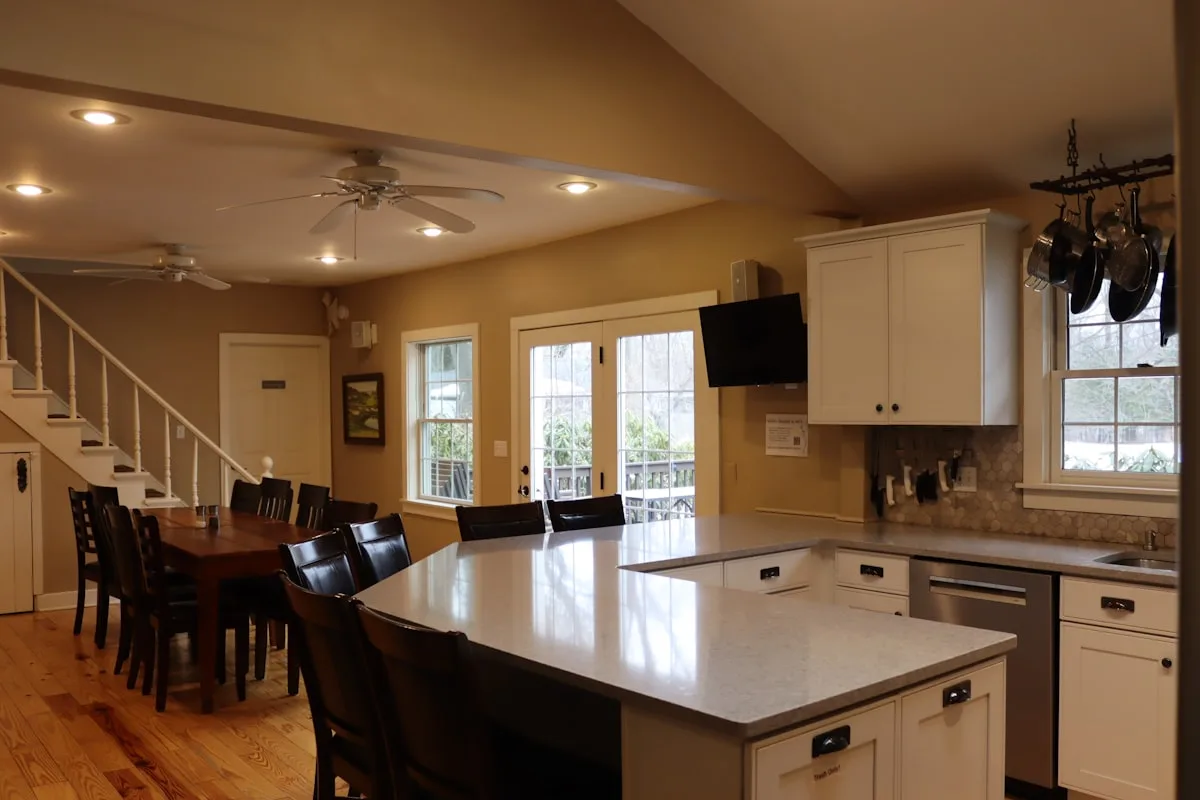
Five rooms where the install math works.
Bedroom ceiling with popcorn. The single most common rental ceiling problem. Foam covers it, the install does not telegraph if the foam is 6 mm or thicker, and the ceiling becomes a non-issue for the rest of the lease.
Kitchen ceiling with smoke or water stains. Talissa tin-look PVC is the right product family because cooking heat and grease film are constants. Foam works in a kitchen but ages faster than in any other room.
Hallway with a flush-mount fixture you can replace. A four-tile install centered on the fixture changes the hallway visual without committing you to a whole-ceiling job. The install footprint is small (roughly 6 by 6 feet around the fixture) and the price lands around $50 in foam.
Walk-in closet. The least visible ceiling in any rental and the right place to test a brand before committing to the kitchen or living room. A single box of foam covers most closets and lets you handle the install, the adhesive, and the removal all on a low-stakes surface.
Home office under an upstairs unit. Acoustic felt panels (Felt Right for full coverage, SoundAssured hexagons for accent zones) are the pick here. The sound benefit is the reason; the visual is the bonus.
Install moves that protect your deposit
Knock down or skim the popcorn first if it flakes. The PSA bonds to ceiling paint, not to loose popcorn. A scraper, a wet sponge, and ten minutes of work per square foot strips off the chunky popcorn without damaging the drywall below. If the popcorn predates the mid-1980s, treat it as potentially containing asbestos and either leave it intact (foam tile on top is fine, the foam encapsulates the texture without disturbing it) or call a tester before scraping.
Prime the ceiling if it is yellowed or has water stains. A single coat of stain-blocking primer (Kilz Original or Zinsser B-I-N for water stains) under the tile install does two things: gives the PSA a clean surface to bond to, and kills any tannin bleed-through that would yellow a foam tile from below over a year.
Level the first tile. Ceilings are rarely truly square to the walls, and a tile installed off-angle cascades the error across the whole grid. A chalk line snapped from a center reference point, or a laser line projected for ten minutes, takes the install from “decent” to “looks intentional”.
Press, do not slide. Foam tiles smear the PSA if you slide them on the ceiling rather than pressing them straight on. A clean perpendicular press lands the tile where you placed it and gives the adhesive its full bond strength.
Start near a wall, not in the middle. The waste on a ceiling install is almost always at the perimeter, where you cut tiles to fit against a wall. Starting at a wall puts your full-size tiles at the room’s focal point and pushes the cut tiles to the edges where the cut line is hidden by trim or by the wall-to-ceiling joint.
Removal protocol for deposit safety
Warm each tile with a hairdryer on low for thirty to forty-five seconds (ceiling tiles take longer than wall tiles because gravity is not helping the warm air sit on the surface), then peel slowly at a shallow angle. Foam tiles release best when the corner is started first and the pull stays close to flat against the ceiling.
If a tile resists, warm the corner for another fifteen seconds rather than yanking. Foam ceiling tiles installed on a primed surface almost always release clean; the failures I have seen all started with insufficient warming.
If a small amount of adhesive residue remains, a microfiber damp with warm water and a drop of dish soap removes most of it. Goo Gone works for stubborn spots but test on a hidden patch first; some ceiling paints (flat or matte latex especially) can dull or develop shiny spots from citrus solvents. Allow the ceiling to dry fully before repainting.
If you painted the foam tiles, you do not need to repaint the ceiling on removal as long as the underlying ceiling paint is intact. The PSA bonds to the paint layer; removing the tile lifts the PSA without lifting the paint below, in my experience across three move-outs.
Frequently asked questions about peel-and-stick ceiling tiles
What makes a ceiling tile renter friendly?
A renter-friendly ceiling tile is one you can take down at move-out without a trace, and four specs decide that. The adhesive comes on the back from the factory and is acrylic, not a separately sold glue or the rubber-based backing on the cheapest foam, the one that takes paint with it. If it is foam, it is around 6 mm or thicker, so it hides texture and holds its corners overhead. It comes down with a hairdryer and a slow peel on a primed ceiling. And the box shows a Class A or B fire rating, not just “fire retardant”, because a whole ceiling of foam is a lot of fuel over your bed.
Can I install peel-and-stick ceiling tiles over popcorn ceiling?
Yes, on light popcorn (the flat, low-relief kind that does not flake when touched) using thicker foam tiles from a specialty retailer like Talissa Decors. On heavy popcorn (the chunky kind that flakes), the popcorn needs to be knocked down or skim-coated first, because the PSA bonds to the popcorn surface rather than to a stable substrate and the tile will lift within months. If the popcorn predates the mid-1980s, treat it as potentially containing asbestos and either leave it sealed under foam (foam encapsulates the texture without disturbing it) or have it tested before scraping.
Will peel-and-stick ceiling tiles fall down over time?
Foam tiles installed on a primed, dust-free ceiling with branded acrylic PSA backing do not fall in a normal residential install. The failure mode I have seen in two rental installs is corner lift at the wall-to-ceiling joint over 18 to 24 months, which is visible and easy to spot before any tile actually detaches. High humidity, unprimed glossy surfaces, and temperature swings are the three conditions manufacturers commonly cite as shortening adhesive longevity. Bathrooms cut bond life roughly in half because of the humidity cycle; kitchens cut it by about a third near the stove.
How much does a peel-and-stick ceiling tile install cost for a small room?
A 10-by-10-foot room (100 square feet of ceiling) lands at about $150 to $300 in specialty foam (Talissa Decors), $150 to $300 in budget foam (Art3d dual-use), and $500 to $900 in faux tin PVC (Talissa tin-look). Acoustic felt (Felt Right) lands $600 to $1,000 for a whole ceiling, but the more typical install is the accent zone in SoundAssured hex at $50 to $100. Add $20 to $40 for primer if the ceiling needs it. Subtract the labor cost of hiring a painter to skim and repaint a popcorn ceiling, which is the closest alternative.
Are peel-and-stick ceiling tiles allowed in a rental?
Most leases are silent on ceiling tiles because they are not a standard renter install. The legally safe answer is to read the “alterations” section of your lease, install only with branded acrylic PSA on a primed ceiling, photograph the ceiling condition before the install, and remove the tiles before move-out using the warm-and-peel protocol. The two cases where a renter has had a deposit-charge dispute over ceiling tiles in my experience both involved cheap rubber adhesive on an unprimed ceiling.
What is the easiest ceiling tile install for a first try?
A four-tile install centered on a hallway light fixture is the lowest-risk first install. The install footprint is small (about 13 square feet), the tile alignment grid only needs to read clean within a small area, and the cost lands around $30 to $50 for a single box of foam plus primer. If the install fails, the consequence is one small section of ceiling to clean; if it succeeds, the next install (bedroom or kitchen) starts from a known-good brand and a known-good install method.
For the popcorn ceiling above the bedroom, Talissa Decors foam in a coffered medallion pattern is the call; for the kitchen ceiling that the stove has been working on for two years, Talissa tin-look PVC is the call. If the room you are upgrading is the bathroom, the ceiling is the wrong place to start: the moisture cycle gives up the adhesive before the lease ends, and the install effort is better spent on the peel-and-stick wallpaper for bathrooms walls instead. For the broader renter-decor system the ceiling sits inside, the renter-friendly wall decor guide rounds up the no-damage moves that pair with a ceiling install, and the peel-and-stick wall panels roundup covers the wall side of the system. If the wall-to-ceiling joint is the corner-lift point you keep watching, peel-and-stick crown molding is the cleanest cover for that seam on a rental and doubles as visual closure between tile and wall.
The Texas-shaped stain above the stove does not have to outlast the lease. Knock the loose popcorn off, prime the ceiling, give the primer twenty-four hours, and the install is one quiet afternoon between Saturday lunch and Sunday morning coffee.