This post contains affiliate links. If you buy through one I may earn a small commission at no cost to you.
You walked into the rental, set the second box of dishes down, and stared at the wall behind where the TV is going. It is the long one, painted contractor-beige, with a faint shadow where a previous tenant probably had a giant mirror, and you have already decided you are not going to drill into it. A friend told you about “those 3D wall panels,” you searched for ninety seconds, and now you are looking at a thousand listings ranging from $18 a panel to $180, half of them claiming to look like real brick and the other half claiming to look like reclaimed barn wood.
Peel-and-stick wall panels are a genuinely useful renter category. A clean install turns the TV wall into the focal wall and survives the lease without a single drilled hole. A bad install starts lifting at the corners within weeks, the “brick” texture compresses into something vacuum-sealed-looking, and the foam pulls a patch of paint off when you move out.
I have installed and removed panels in five renter walls over the last six years, on a mix of smooth drywall, lightly textured walls, and one accent wall behind a TV that took the brunt of two years of foot traffic. Four installs held the full lease and came down clean. One pulled paint on removal and cost me $180 of the deposit. Below are the seven picks I would actually buy again, the three categories I would not, and the install moves that decide which side of the deposit math you end up on.
If you have not picked between panels and wallpaper yet, the best peel-and-stick wallpaper roundup covers the alternative path. This guide assumes you are committed to panels and need to pick the right family.
The category groups five different products under one search term. They install the same way (peel a backing, press to the wall) and they all promise damage-free removal, but the materials and the visual results are very different.
3D foam panels are the listings you see at $18 to $40 per panel: lightweight PVC foam molded into brick, stone, or geometric shapes, usually around 27 inches square. Visual reads as textured wall from across the room; up close it reads as molded foam. Adhesive is acrylic PSA, mid-grade. This is the dominant category by volume.
Faux wood plank panels split into two sub-families. Solid-wood planks (Stikwood, Timberchic) are actual reclaimed-wood boards with a factory PSA backing, around 4 to 5 mm thick. Engineered hardwood veneer planks (Wallplanks, From the Forest) are a real-wood face bonded to an HDF core, thinner than solid plank, less expensive. Both look more convincing than foam wood; only the first is solid wood.
Vinyl wall tiles are 3D-effect printed tiles (subway, hex, marble) on a flexible vinyl carrier with a gel layer for relief depth. Smart Tiles is the dominant brand. Originally marketed for kitchen backsplashes, many also work as accent-wall material in living rooms.
Real shiplap-profile planks are solid or engineered planks milled with a nickel-gap or tongue-edge groove, peel-stick backed, that read close to a real shiplap install when lined up level. Shiplap-look peel-and-stick wallpaper is a different category that ships in rolls, not panels, with no relief depth.
Acoustic PET felt panels are the newest entry: panels with PET felt construction that publish a measurable NRC sound-absorption rating (typically 0.4 to 0.85 depending on thickness and mount). Worth a separate paragraph below.
One thing to check on any pick before you order: does the brand publish their adhesive class, panel thickness, and removal protocol in writing on their own product page? The brands that do are the brands whose panels release cleanly at month eighteen. The brands that say “strong adhesive, easy to remove” with no further detail are the brands I have paid deposit money to replace.
The 7 picks
What to watch: 3D foam compresses where it gets touched. A high-traffic wall (corner you brush past, behind the back of a couch) loses some relief depth over a year. Pick a wall that is mostly looked at rather than touched. Art3d does not run a formal sample program; the Amazon return path is the only way to handle a pattern you do not like.
What to watch: heavier than foam (because it is real wood), so high spots on a textured wall show through more obviously. Smooth drywall is the right surface. This is also the most expensive pick in the roundup; a 4-by-8 accent wall lands $320 to $450 in plank cost. Samples are $5 each on the Stikwood site, which is the cheapest insurance against ordering the wrong tone.
What to watch: this is engineered hardwood veneer on HDF, not solid wood. The product photographs well and the face is genuinely real wood, but the body is not lumber. Order a sample before committing; the multi-tone color mix is broader than some buyers expect, and the panel weight in person is closer to MDF than to plank.
What to watch: do not install on a wall that takes regular furniture impact. The gel layer scratches under sustained pressure, and Smart Tiles works best on small accent installs (between cabinets, framing a mirror, behind a stove) rather than a full living-room accent wall.
What to watch: this is a panel product, not wallpaper. If you searched for “peel-and-stick shiplap” and landed on a 20-inch-wide vinyl roll from NextWall or a similar brand, that is the wallpaper version, not the same category. The wallpaper version has zero relief depth; Cape Classic has the real groove.
What to watch: NRC numbers depend on mount. A peel-and-stick wall install is closer to direct mount than to the cavity-mount lab test, so the real-world absorption sits at the lower end of the published range. The effect is still genuinely audible in a small apartment with hard floors and bare walls. Skip any felt brand that does not publish the test standard or the mount.
What to watch: the brick relief is shallower than Art3d’s, and the panel-size math matters. Home Depot listings show a 10-pack at 10 square feet (12-by-12 inch panels) and a separate 20-pack at 27 square feet (15-by-13.5 inch panels), and the per-pack price gap is real. Count your wall square footage before ordering, not after. For a single-panel entryway install seen from across the room, the trade-off is worth the savings; for a full living-room accent wall, the Art3d depth pays for itself.
What I would actually skip
Three categories underperformed for me consistently and I would not buy any of them again.
The first is unbranded Amazon “3D stone” or “3D brick” panels under $15 per panel. These are usually 2 to 3 mm foam with rubber-based adhesive, often imported with no fire rating documentation. The foam compresses visibly within months, removal pulls paint regularly, and the price difference between cheap unbranded and branded (Art3d, Afoxsos) is roughly $30 to $50 for an accent wall. That is small money against a deposit charge.
The second is shiplap-look peel-and-stick wallpaper marketed as a panel. NextWall, Magnolia Home, and others ship 20-inch-wide vinyl rolls printed with shiplap, sometimes paintable. The product is fine wallpaper, but it is wallpaper. No relief depth, no real groove between planks, and the print reads as printed up close. If you want shiplap, the milled-groove panels (Cape Classic above) are the move; the wallpaper version is a different category and should be evaluated against other peel-and-stick wallpapers, not against panels.
The third is any foam wood-plank product without a published wood-grain rating or photograph at close range. Cheap foam “wood” panels read as foam from any distance closer than 6 feet. If a listing shows photos only at a wide angle, that is the reason. For the wood look, the real choices are Stikwood (solid) or Wallplanks (veneer); foam wood is a category to skip.
Where wall panels actually pay off in a rental
Five locations where the install pays for itself.
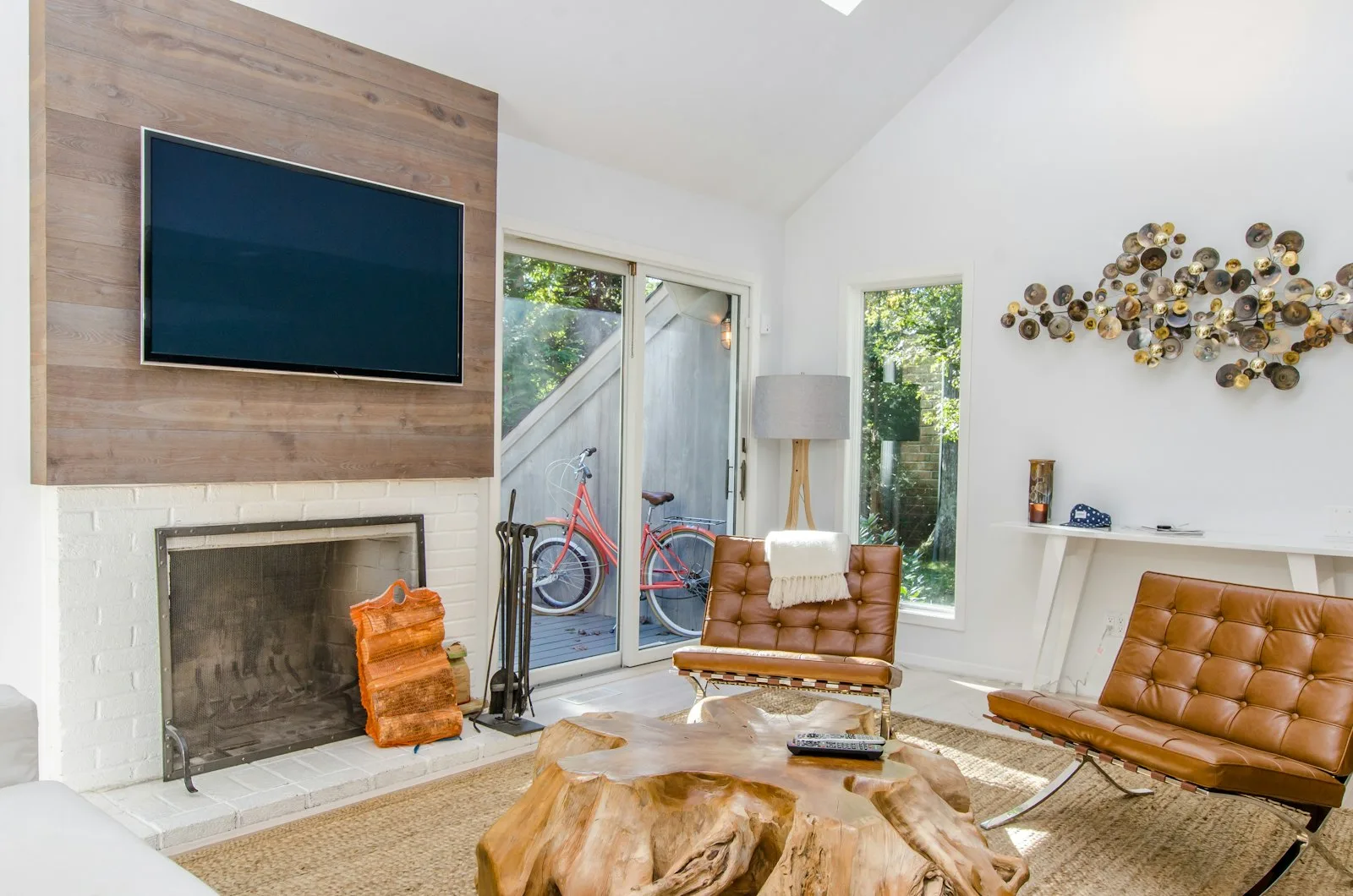
TV wall. Foam brick or faux wood reads strongest behind a mounted or stand-front TV. The TV breaks up the panel grid visually, so the panel becomes a backdrop rather than the focal point.
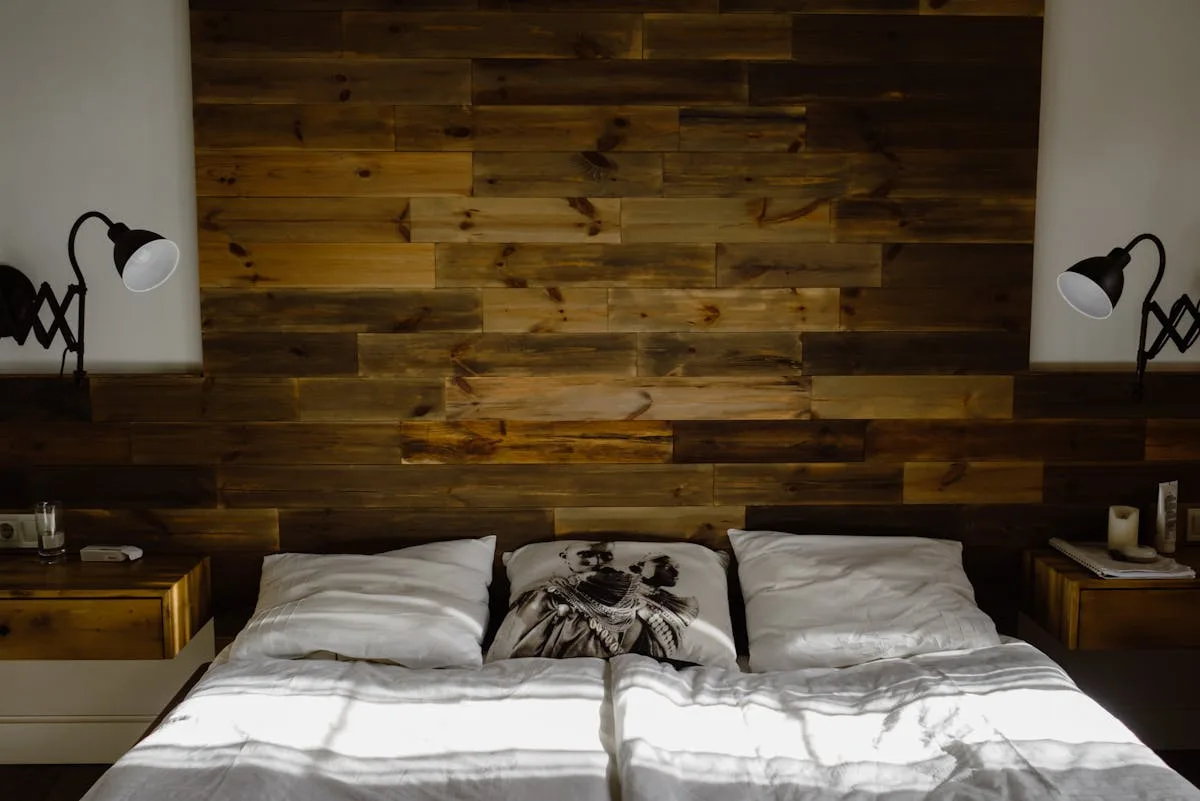
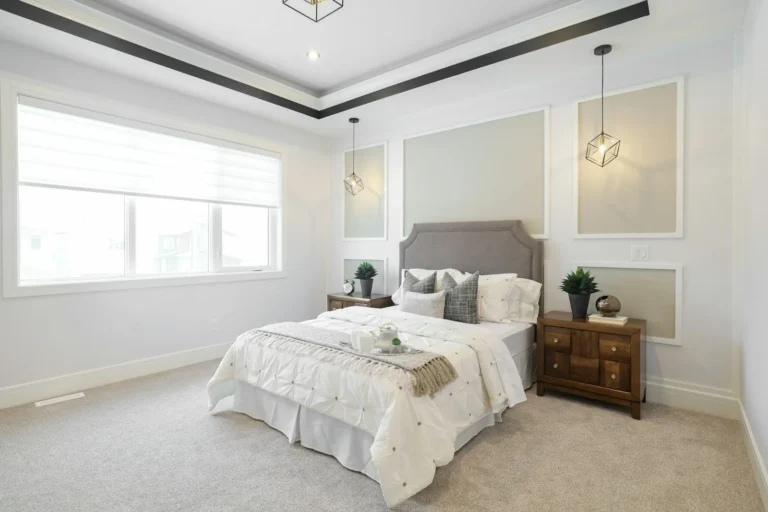
Headboard wall. A 4-by-7 foot panel section behind the bed reads as a custom headboard and removes the need for a freestanding piece of furniture. Solid-wood plank (Stikwood) photographs best here; engineered wood (Wallplanks) is the budget pick at the same visual angle.
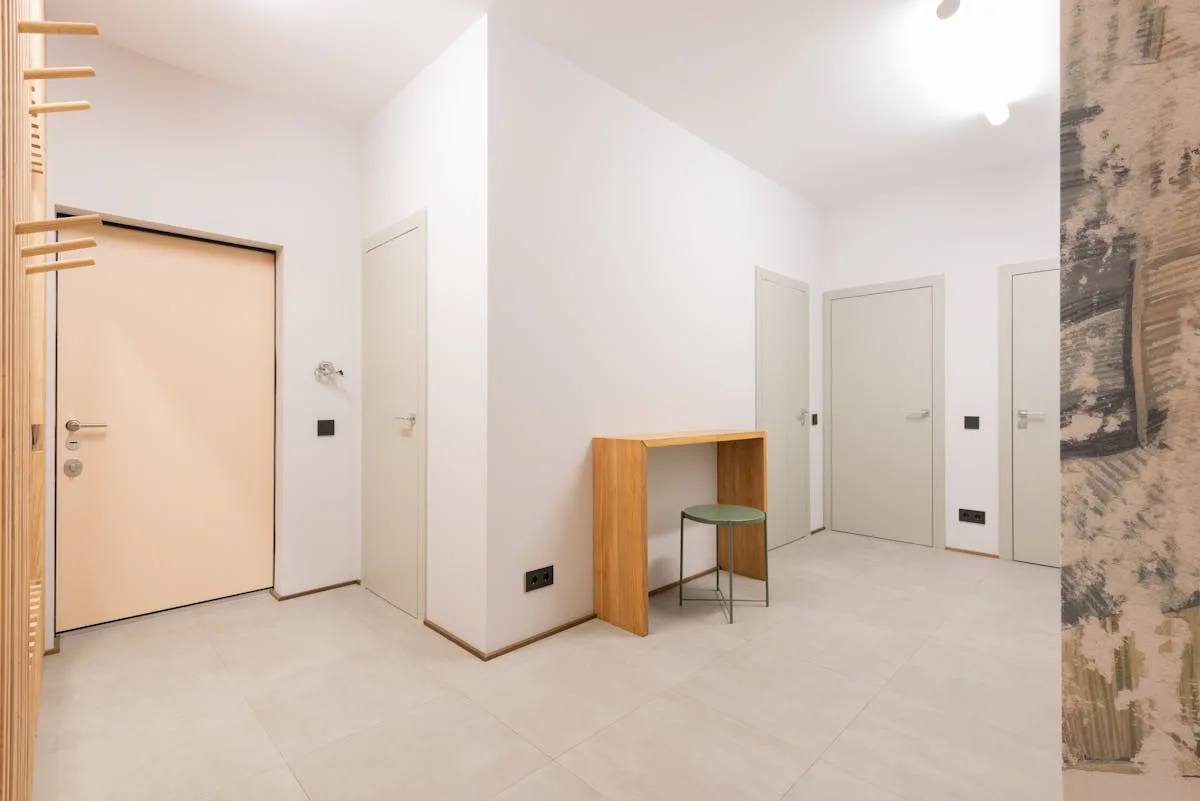
Entryway accent. The narrow wall opposite the door, often three to five feet wide, is the right canvas for a single-panel install. Most studios and 1-bedrooms have one. A two-panel install costs $40 to $80 and lands harder than any framed art purchase in the same budget.
Kitchen backsplash. The 18 inches of wall between counter and upper cabinets is the only place where Smart Tiles vinyl beats foam. One or two cut Smart Tiles sheets cover it cleanly.
Home-office accent. PET felt panels (Inhabit Harmony3D, ReFelt) solve two renter problems at once: the bare-wall sound bounce that makes Zoom calls echo, and the visual problem of an unbroken painted wall behind a monitor.
Install moves that protect your deposit
Cure the paint at least thirty days before the install. Adhesive bonds to fully cured paint; day-old paint releases the adhesive on removal and brings the paint with it. The Austin install I lost was on a wall the landlord had painted four days earlier.
Level the first panel. Rental walls are rarely truly plumb, and a panel installed off-level cascades the error across the whole wall. A bubble level or a laser line takes two minutes; the alternative is a wall that reads off in every photo for the next eighteen months.
Smooth from the center outward. Foam panels and shiplap planks both trap air bubbles when smoothed top-to-bottom; centerward-out releases the trapped air without creating ripples in the face.
Order one extra panel. Cutting errors, drop damage, and the random panel that ships with a print defect all happen. The eight percent overage you tolerated on the order beats reordering a single panel three weeks later.
Photograph the wall before and after. The before photo documents the wall condition for the move-out walkthrough. The after photo is good Instagram content.
Removal protocol for deposit safety
Warm each panel with a hairdryer on low for twenty to thirty seconds along the top edge, then peel slowly at a shallow angle (closer to flat against the wall than perpendicular). The warmth softens the PSA without overheating the wall.
If a panel resists at a corner, warm that corner for another ten seconds rather than yanking. Cheap rubber-adhesive panels are the only ones that consistently pull paint; branded acrylic PSA almost always releases cleanly.
If a small amount of residue is left after panel removal, a Goo Gone wipe followed by a clean dry microfiber removes it without damage in most cases. Test on a hidden corner first, especially on flat or matte latex paint, which can dull or develop shiny spots from citrus solvents.
Frequently asked questions about peel-and-stick wall panels
Do peel-and-stick wall panels actually look real?
3D foam brick and stone panels (Art3d, Afoxsos) read convincingly from four feet and beyond. Within two feet they read as molded foam rather than real masonry. Solid-wood plank (Stikwood) and engineered hardwood veneer (Wallplanks) both read as real wood at any distance because the face is real wood; the give-away on the engineered version is the thinner edge profile up close. Vinyl tile (Smart Tiles) reads as printed tile up close and as convincing tile from four feet. Pick a category based on the viewing distance the wall will mostly be seen from.
Will peel-and-stick wall panels damage the wall when I move out?
Branded acrylic-adhesive panels (Art3d, Afoxsos, Stikwood, Wallplanks, From the Forest, Smart Tiles, Inhabit) remove cleanly from cured paint when warmed with a hairdryer and peeled slowly. Cheap rubber-adhesive panels (unbranded Amazon) regularly pull paint and leave residue. The right brand and the right removal protocol together drop the deposit-charge risk to near zero.
How long do peel-and-stick wall panels last?
Branded panels in a normal-traffic residential install hold two to five years before any visible adhesive failure. High-touch zones (corner of a hallway, behind a couch back) cut that in half. Bathrooms cut it further because foam adhesives give up first in humidity, so most foam panel brands do not warranty bathroom installs at all.
Can I install peel-and-stick panels over textured walls?
Lightly textured drywall (eggshell, light orange-peel) holds most foam panels at the cost of some lift at the edges over time. Heavily textured walls (heavy orange-peel, knockdown) are a poor candidate; the high spots of the texture leave gaps under the panel and the bond fails along those gaps. Solid-wood plank (Stikwood) is the most forgiving on light texture because the random plank rhythm hides small misalignment.
What is the cheapest wall I can do as an accent with panels?
A single-panel install (one 27-inch foam panel from Art3d or Afoxsos in the entryway or behind a small console) lands at $15 to $35 all in. A full accent wall (8 by 8 feet) runs $80 to $150 in foam, $300 to $400 in engineered wood (Wallplanks), $400 to $500 in solid wood (Stikwood). Smart Tiles backsplash on a 3-by-2 foot kitchen section lands around $40 to $70.
For the brick wall behind the TV, foam panels are the right call; for the headboard wall in the bedroom, Stikwood or Wallplanks photographs better. If you are still deciding between panels and peel-and-stick wallpaper for the same wall, the best peel-and-stick wallpaper roundup covers the wallpaper alternatives, and the renter-friendly wall decor roundup covers no-damage alternatives that need neither. If the panel install is happening in a bathroom (which I would think twice about with foam), the peel-and-stick wallpaper for bathrooms review covers what survives daily steam.
The contractor-beige wall behind the TV does not have to stay contractor-beige for the whole lease. Pick the category by viewing distance, the brand by removability, and give the paint its thirty days before you press the first panel up.
Get the renter's first-apartment checklist
Small-space decor ideas for renters, straight to your inbox.
Peel-and-stick crown molding adds high-end ceiling trim to a rental with no saw, no nails, no miter cuts. Six picks that hold and an install walkthrough.
Peel-and-stick ceiling tiles cover popcorn, stains and water marks in a rental without nails. Seven picks that hold, three to skip, and the install moves that protect your deposit.
Christmas decor for a small rental that hangs without nails and comes down in one evening: lights, cabinet bows, garland, the front door and the balcony.
The best studio apartment furniture does two jobs at once. Sleeper sofas, storage ottomans, drop-leaf tables, and renter-friendly picks that save floor.
Manage Consent
To provide the best experiences, we use technologies like cookies to store and/or access device information. Consenting to these technologies will allow us to process data such as browsing behavior or unique IDs on this site. Not consenting or withdrawing consent, may adversely affect certain features and functions.
Functional
Always active
The technical storage or access is strictly necessary for the legitimate purpose of enabling the use of a specific service explicitly requested by the subscriber or user, or for the sole purpose of carrying out the transmission of a communication over an electronic communications network.
Preferences
The technical storage or access is necessary for the legitimate purpose of storing preferences that are not requested by the subscriber or user.
Statistics
The technical storage or access that is used exclusively for statistical purposes.The technical storage or access that is used exclusively for anonymous statistical purposes. Without a subpoena, voluntary compliance on the part of your Internet Service Provider, or additional records from a third party, information stored or retrieved for this purpose alone cannot usually be used to identify you.
Marketing
The technical storage or access is required to create user profiles to send advertising, or to track the user on a website or across several websites for similar marketing purposes.