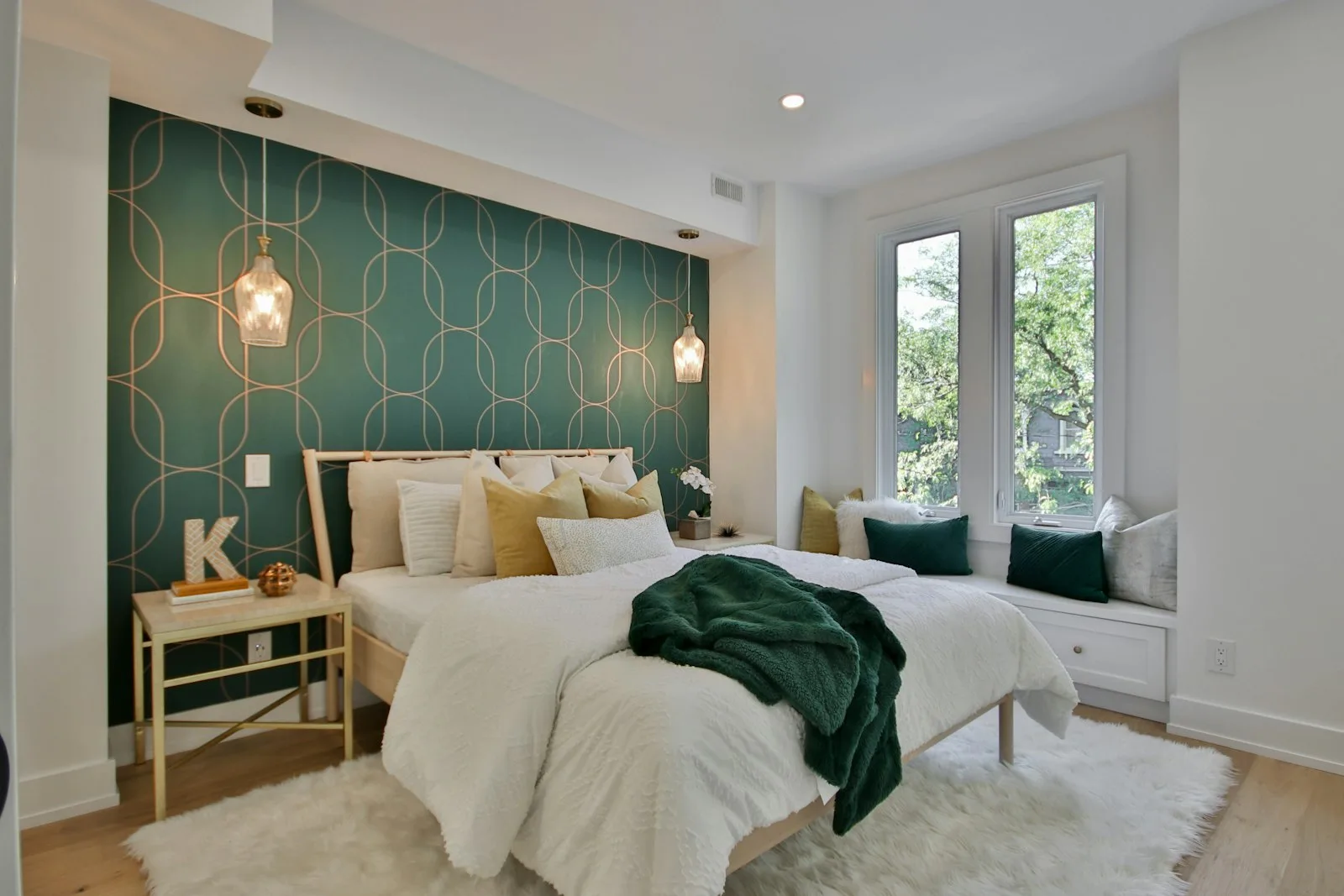
The Best Peel-and-Stick Wallpaper Brands for Renters in 2026 (And Two to Skip)
You opened a box of NuWallpaper on the kitchen counter, the YouTube tutorial is paused on the install step, and you are trying to figure out which side of the panel actually peels first. There is also a roll of generic floral peel-and-stick someone gave you for Christmas, the one with a name you cannot pronounce, and you are wondering if it will hold up next to the branded version or start curling at the seams by Halloween. The honest answer is that some peel-and-stick wallpaper still looks alive after three years of rental life, and some of it is sticker residue waiting to happen. The difference is mostly in the vinyl gauge and the adhesive class, which the marketing copy almost never tells you about.
Below: the brands that have actually held up across multiple installs, the ones that work for specific situations (textured walls, bathrooms, maximalist patterns), and the ones we have stopped recommending. If you are still deciding whether vinyl peel-and-stick is even the right type of removable wallpaper for your rental, our removable wallpaper for renters breakdown of the three adhesive families covers that decision first.
What separates the best peel-and-stick wallpaper from the rest
Four specs do most of the work, and you can use them to read any product page in 30 seconds.
Vinyl gauge matters more than the marketing photos let on. Gauge is measured in mils (thousandths of an inch), and premium brands (Tempaper, Chasing Paper, Walls Republic) ship at 7 to 9 mil non-woven vinyl that holds pattern integrity at install and survives a clean removal years later. Cheap unbranded Amazon rolls often run 4 to 5 mil thin vinyl, which tears at corner-pulls and leaves adhesive residue when you peel it off. Hold a sample roll in each hand and you can feel the difference; the thin ones feel like cling film.
Adhesive class is where cheap brands lose. Top brands use a residential-grade acrylic pressure-sensitive adhesive (PSA), formulated to bond firmly to painted drywall and release at low angles without pulling paint. Cheap brands often use a generic rubber-based adhesive that hardens at low humidity, transfers to the wall on removal, and sometimes yellows behind the seams over a year.
Panel size and repeat overage save you a second order. A roll quoted at “24 inches × 144 inches” is one panel; large repeat patterns require ordering extra to match between panels, and a brand that publishes the repeat distance (Tempaper, Chasing Paper do) saves you a $40 mistake at checkout. Brands that hide the repeat in the FAQ tend to also hide damage to your wall in the install instructions.
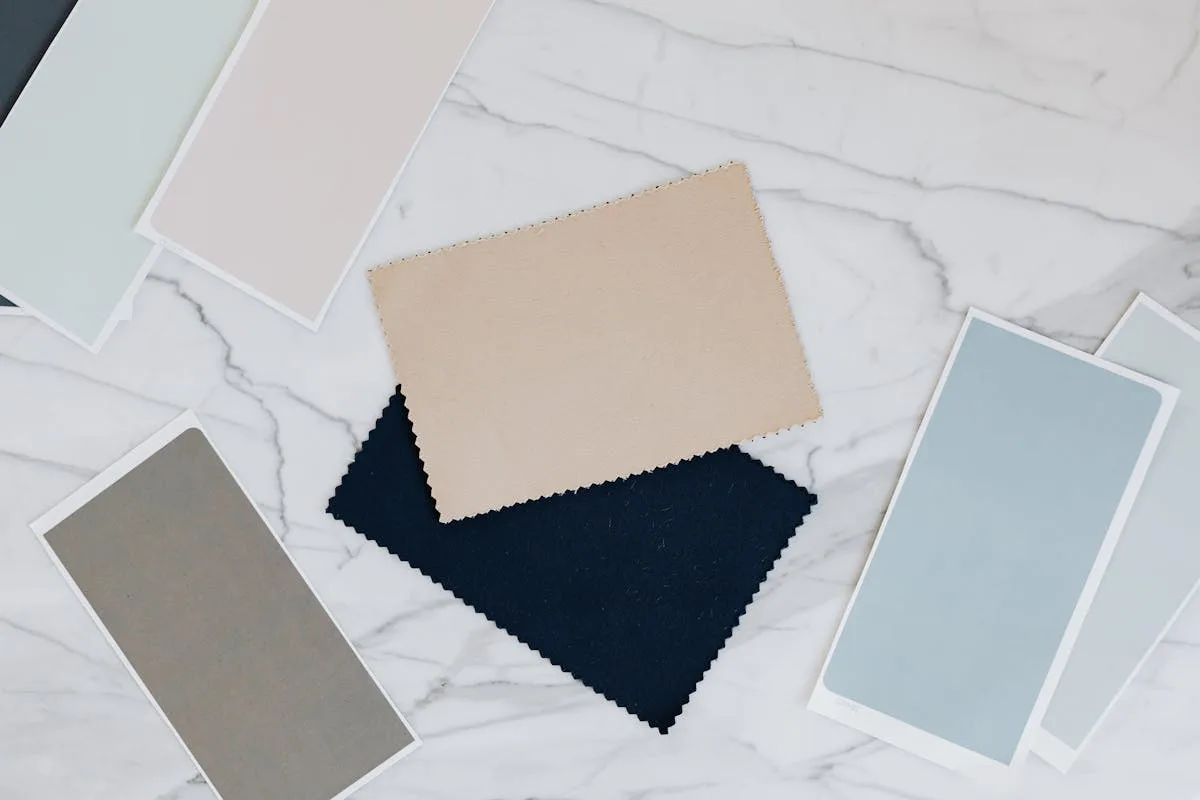
Sample policy is the cheapest hedge you have. Top brands sell sample swatches for $2 to $5, often refundable against a full order. If a brand will not let you test a sample first, walk away. The 30 seconds it takes to stick a swatch to your specific wall, in your specific lighting, prevents the worst install regrets that show up week three.
The picks
We installed and removed each of these in real rentals between 2024 and 2026, on a mix of smooth drywall, lightly textured walls, and one bathroom panel install. Lifespan estimates assume normal residential conditions and proper install (clean wall, cured paint, level application).
What to watch: the price. Tempaper runs roughly $5 to $8 per square foot, which on a 9×8 accent wall lands around $300 to $400. That is roughly half a month’s rent in a small Midwest city for one wall, so make sure it is the wall you actually want to look at every day.
Sample-friendly: yes, $5 per sample, refundable on orders over $200.
Sample-friendly: yes, $5 per sample, refundable on orders over $200.
What to watch: Target rotates RoomMates patterns fast, so the design you fall in love with at the showing may be discontinued by the time you finish your move. Buy the roll when you find it. Also: thinner vinyl shows wall texture more readily, and removal sometimes leaves more residue than premium brands. Smooth drywall only.
Sample-friendly: yes, $2 to $4 for in-store sample squares.
Sample-friendly: yes, $2 to $4 for in-store sample squares.
What to watch: large repeats mean overage matters. Their site publishes the repeat distance for each pattern, so use it; the $40 you save on a careful second order pays for the next sample swatch you order. Pricing runs Tempaper-range, $5 to $8 per square foot.
Sample-friendly: yes, $2 per sample.
Sample-friendly: yes, $2 per sample.
Best small-pattern and classic: NuWallpaper
NuWallpaper lives at Home Depot and stars in approximately every beginner peel-and-stick tutorial on YouTube. 6 mil vinyl, classic patterns (subway-tile, herringbone, small florals, faux-shiplap), reliable adhesive on smooth drywall. The patterns are forgiving of small alignment errors, which is exactly what you want on your first install when you do not yet know which corner you should have started in.
What we like: huge in-stock selection at big-box stores, easy returns, beginner-friendly patterns that hide install mistakes you will probably make on your first wall.
What to watch: large-scale patterns sometimes look slightly flatter in print than Tempaper or Chasing Paper. Best if you want classic and quiet, not a statement piece.
Sample-friendly: yes, $1.50 to $3 at Home Depot.
Best premium: Walls Republic
Walls Republic sits at the bridge between traditional designer wallpaper and renter-friendly peel-and-stick. 9 mil vinyl (heaviest on this list), professional-grade acrylic adhesive, a European-designer catalog with mural-style and large-scale prints. They also keep a paste-the-wall removable line for installs you expect to keep for 5+ years.
What we like: best vinyl body in the category, best removal performance on textured walls, mural-style options none of the other brands attempt.
What to watch: pricing is the highest on this list ($7 to $12 per square foot for the peel-and-stick line), and the catalog is small on purpose. You will not find 200 quick patterns here; you will find 50 considered ones, and you will know which is yours within ten minutes of browsing.
Sample-friendly: yes, $5 per sample, refundable.
Best for bathrooms: Tempaper (Bathrooms-Rated Line) or Wallpops
Bathroom installs need an adhesive class that survives daily humidity cycling. Tempaper’s bathroom-rated line uses a modified PSA tested for moisture, and Wallpops markets a similar moisture-tolerant adhesive. Both should still be installed on side walls or the vanity panel rather than directly behind a shower, and both benefit from a seam sealer (Roman or Polycell wallpaper sealer) at the edges.
Expect a 2 to 3 year lifespan in a regularly used bathroom; non-moisture-rated peel-and-stick fails much faster in this environment.
Best for textured walls: Walls Republic or Spoonflower Non-Woven
If your rental has orange-peel or knockdown texture, vinyl peel-and-stick of any brand will struggle eventually. The thickest vinyl helps; Walls Republic at 9 mil holds longer than thinner brands. The better answer is often to switch families entirely to non-woven prepasted (Spoonflower’s pre-pasted line is the standard pick), which uses a water-activated paste that fills in low spots of the texture.
For a renter on a heavy-texture wall, the choice is usually: accept a 1- to 2-year vinyl install with Walls Republic, or move to Spoonflower prepasted and get 3 to 5 years.
What to skip (and why)
Two categories underperform consistently.
The first is unbranded Amazon vinyl rolls, usually sold at $0.50 to $1.50 per square foot and described with phrases like “thick vinyl” without a mil specification. These often run 3 to 5 mil with a generic rubber adhesive that hardens, transfers to the wall, and yellows behind the seams within a year. They are also the most common source of “removable wallpaper damaged my walls” complaints in landlord forums.
The second is foam-backed self-adhesive wallpaper (often marketed as “3D textured peel-and-stick”). The foam backing looks impressive in the listing photo and feels luxurious when you install it, but the adhesive is invariably weak, the foam compresses over months and creates visible dents, and removal often pulls paint with the foam.
If you are spending under $50 for a whole accent wall’s worth of wallpaper, you are almost certainly buying one of these two categories. That is fine for a one-week party rental; it is not the move for a 12- to 24-month lease.
Buying tips
Five things worth doing before you place the order.
Order a sample first. Every brand on this list sells samples for $2 to $5, and the small spend catches the wrong color or pattern scale before you commit to $300.
Measure your wall and add 15 to 20 percent for large repeat patterns. The repeat distance is published on most brand sites; if it is not, ask customer service before ordering. A 60-inch repeat on a 8-foot wall means you have one full repeat and one partial, which requires careful seam planning.
Batch-match. Different production batches sometimes have slight color variations. Order your full quantity at once, from the same retailer, and check the batch numbers on the rolls when they arrive.
Check the cure status of your wall paint. Paint younger than 30 days gets a sample only. Major brands all spec a 30-day minimum cure; 60 days is safer.
Get the right tools. You need a level (a bubble level or laser line), a felt smoothing tool (most brands include one), a sharp utility knife with extra blades, a tape measure, and clean hands. The total tool spend is under $25 if you do not already own them.
Installation tips that boxes do not tell you
Standard install instructions cover the basics. These are the parts that matter for getting a clean, long-lasting install.
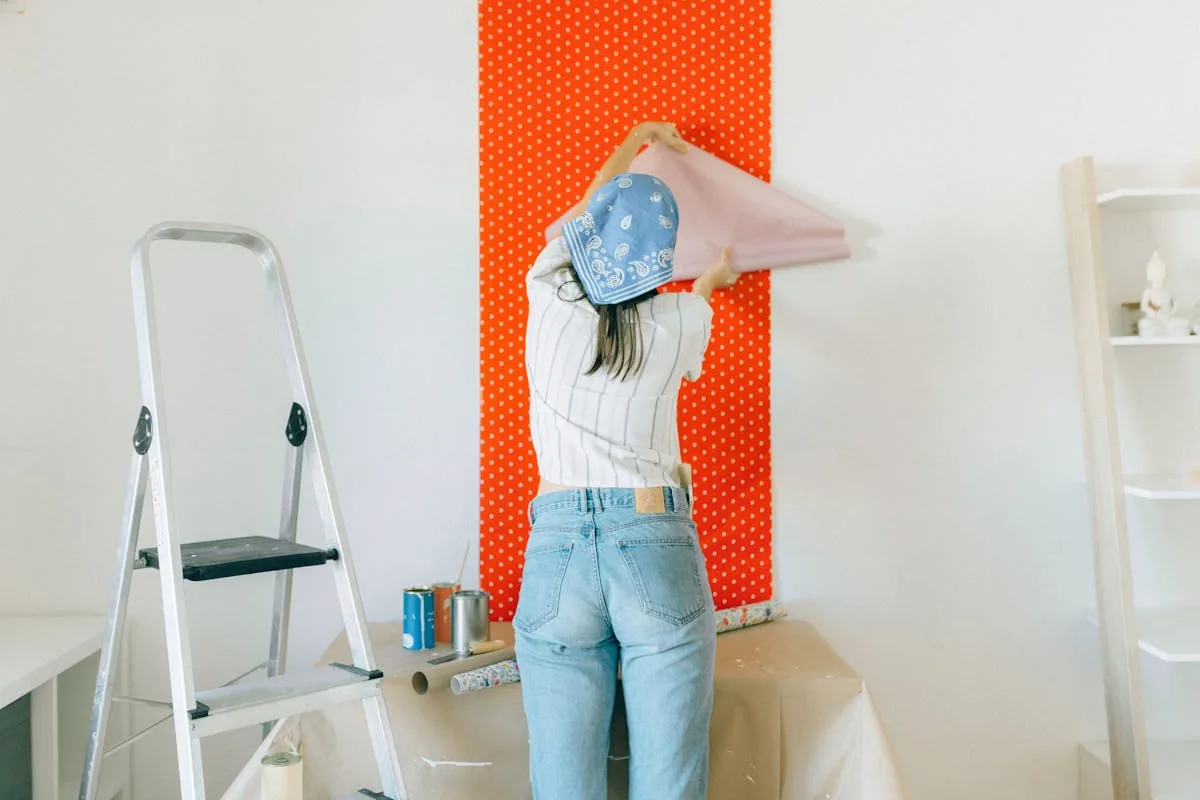
Start in a hidden corner if possible, and plumb the first panel with a level (rental walls are rarely truly plumb). Smooth from the center outward in a fan pattern, not top-to-bottom; centerward-out releases trapped air without creating long seam ripples. Overlap seams by 1/16 inch on most vinyl brands, but butt them flush on thinner vinyl that telegraphs overlap shadows.
Round outside corners by trimming the panel exactly at the corner edge with a sharp blade. Trying to wrap a corner with one continuous panel almost always creates a crease or air pocket that fails first.
For temperature, work in a room at 65 to 75°F. Cold rooms (below 60°F) reduce adhesive tack on first contact; hot rooms (above 80°F) can cause the panel to stretch and curl. Bathrooms with the shower running until install start are not the temperature you want; run the fan, let the room cool, then install.
Frequently asked questions about peel-and-stick wallpaper
Will cheap Amazon peel-and-stick really damage my wall?
Most of the time, yes, in small ways that add up to a deposit charge. The generic rubber adhesive on cheap unbranded vinyl hardens at low humidity, fuses to the paint film over months, and pulls paint off in patches on removal. Branded peel-and-stick (Tempaper, NuWallpaper, Chasing Paper, RoomMates, Walls Republic) uses acrylic PSA designed to release cleanly. The price difference between cheap and branded is usually $40 to $100 for an accent wall, which is a fraction of the average deposit-charge for paint damage.
How long does the best peel-and-stick wallpaper actually last?
Premium brands (Tempaper, Chasing Paper, Walls Republic) hold up well for 3 to 5 years on smooth drywall in normal indoor conditions. Mid-tier brands (NuWallpaper, RoomMates) run 2 to 4 years. Humidity, direct sunlight, and high-traffic zones cut all numbers by roughly half. For a 12- to 24-month lease, any brand on this list is plenty.
Can I install peel-and-stick wallpaper over existing wallpaper?
Not reliably. Existing wallpaper creates a multi-layer surface where adhesive bonds only to the top layer, and removal pulls both layers off together. The right move is to remove the original wallpaper first, prep the wall, and let any new paint cure 30 days before installing peel-and-stick.
What if my apartment has textured walls?
Vinyl peel-and-stick struggles on orange-peel and knockdown textures regardless of brand. Walls Republic at 9 mil performs best of the vinyls, but the more reliable answer for textured walls is to switch to non-woven prepasted (Spoonflower) or paste-the-wall removable. Our removable wallpaper for renters guide walks through the three adhesive families and which one fits a textured wall.
Is one brand really worth four times the price of another?
For a 12-month rental on smooth drywall with a quiet pattern, no. RoomMates at $1.50 per square foot will look fine and peel off clean. For a 36-month stay, a maximalist statement pattern, or a wall with any complication (texture, partial direct sunlight, mild humidity), Tempaper or Walls Republic at $5 to $8 per square foot pays back in lifespan and removal cleanliness. The premium brands also photograph noticeably better, which matters if you are selling the look on Instagram or just want it to feel like a real piece of interior design.
When you are ready to figure out where to put the wallpaper beyond the obvious accent wall, our peel-and-stick wallpaper ideas guide covers stair risers, closet interiors, and dresser drawers. And if wallpaper still feels like more commitment than you want, our renter-friendly wall decor roundup covers the lighter-touch methods. For the broader rental playbook across floors, ceiling, and bathroom, our renter-friendly decor hub ties the whole apartment together.
Done right, that NuWallpaper box on the kitchen counter ends up as a focal wall behind your bed, the YouTube tutorial finally closed, and the only thing left on the counter is a felt smoother and a half-empty roll of sample swatches.