That empty stretch of wall above your bed has been bothering you for three months, and you have been scrolling through Pinterest waiting for a poster you can afford to ship. Meanwhile, a $4 roll of washi tape sitting in your desk drawer can turn that wall into a focal point tonight, comes off without taking paint with it, and lets you start over the next week if you change your mind. Washi works for very specific things, in very specific places, and the people who try to do everything with it learn the hard way that it cannot hold weight. The people who use it for what it is good at end up with the best-looking accent walls in any renter group chat.
Below: what washi tape actually does on a wall, twelve specific ideas worth trying, the application trick that prevents lift-up, and the brands that hold their color longer than six months.
Washi started life in Japan as a low-tack masking tape made from rice-paper backing and a gentle acrylic adhesive. Translation: it holds firmly enough to stay up for months on cured paint, but releases without pulling color, leaving residue, or fading the wall behind it. Painters tape gives up at 14 days. Quality washi regularly holds for six to eighteen months without complaint.
The catch is that washi cannot carry weight. A 4×6 frame on a single strip of washi will release somewhere between two minutes and two days, and the resulting crash usually happens at 2 a.m. Washi is for graphic decoration, not structural mounting. Get that one rule right and the rest of the ideas below work cleanly.
12 washi tape wall decor ideas
The ideas worth your time. Each one takes ten minutes or less and uses one to four rolls.
1. Faux picture frames around posters and prints
The most-used washi-on-wall idea, and the one that converts skeptics. Tape a clean rectangle of washi around any poster, print, or unframed art directly on the wall. Half-inch widths work for small prints, one-inch widths for larger pieces. Corner overlaps look intentional; do not try to miter them perfectly.
2. Faux wainscoting or chair-rail molding
A continuous horizontal stripe of washi at chair-rail height (about 36 inches from the floor) turns a flat builder-beige wall into a paneled one visually. Use a wider washi (1 to 2 inch widths) and a level to keep the line true. Best in entryways and dining areas.
3. Geometric accent shapes
A washi-tape mountain silhouette above a desk, a triangle gradient above a crib, an oversized chevron stripe across a stairwell. The pattern looks more deliberate than it is hard to make. Sketch the outline lightly with a pencil first, then run the washi along the lines.
4. Headboard outline above the bed
No headboard in your rental? Tape a rectangle or arched outline directly to the wall behind the bed, sized to the width of your mattress and 24 to 36 inches above the mattress top. Black or gold washi reads as the most finished version of this.
5. Gallery anchors for unframed prints
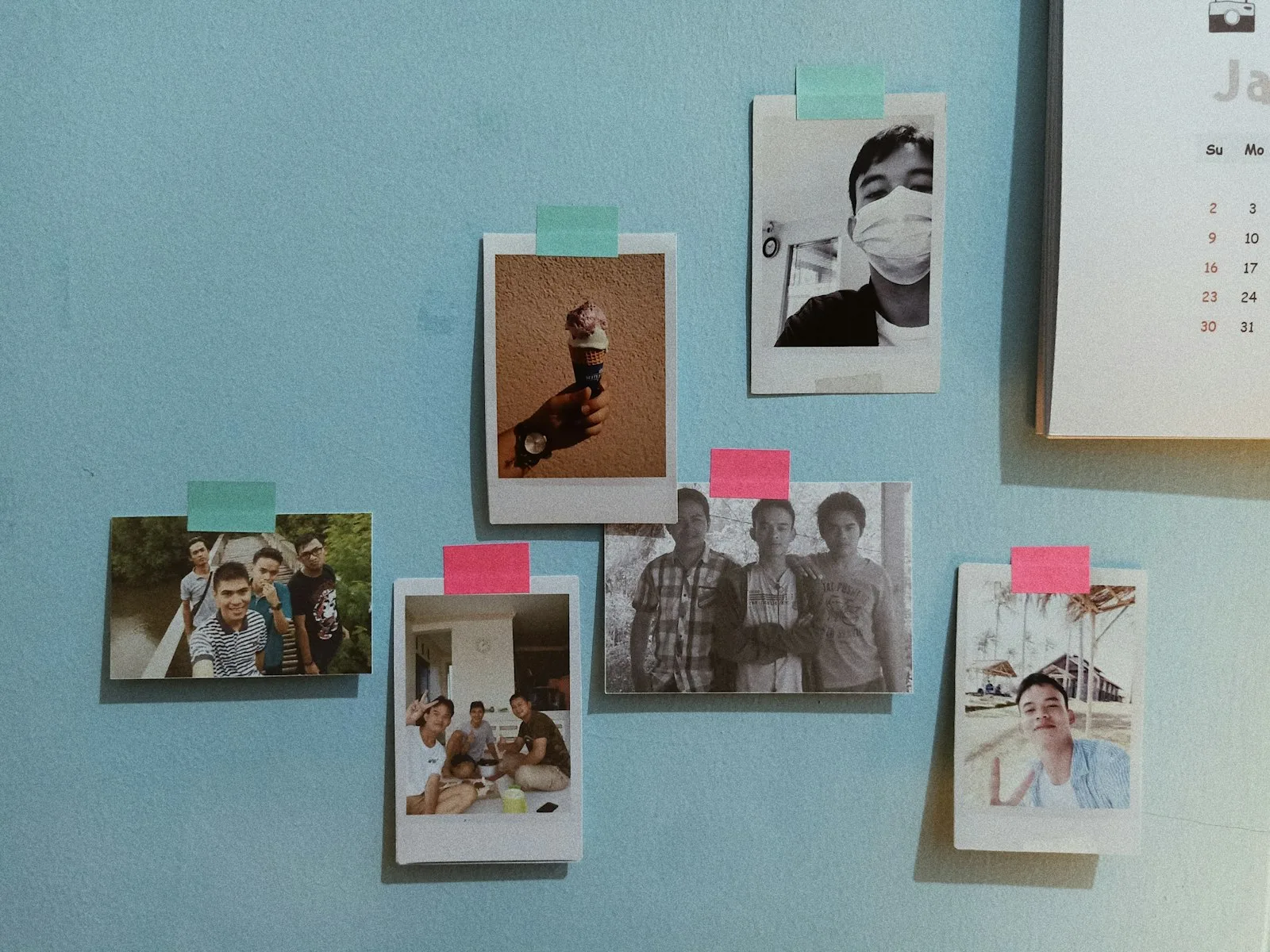
Two crossed strips of washi at the top corners of a postcard, polaroid, or paper print under 4×6 inches hold the piece flush against the wall and replace what would have been a nail. Mix several at varied heights for a free, swap-out-anytime gallery wall. The morning kitchen-coffee version of this: a constellation of trip postcards above the breakfast counter that you can rearrange in three minutes when you get bored.
6. Doorway and window trim
A strip of washi traced around the inside edge of a doorway or window frame gives the trim the look of a painted accent. Works especially well for kids’ rooms or office nooks where the rest of the trim is builder-grade.
7. Stair riser stripes
If your rental has a staircase (or you have a Billy bookcase or Kallax with vertical risers), a strip of washi across each riser face turns plain wood into a pattern. Works with same color across all risers, or graduated colors for an ombré effect.
8. Mini grid behind a desk
A small section of grid pattern (1-inch spacing, intersecting horizontal and vertical washi strips) behind a desk creates the look of grid paper at scale. Great for office walls and creative spaces.
9. Calendar or quote display
A vertical washi-tape strip is a built-in frame for a paper calendar, a printable quote, or a rotating display of postcards. Tape the strip to the wall, then use small additional washi pieces to clip each item to the strip. Easy to swap weekly.
10. Light switch and outlet plate trim
A thin strip of washi around the rectangular edge of a switch plate or outlet cover gives builder-grade plastic the look of a small accent. Small change, surprising payoff in entryways and bedrooms.
11. Kids’ room growth chart
A vertical washi line up a doorframe with marked heights creates a removable growth chart. No drilling into the trim, lifts off cleanly when the kid outgrows the apartment.
12. Holiday or seasonal swap-outs
Washi is the rare wall decor format you can change every six weeks without commitment, without spackle, and without explaining yourself to your landlord. A row of small triangles along a mantel for the holidays, a horizontal stripe in seasonal colors above the entryway, an outline around an existing piece in a new color. Take the whole thing down in twenty minutes when the season turns.
If you find yourself reaching for washi to hang something heavier than a postcard, switch to Command picture-hanging strips. That is what they are for.
How to apply washi tape so it sticks (and comes off clean)
Five steps. Skip them and you get edge lift in week two.
Clean the wall surface with a dry microfiber cloth. Skip rubbing alcohol on washi (it can over-strip the paint surface and cause adhesion problems on aged paint).
Check that paint on the wall has cured for at least 30 days. Washi is more forgiving than peel-and-stick wallpaper here, but uncured paint still lets adhesive bond to paint film instead of the wall.
Cut the washi to length before pressing it down. Tearing freehand creates uneven adhesion at the torn edge.
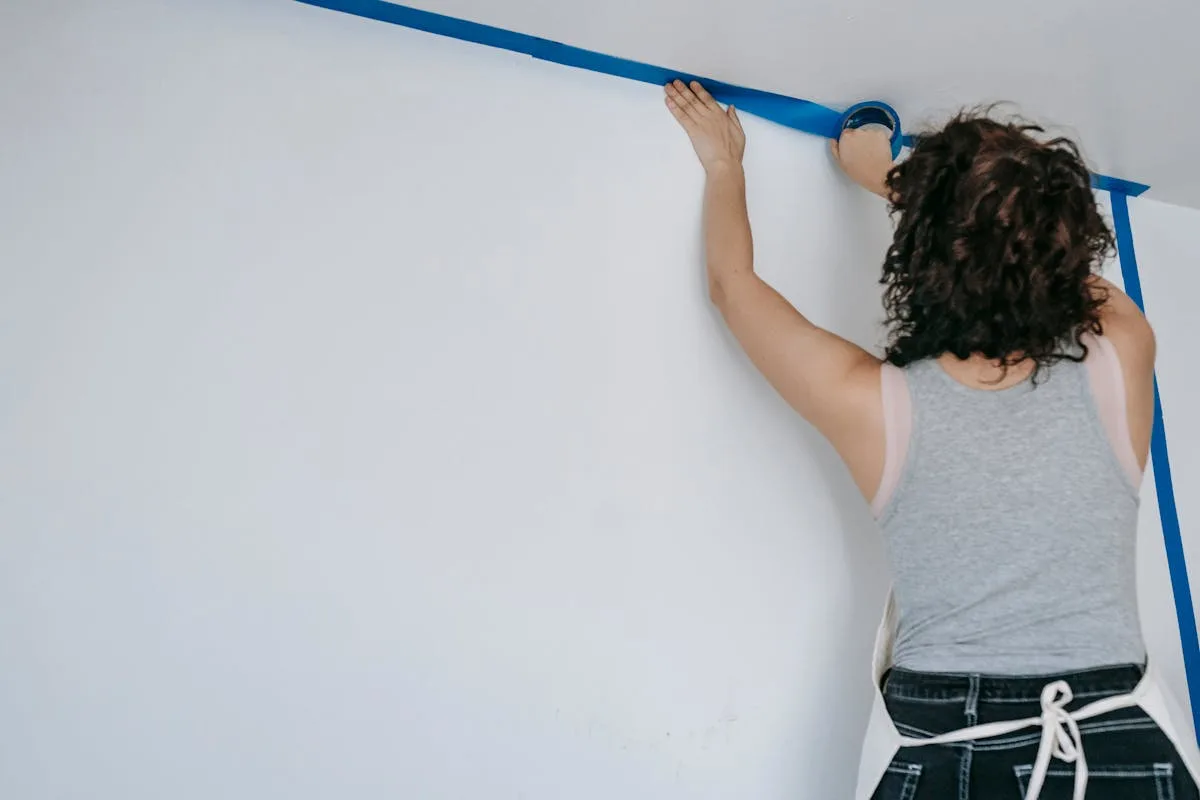
Press, do not stretch. Stretching the tape during application is the single biggest cause of edge lift. Lay the tape flat, then press from the center outward with a finger or a soft burnisher.
For long horizontal lines (faux chair-rail), use a level and apply in 2- to 3-foot sections, pressing each before moving to the next.
Removal is the easy part: pull at a low angle (close to parallel with the wall), slowly. Washi comes off cleanly from cured paint on the first pull. If a small piece of adhesive transfers, a damp cloth and gentle pressure lifts it.
Best washi tape for wall decor
The brands that hold up past six months on a wall.
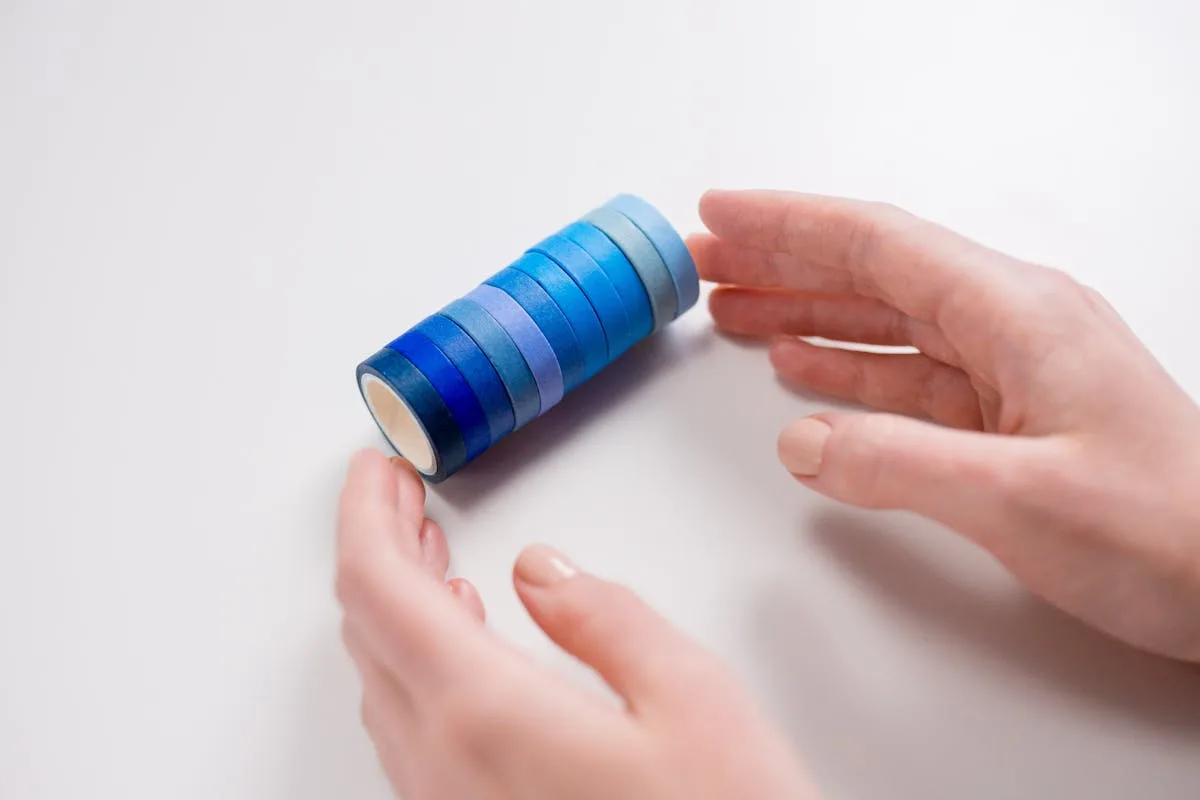
For premium quality, mt washi tape (the original Japanese brand) is the gold standard. The adhesive is gentle, colors stay true under indirect sunlight for a year or more, and the paper backing tears cleanly. Available in widths from 6mm to 50mm. Pricing runs $4 to $8 per roll.
For mid-tier, BGM (also Japanese-made) and Scotch Expressions (3M, widely stocked) both perform well. Scotch is the easiest to find in US big-box stores; BGM has the better pattern library. Both run $2 to $5 per roll.
For wider widths (30mm to 50mm) needed for faux molding and chair-rail effects, the mt washi line offers the most reliable color and adhesion. Cheap unbranded wide washi often lifts at the edges within weeks.
What to skip: glitter-coated washi. The glitter coating creates uneven adhesion and the underlying tape sometimes pulls paint or leaves shiny residue when removed. Looks great for one week, becomes a problem by month three.
What washi tape cannot do
Three honest limits.
It cannot hold weight. Anything heavier than a postcard or paper print needs Command strips or hooks.
It does not work well on very textured walls. Orange-peel and knockdown textures only contact the high points of the texture, which means the adhesive grip is patchy and edges lift faster.
It fades in direct sunlight. South-facing windows accelerate color loss; pastel and bright washi tape can shift by six months in heavy sun. Plan accordingly or rotate seasonal palettes.
Frequently asked questions about washi tape wall decor
Will washi tape damage rental wall paint?
Almost never, on cured paint. The acrylic-based adhesive on quality washi is rated as low-tack and designed to release without paint transfer. The exception is uncured paint (under 30 days old), which can be vulnerable to any adhesive. Glitter-coated washi and very cheap unbranded brands are also riskier than mt, Scotch Expressions, or BGM.
How long does washi tape stay on a wall?
Quality washi (mt, BGM, Scotch Expressions) holds for six to eighteen months in normal indoor conditions. Direct sunlight and high humidity (bathrooms) shorten that. Cheap glitter-coated washi often starts lifting within four to six weeks.
Can washi tape hold a small frame on the wall?
No, and the failure mode is dramatic. Washi has a low adhesion class by design; a 3×5 frame will release within minutes to days, depending on weight. For hanging frames, use Command picture-hanging strips instead. Washi works as a decorative outline around a frame already mounted some other way.
What is the best washi tape width for faux molding?
For chair-rail or wainscoting effects, use 1 to 2 inch (25 to 50mm) widths. Thinner widths read as smaller graphic accents rather than architectural features. The mt washi 30mm and 50mm lines are the most reliable choices for these wider applications.
Can I use washi tape on a textured wall?
You can, but expect a shorter lifespan and more edge lift. Washi adheres to high points of the texture and not the low spots, so the bond is patchy. Smooth painted drywall is the surface that gets you the best lifespan.
That empty stretch above the bed does not have to wait three more months for a Pinterest poster that ships from Iceland. A $4 roll, ten minutes, and the wall has a focal piece you actually made yourself, peels off clean the day you move, and never costs you a square inch of deposit. When you are ready to hang something heavier than paper, our no-nail hanging guide covers Command strips and the methods that hold real weight. And if washi outlines lead you toward bolder accent moves, our renter-friendly wall decor roundup gathers the rest of the low-damage toolkit.
Washi handles the lightweight stuff. When the bigger projects come up (floors, backsplash, ceiling), our renter-friendly decor hub is where the rest lives.
Get the renter's first-apartment checklist
Small-space decor ideas for renters, straight to your inbox.
You opened a box of NuWallpaper on the kitchen counter, the YouTube tutorial is paused on the install step, and you are trying to figure out which side of the panel actually peels first. There is also a roll of generic floral peel-and-stick someone gave you for Christmas, the one with a name you cannot…
The roll of peel-and-stick wallpaper just got delivered, you sized it for the accent wall behind your bed, and standing in front of that wall you are now thinking the bedroom does not actually need an accent wall. The pattern is too good to return, the bedroom is too tired for it, and you are…
You signed the lease, walked into the empty studio, and clocked the wall you cannot drill into. The long one across from the kitchenette, the one your couch has to live against. Everything you put on that wall is going to be either Command-strip light, or it is not going up at all. And the…
Peel-and-stick crown molding adds high-end ceiling trim to a rental with no saw, no nails, no miter cuts. Six picks that hold and an install walkthrough.
This post contains affiliate links. If you buy through one I may earn a small commission at no cost to you. The first apartment where I tried this was a 540-square-foot Chicago studio with a galley kitchen and a bathroom roughly the size of a coat closet. The bathroom floor was beige sheet vinyl, lifting…
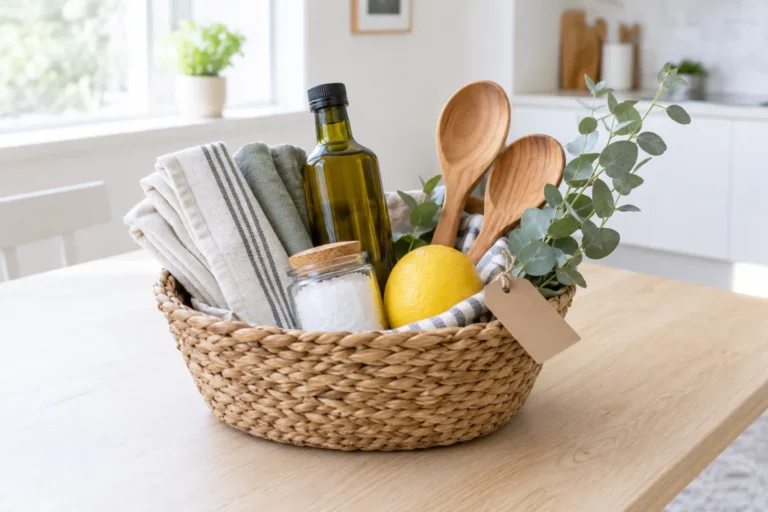
Nine housewarming gift basket ideas for a new apartment, from a kitchen starter basket to a coffee lover basket, plus how to pack a basket so it looks full.
Manage Consent
To provide the best experiences, we use technologies like cookies to store and/or access device information. Consenting to these technologies will allow us to process data such as browsing behavior or unique IDs on this site. Not consenting or withdrawing consent, may adversely affect certain features and functions.
Functional
Always active
The technical storage or access is strictly necessary for the legitimate purpose of enabling the use of a specific service explicitly requested by the subscriber or user, or for the sole purpose of carrying out the transmission of a communication over an electronic communications network.
Preferences
The technical storage or access is necessary for the legitimate purpose of storing preferences that are not requested by the subscriber or user.
Statistics
The technical storage or access that is used exclusively for statistical purposes.The technical storage or access that is used exclusively for anonymous statistical purposes. Without a subpoena, voluntary compliance on the part of your Internet Service Provider, or additional records from a third party, information stored or retrieved for this purpose alone cannot usually be used to identify you.
Marketing
The technical storage or access is required to create user profiles to send advertising, or to track the user on a website or across several websites for similar marketing purposes.