Peel-and-Stick Wallpaper Ideas: 12 Places to Use It That Are Not the Obvious Accent Wall
The roll of peel-and-stick wallpaper just got delivered, you sized it for the accent wall behind your bed, and standing in front of that wall you are now thinking the bedroom does not actually need an accent wall. The pattern is too good to return, the bedroom is too tired for it, and you are looking around the apartment wondering where else this could go. The answer is more places than you would guess. Peel-and-stick works on any flat, smooth, cured surface, which includes stair risers, drawer interiors, closet backs, ceilings, and the inside face of a vanity cabinet. Most renters never try any of these, which is why most rental apartments still look like every other rental apartment.
Below: twelve uses for peel-and-stick wallpaper that are not the headline accent wall, ranked rough from low-stakes weekend project to ambitious afternoon. If you have not picked a brand yet, our best peel-and-stick wallpaper roundup ranks the brands that actually hold up, and our removable wallpaper for renters guide covers the three adhesive families and which one fits your wall.
Quick rules before you start
Three things to check before you cut into the roll. Wipe the surface clean with a dry microfiber cloth, and skip rubbing alcohol on any freshly painted area. Wait 30 days after any new paint job, 60 if you want to be safe; uncured paint pulls off with the wallpaper at removal. Install in a moderate room (65 to 75°F, 40 to 70% relative humidity), not a cold garage or a steamy bathroom right after a shower.
Where to use peel-and-stick wallpaper besides the accent wall
1. The accent wall (done right)
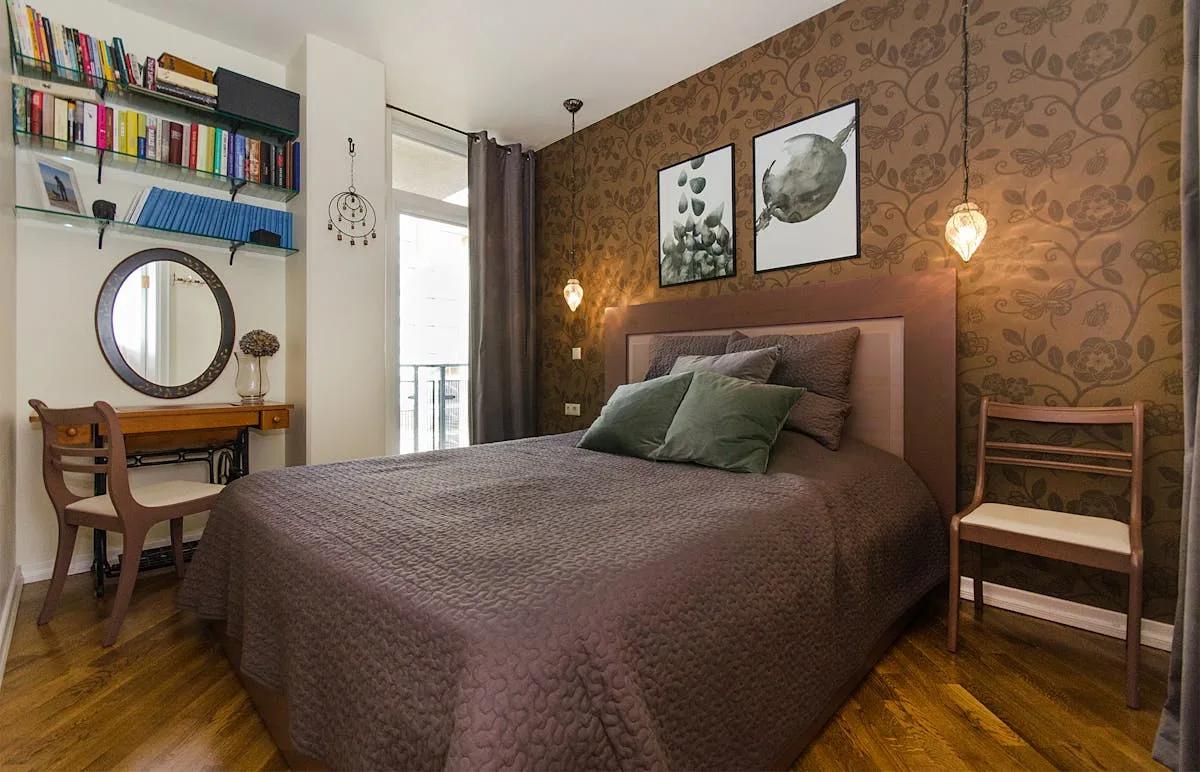
The obvious one, with a setup that makes it land harder. Pick one wall, not two. Pick the wall most often photographed (behind the bed, behind the couch, behind the dining table). Order 15 percent overage on the pattern repeat. Plumb the first panel with a level. The accent wall fails when it competes with too many other visual elements in the room; clear the wall of frames first, install the wallpaper, then add back at most two or three pieces.
2. Stair risers
A single 24-inch panel of peel-and-stick wallpaper covers eight to twelve risers when cut into strips matched to riser height (most US residential risers are 7 to 8 inches). The treads stay untouched; only the vertical face of each riser gets the pattern. Small patterns work best (large repeats break at the riser-tread junction).
If you do not have stairs, the same technique works on the vertical risers of a Billy bookcase, a Kallax, or any open-shelf unit.
3. Inside dresser drawers
The interior floor of a drawer is an ideal peel-and-stick surface: flat, smooth, dry, completely out of direct sunlight. A printed-bottom drawer adds a small surprise every time you open it and protects the wood from clothing dye transfer. One roll lines all six drawers of a typical IKEA Hemnes.
4. Closet interior back wall
A floor-to-ceiling closet back wall covered in a maximalist pattern transforms an IKEA Pax or a builder-grade reach-in into a moment. The print stays hidden behind a closed door, so this is the safest place to test a pattern you love but would not commit to in the bedroom. Best wallpaper test environment in your entire apartment.
5. Above the bed (as a faux headboard)
No headboard in your rental? A rectangle of peel-and-stick wallpaper sized to the width of your mattress, applied to the wall behind the bed at headboard height (about 24 to 30 inches above the mattress top), reads as a faux upholstered headboard. Quiet textural patterns (linen, grasscloth, small geometric) work better here than busy florals; the wallpaper has to share the visual weight with the bed.
6. Ceiling over the bed
A single panel of wallpaper directly above where you sleep adds a layer most rentals never have. Quiet repeating patterns work; large bold prints overhead get overwhelming when you are lying down looking up. This is a two-person install (the panel will crease on a one-person ceiling job) and the ceiling paint needs to be fully cured.
7. Half-wall under chair-rail height
A horizontal install from the floor to about 36 inches up creates a paneled, wainscoted look without the wood. Cap the top edge with a thin washi-tape line in a complementary color so the transition reads intentional. Entryways and dining areas show it off best; small bathrooms benefit too if the wallpaper is moisture-rated.
8. Bookshelf or bookcase back
The back of a Billy bookcase, a Kallax, or any open shelving unit is plain particleboard waiting for a pattern. Removing the back panel (most IKEA units have a thin tackable back), wallpapering it on a flat surface, then reinstalling it is the cleanest method. Or wallpaper the back in place if it is permanently attached.
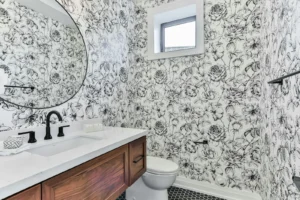
9. Bathroom vanity face
The flat front face of a vanity cabinet (the door fronts and surrounding panel) takes peel-and-stick wallpaper well, transforming a builder-grade vanity without painting. Avoid the area directly around the sink, where standing water and soap residue will lift edges. Pair with a clear sealer (Roman wallpaper sealer) on the edges for moisture resistance.
10. Kitchen backsplash mini-section
For a short-term rental upgrade, peel-and-stick wallpaper as a kitchen backsplash hides dated tile or a stained wall behind the stove. Use a moisture-rated brand (Tempaper bathrooms-line or Wallpops moisture-tolerant) and seal the seams. Plan for 1- to 2-year lifespan; high-grease zones above a gas range require more frequent replacement.
11. Refrigerator side panel or appliance face
The side of a refrigerator or the front of a dishwasher panel takes peel-and-stick wallpaper because the surface is smooth metal, which is actually a stronger PSA bond than painted drywall. Removable, repositionable, and a way to add personality to a rental kitchen without modifying the fixed surfaces.
12. Door interior face
The interior face of an apartment front door, a closet door, or a bedroom door is a vertical surface most renters ignore. A pattern on the back of the front door greets you every time you come home; on a closet door, it adds a moment of pattern that closes away. Apply to a clean, cured painted door. Avoid the exterior face of any door that gets weather, sun, or frequent touch.
If a place is not on this list, it usually means one of three things: the surface is too rough (uncured texture, exposed wood grain), too wet (showers, sinks), or too hot (radiator covers, the back of an oven). Peel-and-stick wallpaper requires a flat, smooth, dry, cool surface; anywhere those three are true, it will probably work.
Surface and prep notes (the gotchas)
Textured walls (orange-peel, knockdown) fight peel-and-stick of any brand. Adhesive only contacts the high points of the texture, which means seams lift and edges curl within months. If your walls are textured, switch to non-woven prepasted (Spoonflower) or paste-the-wall removable wallpaper.
High-traffic risers (a heavily used staircase) wear faster than wall installs because shoes and pets brush against them daily. Plan for a 1- to 2-year lifespan on stair risers rather than the 3- to 4-year accent-wall baseline.
Bathroom humidity is the natural enemy of pressure-sensitive adhesive. Even moisture-rated peel-and-stick fails faster than vinyl ratings suggest in a daily-shower bathroom. Side walls and vanity panels survive longer than walls directly behind a shower.
On pattern scale: small surfaces (stair risers, drawer interiors, switch plates) need small repeats under 12 inches; large repeats break visually at the edges. Closet interiors and bookshelf backs hide the pattern by default and reward maximalist choices. Ceilings benefit from quiet repeating patterns. Half-walls and accent walls scale to the room.
Frequently asked questions about peel-and-stick wallpaper ideas
Where should I avoid using peel-and-stick wallpaper?
Three places consistently fail: textured walls (orange-peel and knockdown), wet zones (directly behind a shower, around a sink), and high-heat areas (radiator covers, the back of an oven). Also avoid uncured paint (less than 30 days old) on any surface. Everywhere else, peel-and-stick is fair game.
Can I peel-and-stick wallpaper a popcorn ceiling?
No. Popcorn texture is the worst possible surface for PSA: adhesive only touches the high points of the texture, the points crumble under any pulling force, and removal pulls texture off in chunks. Skip ceilings entirely if they are textured; smooth-painted ceilings only.
Will peel-and-stick on a drawer or cabinet show wear?
Drawer interiors hold up indefinitely because nothing rubs against them. Cabinet faces (vanity, closet doors, refrigerator sides) survive 3 to 5 years in normal use. Surfaces touched daily (a heavily used front-door interior face) show wear at the edges within a year.
How do I match a pattern across stair risers?
Cut one strip per riser, all from the same pattern repeat. If the repeat is small enough that each riser gets one full repeat, perfect alignment is easy. For larger repeats, treat each riser independently rather than trying to match across all of them; the visual break at each tread reads as intentional.
Can I use peel-and-stick wallpaper outdoors or on porches?
No. Sunlight degrades the print, temperature swings break the adhesive bond, and rain or humidity destroys the vinyl. Peel-and-stick is indoor-only, room-temperature only.
Standing in front of that wall behind your bed, you can save the roll for it or save it for somewhere the brand never thought of. A closet you have not opened in months, a drawer that has been beige since the day you signed the lease, the back of the front door that you walk past every time you come home. The wall is the obvious move; the second spot is the one that makes the rest of the apartment feel like yours. When you are ready to compare specific brands by vinyl gauge and lifespan, our best peel-and-stick wallpaper roundup covers the names worth ordering; for the lighter-touch decor options that pair with a wallpapered wall, our renter-friendly wall decor guide rounds those up.
Once the wallpaper is up and the rest of the apartment is calling, our renter-friendly decor hub covers floors, ceiling, bathroom, and the deposit-saver checklist.