This post contains affiliate links. If you buy through one I may earn a small commission at no cost to you.
You took a shower in the rental bathroom, walked out to brush your teeth, and noticed the seam above the toilet. The roll you put up six weeks ago, the one that looked perfect on day three, is now curling at the corner about an inch and a half, and the print near the vanity feels tacky to the touch. It rained in your city for ten days straight, the fan in your bathroom is the kind that takes forty-five seconds to even start, and the wallpaper is the part of the install that gave up first.
That was my Austin half-bath in 2022. I have also had the win scenario. In a Chicago studio four years earlier, I ran a Tempaper print on an 8-foot vanity wall through fourteen months of daily showering, no seam lift, clean removal at move-out, full deposit back.
That was four bathrooms ago. Two of those installs held the full lease. The Austin one lifted in week six and I pulled it down on a Saturday. Below are the five brands I would actually put up again, what I would skip, the install moves that double the hold time, and the honest spec the listings will not show you.
If you have not picked a wallpaper family yet, the removable wallpaper for renters breakdown of the three adhesive types is the first stop. This guide assumes you are committed to peel-and-stick and need to make it work in a humid room.
Here is the part most brand pages quietly skip. No mass-market peel-and-stick wallpaper is rated waterproof. Even the brands that show their prints in bathroom photography publish, in their own FAQs, that the film is moisture- and steam-resistant, not waterproof, and that the install belongs on a vented wall away from direct water. That is the actual category. There is no secret moisture-rated SKU sitting one click deeper in the catalog.
The two specs I check before buying anything now: does the brand publish a bathroom recommendation in writing on the product page or FAQ (most do not, and the ones that do are the ones worth your money), and does it ship a cheap sample. The first protects you from the listing-photo trap. The second protects you from buying $300 of wallpaper in a print that lands very differently under bathroom lights than under a softbox.
The 5 brands I would buy again
What to watch: samples are final sale, not refundable, even when you order the full roll. Build the sample cost into the budget rather than assuming a credit back. Bathroom photography on the brand site is aspirational; verify each pattern on the FAQ for the moisture-resistant note before you commit.
What to watch: the catalog rotation is real, so when you find a pattern that fits the room, buy the rolls you need that week. Returning two months later and finding the SKU discontinued is the standard outcome.
What to watch: swatches run six dollars per piece, not the two-dollar number some posts repeat. Build the sample cost in if you are testing four patterns before committing.
What to watch: this is the brand to ignore if your bathroom is a full bath with a daily shower. RoomMates’ standard line is not built for the steam cycling of a shower-run room, and pushing it there is the single most common reason people write off peel-and-stick wallpaper entirely.
What to watch: install runs slower than peel-and-stick because you wet the back of each panel. The visual lands closer to traditional wallpaper than to a vinyl decal. If speed is what you came for, this is not it.
What I would actually skip
Two categories underperformed for me consistently in a bathroom and I would not buy either again.
The first is any unbranded Amazon roll marketed as “waterproof” without a manufacturer page to back the claim. The cheap end of this category ships with a rubber-based adhesive that hardens in humidity cycling, yellows behind the seams within a few months, and transfers to the wall on removal. The price (often twenty to forty dollars for a full roll) is half the budget-tier branded option, and the install life is roughly one-quarter as long. Worse, the listings that score best in Amazon search have been review-stuffed from the same three SKU families for years. Trust no listing whose brand name returns zero hits outside the platform.
The second is foam-backed self-adhesive wallpaper, marketed in some catalogs as “3D textured peel-and-stick”. The foam absorbs steam, compresses unevenly across the panel, and creates visible dents within weeks. Removal tends to pull paint with the foam more often than vinyl removal does. Foam panels can work in a dry living room. They do not work in a bathroom.
Where peel-and-stick actually lives in a bathroom
Not every wall in a bathroom is a candidate. The five zones below are ranked from easiest to hardest, and matching your install to the right zone is what turns a six-week edge curl into a two-year vanity wall.
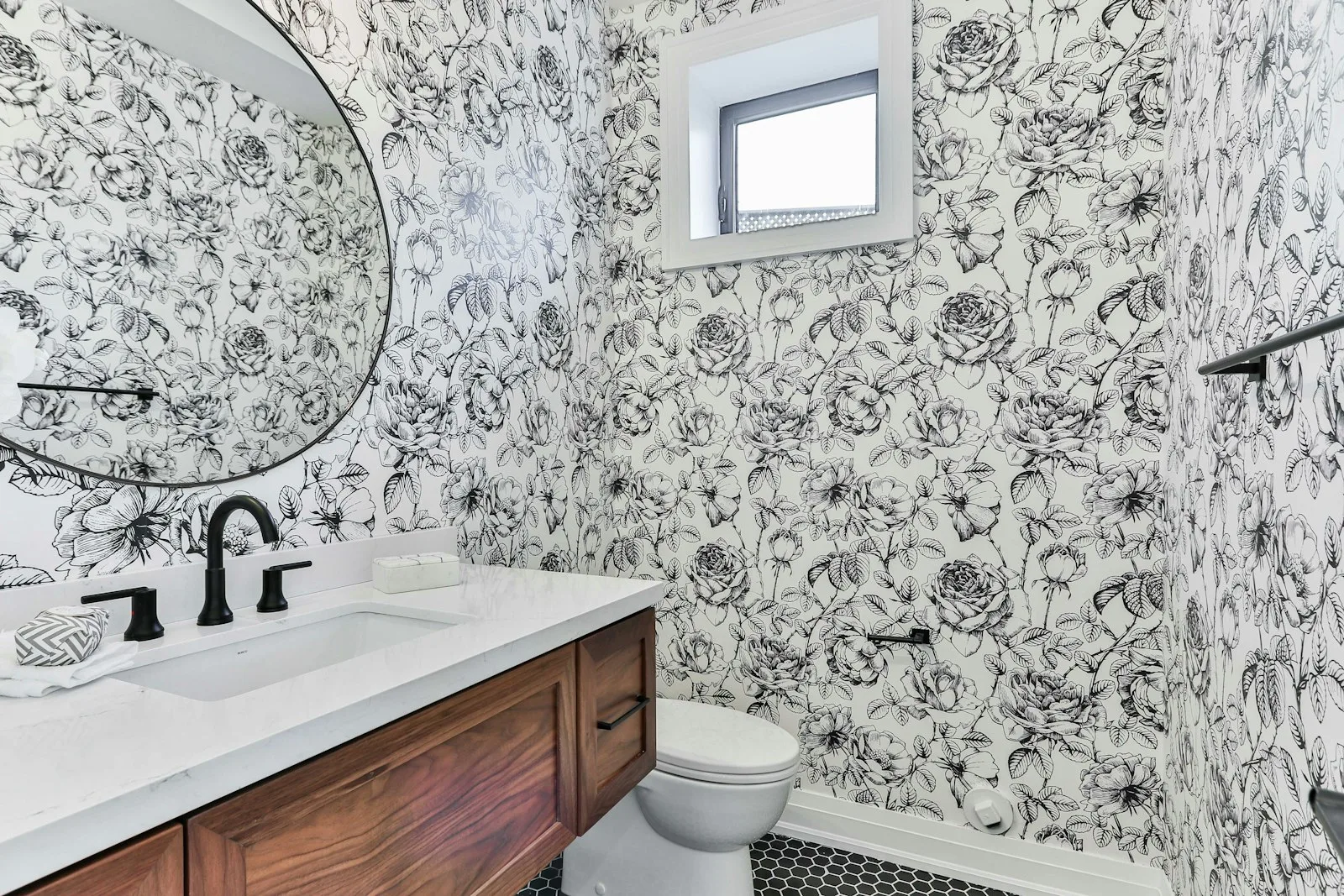
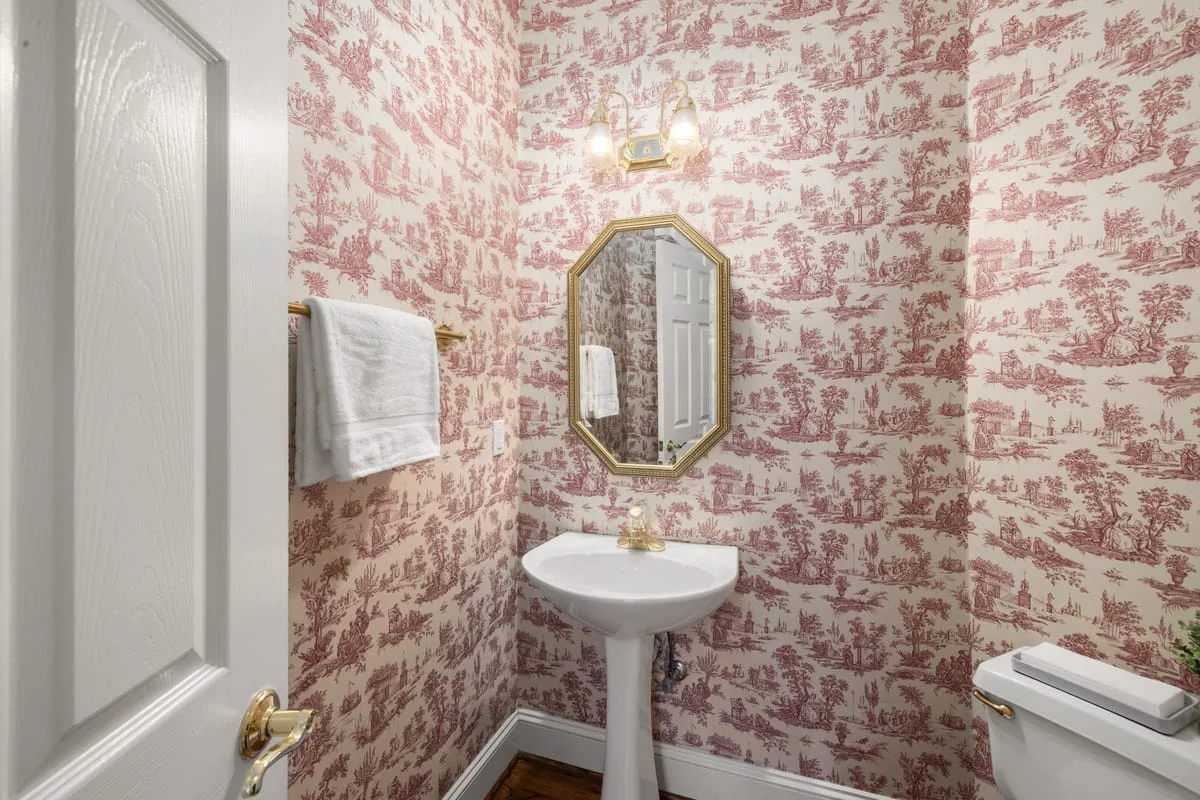
1. Vanity wall (best). The wall behind the sink and mirror is the safest bet in any rental bathroom. It sees humidity but no direct splash, the wall is at room-low height (no ceiling contact), and the visual impact of a patterned wall behind the mirror is the strongest decor move in the room. Most of my best bathroom installs are vanity-wall installs.
2. The half-wall above wainscoting or tile. If your rental bathroom already has tile or wainscoting halfway up the wall, the strip of drywall above it is a perfect peel-and-stick zone. The tile takes the direct splash, the drywall above sees only ambient humidity, and the visual reads as a designed half-wall rather than a covered wall.
3. Toilet wall. Behind and to the side of the toilet sees ambient humidity but no splash zone. Same install rules as the vanity. Visual impact is lower (the toilet sits in front of it), so pick a pattern that reads from a step back rather than at close inspection.
4. Bathroom ceiling (medium-hard). Peel-and-stick on a bathroom ceiling can be a strong visual move (closes the room in, adds drama overhead). It is also harder to install (gravity working against you on the first thirty minutes of adhesion) and slightly higher risk for steam contact, since heat rises. Run the fan for the first hour after the install no matter the brand.
5. Behind the shower (skip). The wall directly behind the shower head and within three feet of the shower edge sees direct splash and standing condensation. No peel-and-stick brand holds reliably in that zone for more than a few months. Leave that wall to tile and put the wallpaper on the vanity side of the room.
Install moves that double a bathroom hold
The brand decides a lot. The install decides the rest. Five moves do most of the work.
Cure the paint thirty days minimum. Adhesive bonds to fully cured paint film. Bathroom installs on day-old paint are the most common cause of premature failure I have seen. If you moved in this week and the landlord painted last week, wait.
Run the bathroom fan for two hours after the install. Lower humidity in the first forty-eight hours lets the adhesive fully bond before the first steam cycle hits it. If your rental does not have a working fan, open the window and aim a small box fan at the wall for the same window. The first two days are most of the install life.
Seal vertical seams with a real wallpaper seam-repair adhesive. Roman 3 oz Stick-Ease and Zinsser SureGrip Seam & Repair are the two products built for this, both around $7 to $9 at the hardware store. Apply a fine bead along each vertical seam with a fingertip applicator, then let it dry twenty-four hours before the next shower.
Install in the 65 to 75°F window. Adhesive cure temperature matters more than ambient bathroom feel. Run the fan, leave the door open for an hour to equalize the room with the rest of the apartment, then install in the cool window before closing the door.
Use cleaners the brand allows. The bathroom-tolerant brands all publish a short list of safe cleaners on the FAQ. A damp microfiber with mild dish soap usually covers it. Ammonia and bleach wipes dull most vinyls within a few months, and there is no recovery once the print goes flat.
What this costs
For a typical 5-by-8 vanity wall (40 square feet, the most common bathroom install zone):
Budget tier (WallPops, RoomMates in a powder room): $60 to $120 in wallpaper
Mid-tier (Spoonflower pre-pasted, mid-print Chasing Paper SKUs): $150 to $250
Premium tier (Tempaper, top-pattern Chasing Paper): $200 to $360
Tools (smoother, sharp utility knife, seam-repair tube): $25 to $40 if you do not already own them
The half-bath off the entry is the cheapest install in any rental because budget tier works there. The full bath with a daily shower is where premium pays for itself: the wallpaper that runs $300 for fourteen months works out to $21 a month, less than most renters spend on a single throw pillow they will not keep.
The renter parts no one mentions
Document the wall before you start. Take five photos of the existing wall with the time-stamp on. Peel-and-stick on a wall with pre-existing damage you did not cause is a fine outcome at move-out; on a wall where the damage was not photographed, it can read as a cover-up. Send the photos to yourself in an email rather than leaving them only in the camera roll.
Tell the landlord at move-in if you plan to do this. A texted “I am putting peel-and-stick wallpaper on the vanity wall, here are photos of the existing paint” puts you on the record. Most landlords I have asked have not minded; one asked me to leave it down because the next tenant liked it.
Save one roll in a closet for the full lease. Patterns rotate fast in this category, and a same-batch replacement for a torn corner reads invisible against the wall. A patch from a new production run does not; the dye lot drifts noticeably between runs on the same SKU.
Slow the removal down. Run a warm steam cycle in the bathroom for ten minutes (hot shower, door closed), then let the room cool for thirty. Peel from a low corner upward at a shallow angle, closer to flat against the wall than perpendicular. Moisture-tolerant brands come off in one continuous panel; if a section resists, warm it for a few seconds with a hairdryer on low rather than yanking harder.
Frequently asked questions about peel-and-stick wallpaper for bathrooms
Will peel-and-stick wallpaper hold up in a bathroom with daily showers?
The vented-bathroom-tolerant lines (Tempaper, Chasing Paper, WallPops) hold reliably for one to three years in a daily-shower bathroom when installed on a non-shower wall (vanity, half-wall above tile, ceiling) with proper seam seal and cure time. Standard peel-and-stick from brands that do not publish a bathroom recommendation usually fails within a few months in the same environment.
Can I put peel-and-stick wallpaper behind the shower?
Not reliably. The wall within three feet of the shower head sees direct splash and prolonged condensation, and no peel-and-stick adhesive class is built for that. Leave that wall to tile; peel-and-stick goes on the vanity wall, the half-wall above wainscoting, or the ceiling.
How long does a bathroom install actually last?
Two to three years on a vanity wall with a working fan and a proper install. Without a fan, plan on a year. On a high-touch zone like the towel-hook wall or the toilet-side wall at hand height, plan on less. For a twelve-month rental, even the budget tier is plenty if you install it correctly.
Do I need to seal the seams in a bathroom install?
Yes for a daily-shower bath, optional for a half-bath. Roman Seam Repair Adhesive or Zinsser SureGrip is an eight-dollar product that prevents the most common bathroom failure mode: humidity slipping under the edge of a seam and lifting it. Cheaper than the deposit charge for a lifted-panel wall by a factor of about fifty.
Will the landlord charge me for wallpaper damage when I move out?
Not if you install on cured paint, remove the panels carefully (warm room, shallow-angle pull), and touch up any small paint transfer with matching paint. Most landlord disputes over peel-and-stick come from unbranded rubber-adhesive rolls that lift paint on removal. Branded peel-and-stick removed correctly leaves no trace.
When you are ready to think about the rest of the bathroom (mirror, lighting, the corner-shelf situation), the renter-friendly wall decor roundup covers no-damage alternatives. For the rest of the apartment outside the bathroom, the best peel-and-stick wallpaper brand guide covers the full picks for non-humid rooms. If you are also looking at the floor and the backsplash in a bathroom remodel that has to come back at move-out, the peel-and-stick floor tile review and the peel-and-stick backsplash review cover those categories in the same honest-roundup format.
That seam above the toilet that lifted on you in week six is not the wallpaper telling you the category does not work. It is the wallpaper telling you the wrong brand went on the wrong wall in a room that punished you for both. The Chicago vanity wall held for fourteen months with the same shower running daily. The next one can too.
Get the renter's first-apartment checklist
Small-space decor ideas for renters, straight to your inbox.
The space under your bed is a closet you are not using. 8 renter-friendly under-bed storage picks sorted by clearance and contents, the one to skip, and the measurement to take first.
Housewarming gift ideas for a small rental: practical gifts for moving week, no-drill fixes, cozy picks, gifts for men, unique and DIY ideas, plus what not to give.
Christmas decor for a small rental that hangs without nails and comes down in one evening: lights, cabinet bows, garland, the front door and the balcony.
Manage Consent
To provide the best experiences, we use technologies like cookies to store and/or access device information. Consenting to these technologies will allow us to process data such as browsing behavior or unique IDs on this site. Not consenting or withdrawing consent, may adversely affect certain features and functions.
Functional
Always active
The technical storage or access is strictly necessary for the legitimate purpose of enabling the use of a specific service explicitly requested by the subscriber or user, or for the sole purpose of carrying out the transmission of a communication over an electronic communications network.
Preferences
The technical storage or access is necessary for the legitimate purpose of storing preferences that are not requested by the subscriber or user.
Statistics
The technical storage or access that is used exclusively for statistical purposes.The technical storage or access that is used exclusively for anonymous statistical purposes. Without a subpoena, voluntary compliance on the part of your Internet Service Provider, or additional records from a third party, information stored or retrieved for this purpose alone cannot usually be used to identify you.
Marketing
The technical storage or access is required to create user profiles to send advertising, or to track the user on a website or across several websites for similar marketing purposes.