Small Bathroom Storage Ideas for Renters: 8 No-Drill Picks That Actually Hold
This post contains affiliate links. If you buy through one I may earn a small commission at no cost to you.
The rental bathroom is the room where storage hurts the most, because it is the smallest room with the most stuff per square foot. One vanity, no linen closet, a medicine cabinet the size of a cereal box, and you are supposed to fit towels, cleaning supplies, a hair dryer, three half-empty bottles of conditioner, and whatever your roommate keeps buying. There is exactly one cabinet under the sink, and half of it is taken up by the P-trap.
The good news is that a bathroom is almost all vertical and corner space, which is the space renters can claim without drilling. The wall over the toilet, the back of the door, the corner of the shower, the dead air beside the vanity: all of it is storage you are currently using to store nothing. The catch, and it is the one that separates a pick that works from a pick that ends up in a yard-sale box, is humidity. A bathroom is the hardest place in the apartment for adhesive to hold, and the cheap suction cup that grips fine in the store gives up at 2 a.m. and drops a shelf of bottles into the tub.
I have set up bathroom storage in five rentals, including one Chicago studio bath so small the door hit the toilet. Below are the eight picks I would buy again, organized by the zone they solve, the one category I would skip, and the install moves that keep adhesive from failing in the steam.
The 8 picks
What to watch: measure the gap between the tank and the wall behind it before ordering. Some toilets sit close enough to the wall that the back legs of a spacesaver do not clear the tank lid. A tape measure saves a return.
What to watch: check your door thickness. Standard interior doors are about 1 3/8 inches, and most over-door hooks fit that, but a few thicker or solid-core doors need the wide-hook version. The product page usually lists the maximum door thickness.
What to watch: it needs a ceiling it can press against, so it works in a standard tub-shower with a normal ceiling height and will not work in an open or sloped-ceiling shower. Set it firmly enough that it does not slip, but not so hard it marks the ceiling.
What to watch: measure the gap width first. The slim carts vary from about five to nine inches wide, and the difference decides whether it fits your slot. Wheels add a little height, so check vertical clearance under a wall-mounted sink too.
What to watch: measure the cabinet interior height and the pipe position before ordering. The expandable shelves fit most standard vanities, but a deep P-trap or a garbage-disposal-style fitting can eat the lower tier.
What to watch: use the water-resistant or bath-specific version, not the standard indoor hooks, and give them the full cure time, about an hour, before loading. Standard Command hooks in a steamy bathroom are the ones people mean when they say “those adhesive hooks never hold.”
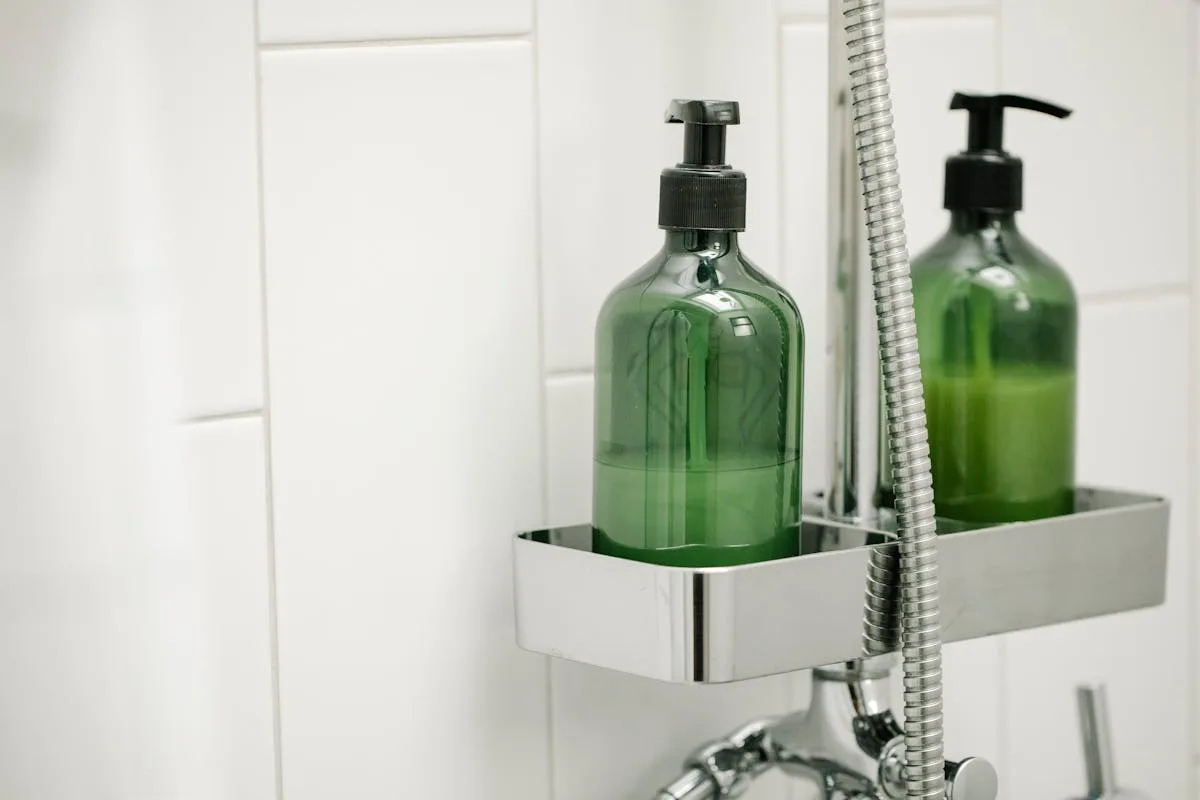
What to watch: suction only works on glass or fully smooth tile. Textured tile, stone, or any surface with grout lines under the cup will not hold. Clean and fully dry the surface before mounting, and re-press it every few weeks; suction loosens over time even on the locking kind.
What to watch: the price-to-storage ratio is the worst on this list. Buy one Tower piece for the visible zone and fill the hidden zones, under the sink, behind the door, with the budget picks. Paying Tower prices for under-sink storage no one sees is money in the wrong place.
The one category I would skip
Basic press-on suction cup shelves and baskets, the kind that come in a three-dollar two-pack with no locking lever. They hold for a week, then the combination of steam, weight, and a surface that is never quite as smooth as the package assumed lets them peel off the wall and dump everything they were holding. The locking-suction version (iDesign above) is a different and much better product; the plain press-on cup is the one to leave on the shelf. If a wall is too textured for even locking suction, that wall wants an over-door rack or a freestanding piece, not a suction product.
The order to attack it in
If you are starting from an empty, frustrating bathroom, do it in the order the picks pay off. The over-toilet shelf goes up first, because it claims the biggest single block of dead vertical space for the towels that have nowhere to live. The door-back rack is next and just as fast. Then the shower, where a tension pole beats anything that relies on suction. Under the sink comes after that, since the expandable shelf is the least visible win but recovers the most cabinet. The slim cart in the slot beside the vanity is the finisher. If you have read the over-the-door storage guide, the door-back move is the same one that works in every room; the bathroom is just where it pays off fastest, because there is no other storage to lean on.
Install moves that keep things from falling in the steam
Use bath-rated adhesive, not standard. The water-resistant Command line and standard indoor hooks look similar and perform completely differently in a steamy room. The standard ones are the source of the “adhesive never holds” reputation.
Give adhesive its full cure time and clean the surface first. About an hour of press time on a clean, fully dry, room-temperature surface before you load it. Sticking a hook to a wall that is still damp from a shower is the most common reason it fails.
Prefer tension and freestanding over suction in the shower. Suction is the least reliable mount in the wettest zone, and the tension pole sidesteps the problem by gripping nothing the steam can loosen.
Protect the door edge. Choose over-door racks with felt or rubber pads on the contact hooks so they do not scuff the paint or the door edge. For the full no-damage toolkit across the apartment, the how to hang things without nails guide breaks down strips, hooks, and rods by weight.
Frequently asked questions about small bathroom storage
What is the best storage for a small bathroom with no linen closet?
A freestanding over-the-toilet spacesaver is the highest-impact move. It claims the unused vertical space above the tank, adds two to three shelves for the towels a missing linen closet cannot hold, and requires no wall attachment, so it is fully renter-safe and moves with you.
How do renters add bathroom storage without drilling?
Three mounts cover almost everything: over-the-door racks that hook over the top edge, tension poles and rods that spring between surfaces, and bath-rated adhesive hooks that release without residue. Freestanding pieces like a spacesaver or a slim rolling cart add storage with no mounting at all.
Why do my suction shower caddies keep falling?
Suction needs a perfectly smooth, clean, dry surface, and a steamy bathroom defeats all three over time. Textured tile or grout lines under the cup make it worse. A tension-pole caddy skips suction entirely and is far more reliable; if you need suction, the locking-lever version holds much better than a plain press-on cup.
How do I use the wasted space under the bathroom sink?
The cabinet is usually half-empty because the P-trap blocks stacking. An expandable two-tier shelf builds around the pipe instead of over it, which roughly doubles the usable space. Measure the cabinet height and the pipe position first, since a deep trap can eat the lower tier.
Will bathroom organizers damage my rental?
Not when you respect the ratings. Adhesive fails and pulls paint when it is overloaded or stuck to a damp or fresh-painted surface; bath-rated and cured, it releases clean. Tension poles and freestanding pieces leave no mark at all. Choose door racks with padded contact points and you finish the lease with nothing to patch.
The rental bathroom is small, but it is mostly empty vertical and corner space pretending to be full. Start with the over-toilet shelf and the door-back rack, the two highest-impact no-drill moves, then add the shower and under-sink fixes as you go. For the other rooms, the small apartment storage ideas hub maps the whole apartment, and the over-the-door storage guide goes deeper on the move that works behind every door in the place.