This post contains affiliate links. If you buy through one I may earn a small commission at no cost to you.
A small bedroom fills up fast because almost everything you own that is not in the kitchen ends up there: the clothes, the shoes, the off-season everything, the stuff with no other home. And the room fights back, because once the bed and one dresser are in, there is no floor left. You end up with a closet crammed to the rod, a chair that has become a clothes pile, and bins stacked in the one corner the door does not hit.
The fix is not more furniture, because there is no floor for it. The fix is using the three places a bedroom hides storage: under the bed, up the walls and closet rod, and inside furniture that does double duty. The bed alone sits on top of the single largest block of wasted space in the apartment, and most people store nothing there.
I have organized small bedrooms in six rentals, including one where the “bedroom” was a curtained-off corner of a studio and the bed had to hold half my wardrobe underneath it. Below are the eight picks I would buy again, grouped by where the space actually is, plus the moves that keep all of it renter-safe.
Under-bed storage is the highest-impact, lowest-cost move in the whole room, and it is the one people skip because they cannot see the space until they crawl down and look. A standard bed frame leaves anywhere from six to fifteen inches of clearance underneath. That is a full extra dresser’s worth of volume running the length and width of your bed, sitting empty.
What to watch: measure your clearance from the floor to the bottom of the bed frame, then buy bins an inch shorter. Bins that are even slightly too tall will not roll under, and that is the most common return on this category.
What to watch: raising the bed changes how it looks and feels, so do not go higher than you need. Match the riser weight rating to your bed and body weight, and on a hard floor, check that the risers grip and do not slide; the rubber-footed versions stay put better than bare plastic.
What to watch: soft-sided bags do not protect contents from crushing the way hard bins do, so keep anything fragile out of them. For a frame with no wheels-clearance, these slide where a caster bin cannot roll, which is the trade-off you are choosing.
Doubling the closet
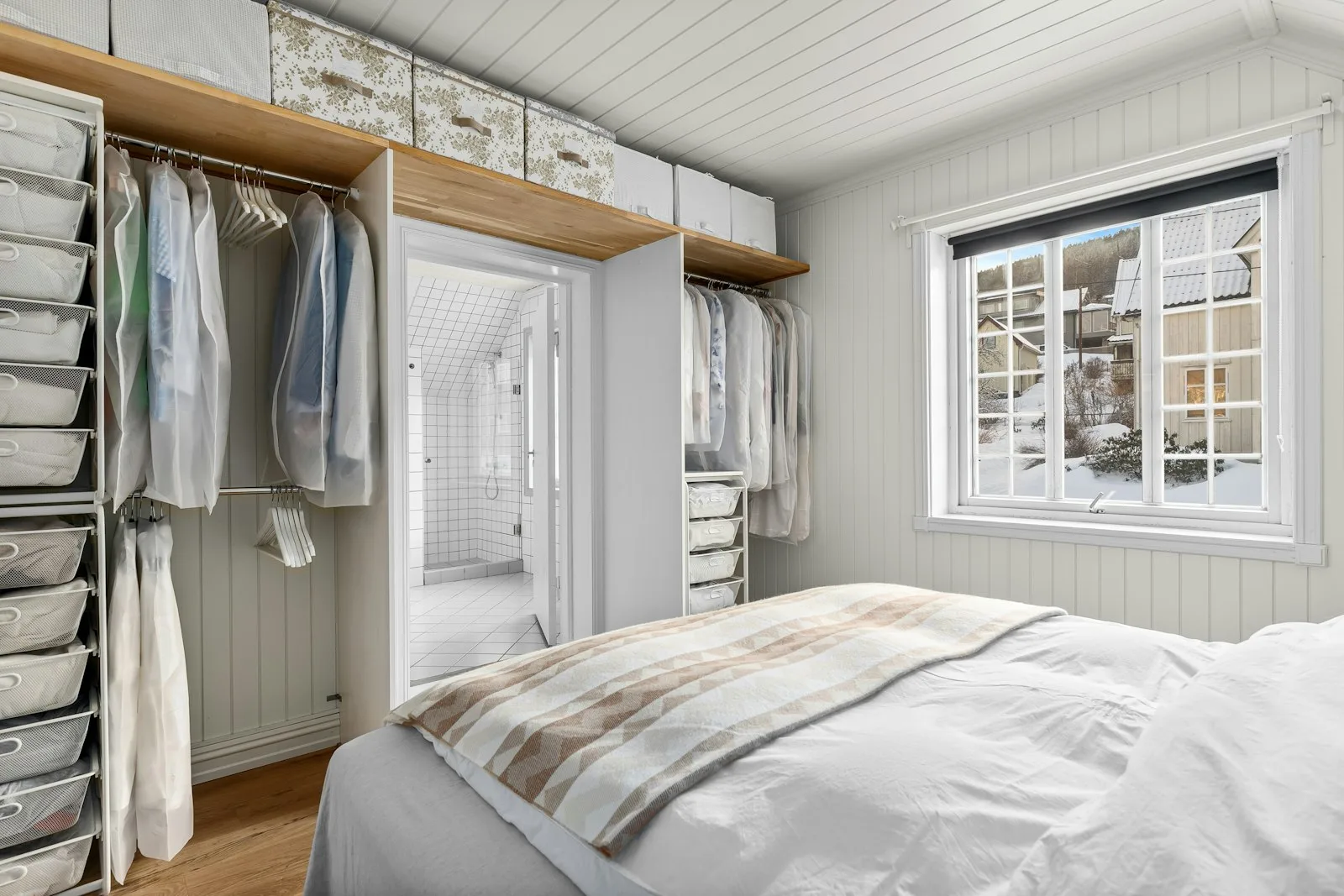
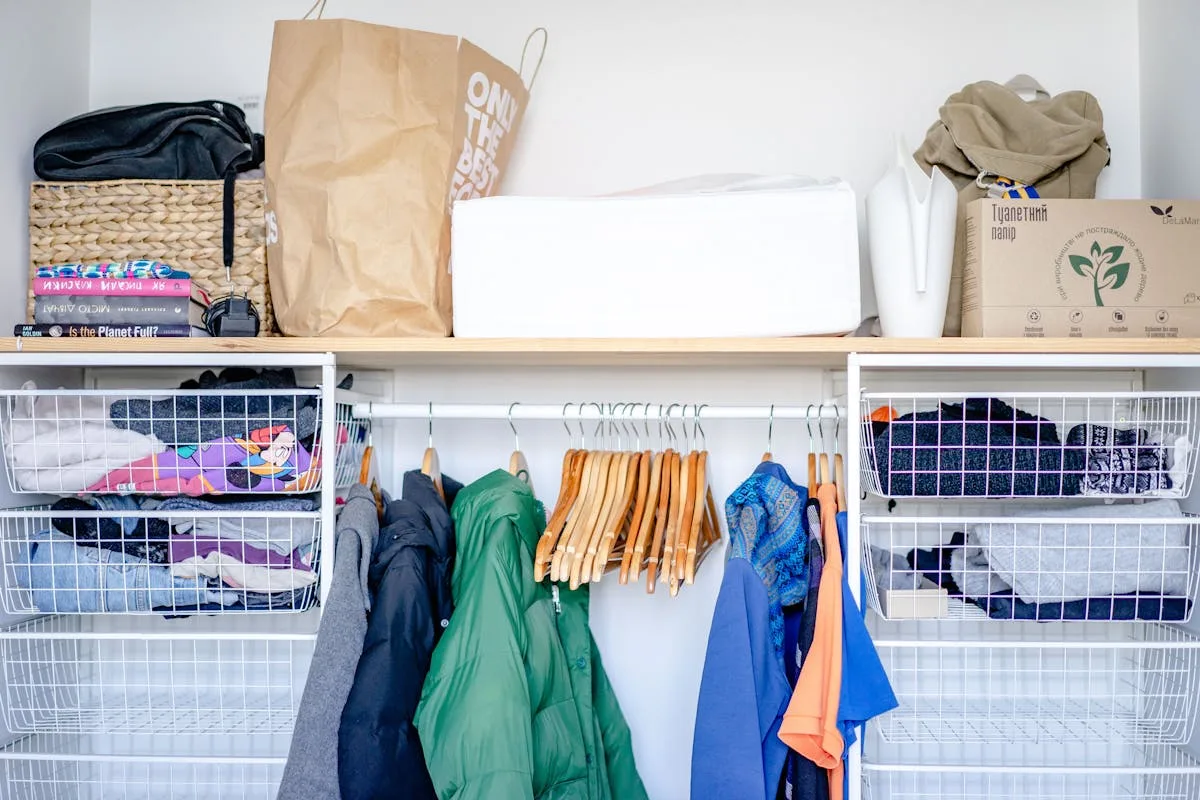
Most small-bedroom closets run at half their capacity, because a single rod leaves the top two feet and the floor empty. You can roughly double a closet without a single screw.
What to watch: the doubled rod works for shorter items (shirts, folded pants); you lose the full-length drop for dresses and long coats on that side. Plan one side of the closet for long items and double the other.
What to watch: loaded heavy, a hanging shelf tower can sag or swing. Keep the heaviest items on the bottom shelf, and if your closet rod is a flimsy tension rod rather than a fixed one, check that it can take the added weight.
Furniture that stores things inside itself
In a small bedroom, a piece of furniture that only does one job is wasting the floor it sits on. These are the swaps that add storage without adding footprint.
What to watch: drawer-base frames need floor clearance beside the bed for the drawers to pull out, so check the room layout against the drawer side. Lift-up ottoman frames need clearance above to raise the mattress. Either way it is a bigger spend; worth it if you are replacing the bed anyway, less so as a standalone upgrade.
What to watch: measure the foot-of-bed space and leave walking clearance to the door. A bench that blocks the path around the bed costs more in daily annoyance than it gives back in storage.
What to watch: measure the gap between the bed and the wall or radiator before buying; bedside gaps in small rentals are often narrower than a standard nightstand. A wall-mounted floating nightstand is the no-floor option, but it needs anchors, so it is a drill-required move unless your wall takes heavy adhesive.
Up the walls and behind the door
When the floor is full, the last storage frontier in a small bedroom is vertical. A no-drill wall shelf or a row of adhesive hooks claims wall space for the things that do not need to sit on the floor, and the back of the bedroom or closet door is a full sheet of storage on its own. The over-the-door storage guide covers the shoe organizers, mirrors, and accessory panels that hang behind the door with no tools. For hanging anything on the wall without damage, the how to hang things without nails guide breaks it down by weight.
Keeping it all renter-safe
The under-bed and closet moves leave no marks at all, which is most of this guide. The only places to be careful are the wall and the bed itself. Cap any adhesive hook or strip at its printed weight and give it cure time. Match bed risers to your weight rating and check they grip a hard floor. And if you go for a wall-mounted floating nightstand or shelf that needs anchors, that is the one drill-required exception here; weigh it against an under-bed or closet solution that needs nothing. The full no-damage playbook for the whole apartment is in the small apartment storage ideas hub, and if you are still furnishing the bedroom from empty, the first apartment checklist covers what to buy first.
Frequently asked questions about small bedroom storage
What is the best storage solution for a small bedroom?
Under-bed storage, because the bed sits on the largest block of unused space in the room. A pair of rolling under-bed bins absorbs a full season of clothing or all your spare bedding for under fifty dollars, with no installation and nothing to undo at move-out. If the clearance is too low, bed risers add the height to make the bins fit.
How do I store clothes in a small bedroom with no dresser?
Combine a doubled closet rod, a hanging closet shelf tower, and under-bed bins. The double rod nearly doubles hanging space, the shelf tower adds cubbies for folded clothes, and the under-bed bins hold off-season items. Together they replace a dresser without taking any floor, and all three come down and pack flat when you move.
How much space is under a standard bed?
A standard bed frame leaves roughly six to fifteen inches of clearance underneath, which is a full dresser’s worth of volume across the footprint of the bed. Measure your specific clearance from the floor to the underside of the frame before buying bins, and add bed risers if the gap is too short for the storage you want to fit.
Is a storage bed frame worth it in a small bedroom?
If you are buying or replacing a bed anyway, yes. A drawer or lift-up storage frame puts a dresser’s worth of storage into the space the bed was already occupying, which can free enough floor to skip a separate dresser. As a standalone upgrade when your current bed is fine, the cheaper move is under-bed bins plus risers.
How can renters add bedroom storage without drilling?
Almost the entire bedroom storage playbook is no-drill: under-bed bins, bed risers, hang-from-the-rod closet doublers and shelf towers, storage furniture, and over-the-door organizers. The only drill-required pieces are wall-mounted floating shelves or nightstands, and each of those has a freestanding or under-bed alternative that needs no holes.
The bedroom is not out of space; it is storing nothing under the bed, nothing on the lower closet rod, and nothing behind the door. Start under the bed with rolling bins, double the closet rod, then swap in storage furniture as you replace pieces. For the rest of the apartment, the small apartment storage ideas hub maps every room, and the over-the-door storage and small bathroom storage ideas guides go deeper on the spots the bedroom borrows from.
Get the renter's first-apartment checklist
Small-space decor ideas for renters, straight to your inbox.
This post contains affiliate links. If you buy through one I may earn a small commission at no cost to you. The first apartment where I tried this was a 540-square-foot Chicago studio with a galley kitchen and a bathroom roughly the size of a coat closet. The bathroom floor was beige sheet vinyl, lifting…
A small apartment feels cramped because the stuff has nowhere to live. 9 organizing principles, from going vertical to keeping surfaces clear, that make a tiny rental feel twice its size.
This post contains affiliate links. If you buy through one I may earn a small commission at no cost to you. The rental bathroom floor was a grid of small peach-pink tiles from sometime around 1996, set in yellowing white grout, and the landlord had said in the lease walkthrough that I was welcome to…
This post contains affiliate links. If you buy through one I may earn a small commission at no cost to you. You walked into the rental, set the second box of dishes down, and stared at the wall behind where the TV is going. It is the long one, painted contractor-beige, with a faint shadow…
Manage Consent
To provide the best experiences, we use technologies like cookies to store and/or access device information. Consenting to these technologies will allow us to process data such as browsing behavior or unique IDs on this site. Not consenting or withdrawing consent, may adversely affect certain features and functions.
Functional
Always active
The technical storage or access is strictly necessary for the legitimate purpose of enabling the use of a specific service explicitly requested by the subscriber or user, or for the sole purpose of carrying out the transmission of a communication over an electronic communications network.
Preferences
The technical storage or access is necessary for the legitimate purpose of storing preferences that are not requested by the subscriber or user.
Statistics
The technical storage or access that is used exclusively for statistical purposes.The technical storage or access that is used exclusively for anonymous statistical purposes. Without a subpoena, voluntary compliance on the part of your Internet Service Provider, or additional records from a third party, information stored or retrieved for this purpose alone cannot usually be used to identify you.
Marketing
The technical storage or access is required to create user profiles to send advertising, or to track the user on a website or across several websites for similar marketing purposes.