Small Apartment Storage Ideas: A Renter’s Guide to Finding Space That Isn’t There
You did the move-in math wrong, the same way everyone does. You measured whether the couch and the bed would fit, they did, you signed, and three weeks later you are standing in the kitchen holding a stockpot with nowhere to put it, looking at a closet that is already full and a wall you are not allowed to drill into. The apartment is exactly as big as it was when you toured it. The problem is that nobody tours an apartment imagining where the vacuum, the off-season coats, the extra towels, and the air fryer are going to live.
Small-apartment storage is not really about buying bins. It is about finding the space the floor plan is hiding from you, and doing it in a way that comes off the walls clean when the lease ends. A renter has a harder version of this problem than a homeowner: you cannot build a closet, you usually cannot drill a shelf bracket into a stud, and anything you do attach has to release without taking paint and your deposit with it.
I have lived in six rentals over eight years, most of them under 700 square feet, including a Chicago studio where the “bedroom” was a corner and the only coat closet doubled as the pantry. Below is the whole playbook: the four places hidden storage actually exists in a small apartment, the room-by-room moves that work, the no-drill weight math that decides what you can hang, and the order I would tackle it in if you just moved into an empty place.
The four places storage hides in a small apartment
Every small apartment has more storage than it looks like, and it is almost always in the same four places. Once you start seeing them, the “I have no room” feeling turns into a list of projects.
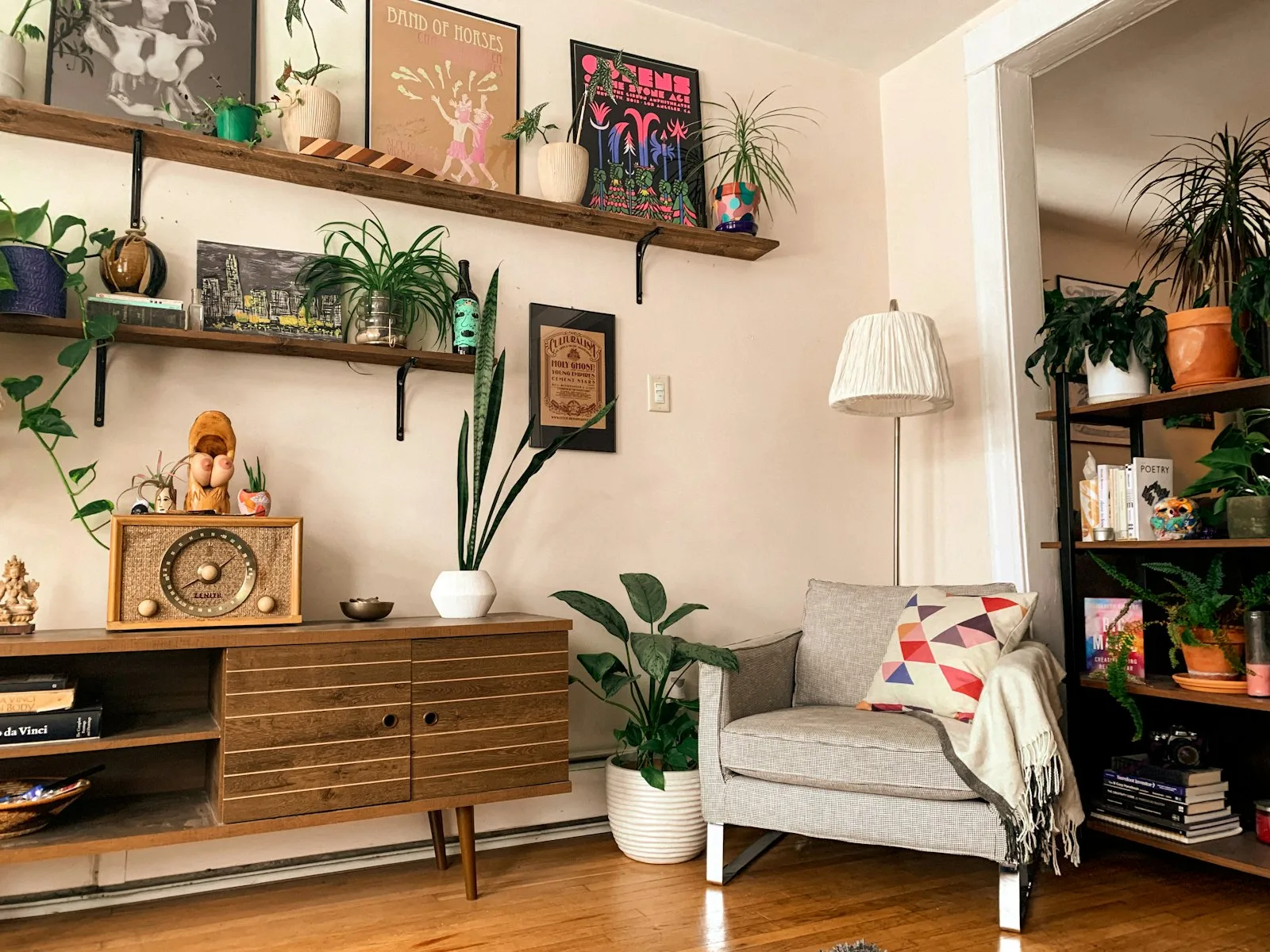
Vertical space. The single biggest miss in small apartments is that people store outward instead of upward. The wall above eye level, the foot of empty air above the kitchen cabinets, the back of every door, the column of space beside the fridge: that is all storage you are currently using to hold nothing. Going vertical is the difference between a 600-square-foot floor and a 600-square-foot floor plus the eight vertical feet sitting on top of it.
Under furniture. The bed is the largest single piece of furniture you own and it sits on top of the most underused real estate in the apartment. Same with the couch, the console, and the gap under a wall-mounted vanity. Under-bed storage alone can absorb an entire season’s worth of clothing and bedding without taking one inch of visible floor.
Inside dead corners. Every apartment has them: the awkward six inches beside the toilet, the corner of the kitchen counter that collects mail, the slice of wall behind a door that opens flat against it. Corner shelving, slim rolling carts, and over-toilet racks turn dead corners into working ones.
The backs of doors. This is the one renters underuse the most, because it requires zero installation. Every interior door in the apartment, the closet, the bathroom, the pantry, the entry, has a full sheet of vertical storage hanging off it that needs nothing more than a hook that slips over the top edge. The over-the-door storage options alone can rehome shoes, cleaning supplies, pantry overflow, and bathroom extras without a single anchor in the wall.
The renter constraint that changes everything: no drilling
Before any of this matters, you have to solve the attachment problem, because in a rental it decides what is even possible.
Most renters assume they cannot hang anything heavier than a picture frame without drilling. That is mostly wrong, and the wrongness is expensive because it pushes people toward freestanding furniture that eats floor space. Here is the actual weight math, because the numbers are better than people think.
3M Command picture-hanging strips, the velcro-style ones, hold up to about 15 pounds in the large size when you use enough pairs and follow the cure time, and the extra-large set is rated for 20. Their utility hooks are rated individually, from under a pound up to about 7.5 for the jumbo, printed right on the back of the pack. A tension rod sprung between two walls of a closet or an alcove carries a full hanging rod of clothes with zero hardware. And an over-the-door rack does not attach to anything at all; it transfers the weight to the top edge of the door, which is structural.
That covers most of what a small apartment needs to hang. The things that genuinely need a stud, a floating shelf carrying real weight, a wall-mounted bike, a heavy mirror, are the exceptions, not the rule, and most of them have a freestanding or leaning equivalent. For the full no-damage hanging toolkit, the how to hang things without nails guide covers strips, hooks, and rods by weight class. The rule I follow: if it weighs less than about 15 pounds, it can go on the wall without a drill; if it weighs more, it goes on the floor or leans.
One thing that saves deposits more than any product: give adhesive strips their cure time. Command strips bond to fully cured paint, and the instructions are specific: press for thirty seconds, then wait about an hour before you hang anything on them. The single most common cause of a strip failing and pulling paint is loading it ten minutes after sticking it up, or sticking it to paint the landlord rolled on last week.
Room by room

The four hiding places show up differently in each room. Here is where the space actually is.
The bedroom
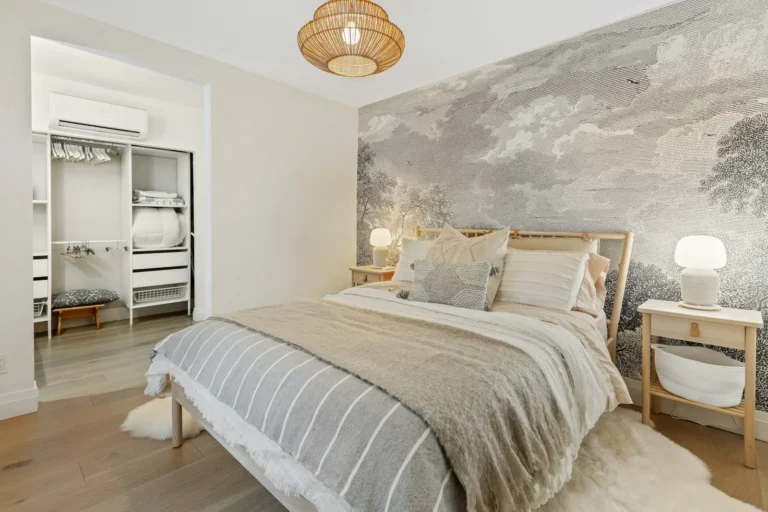
The bedroom holds the biggest single storage win in the apartment, and it is the bed. Under-bed storage absorbs off-season clothes, spare bedding, and shoes without touching the floor or the closet. Bed risers lift a standard frame an extra three to eight inches if the clearance is tight, which turns a useless four-inch gap into a usable bin height.
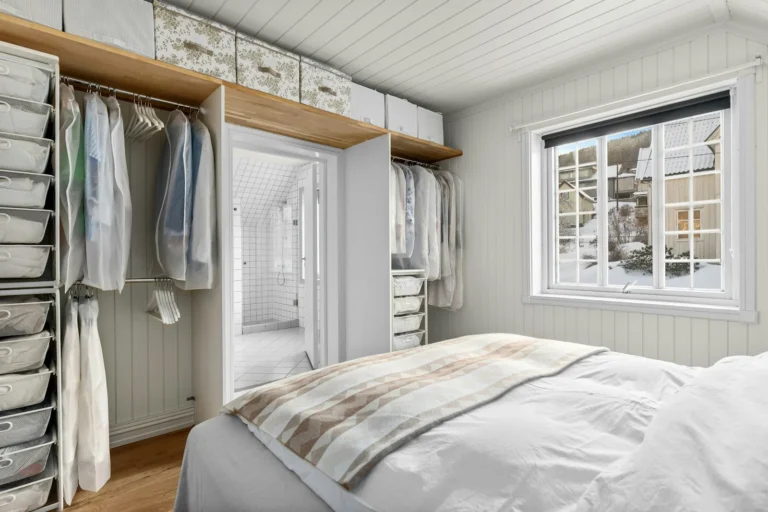
The closet is the second project, and small-apartment closets are almost always organized at half their capacity because the single rod leaves the top two feet and the floor empty. A second tension rod, a hanging shelf organizer, and over-the-door hooks roughly double a small closet without a single screw. The full breakdown lives in the small bedroom storage ideas guide, which covers under-bed systems, closet doubling, and the headboard and nightstand swaps that buy back floor space.
The bathroom
The bathroom is the room where storage is hardest to find and easiest to add, because it is almost all vertical and corner space. The wall above the toilet is the most obvious one: an over-the-toilet shelf or an over-the-tank rack adds three shelves in a footprint you were not using. The back of the door takes a rack for towels and extras. The corner by the sink takes a slim cart.
Renters have one extra constraint here, which is humidity: adhesive hooks give up faster in a steamy bathroom than anywhere else in the apartment, so the picks have to be rated for it or mounted with suction that actually holds. The small bathroom storage ideas roundup covers the over-toilet racks, the door-back organizers, and the suction and tension options that survive daily showers without falling in the night.
The kitchen
The small-apartment kitchen runs out of cabinet space first and counter space second, and that stockpot you are holding has to go somewhere. The fixes are mostly vertical and inside-the-cabinet. A shelf riser doubles a cabinet shelf by splitting the dead air above the plates. A tension rod under the sink hangs the spray bottles off the cabinet floor. A magnetic strip frees the drawer the knives were eating. And the slim gap beside the fridge, the one nothing fits in, takes a rolling cart that pulls out for pantry overflow and tucks back flat.
The entryway
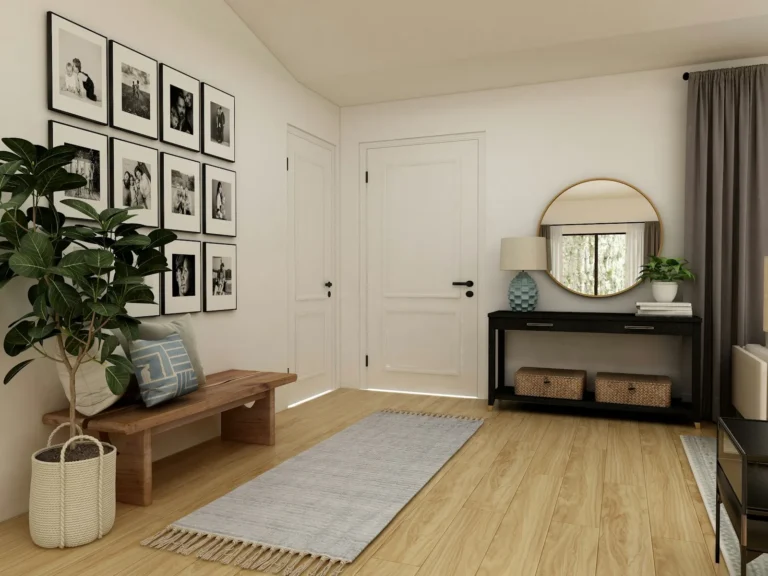
Even a studio with no real entry has the wall and the back of the front door. A row of wall hooks on a no-drill rail, a slim shoe rack, and an over-the-door organizer for shoes or bags turn the first three feet inside the door into a working drop zone instead of a pile. If you are still furnishing from scratch, the first apartment checklist covers the entry pieces worth buying first.
Hidden-storage furniture: when the storage is the furniture
The smartest move in a small apartment is buying furniture that stores things inside itself, because it adds storage without adding footprint. A storage ottoman holds blankets and doubles as a coffee table and a seat. A bed frame with built-in drawers replaces an entire dresser. A lift-top coffee table hides remotes, chargers, and clutter. A bench with a hinged seat at the entry stores shoes and gives you somewhere to put them on.
A coffee table that only holds your coffee is wasting the cubic feet underneath it. So when you are replacing or buying a piece, the storage version usually costs a little more and gives back a whole bin of space you would otherwise have to find somewhere else. The hidden storage furniture guide compares the ottomans, storage beds, lift-top tables, and benches that earn their footprint.
In what order to do this: a small-apartment storage playbook
If you just moved in and the boxes are still everywhere, doing this in the right order keeps you from buying bins for space you have not found yet. For the principles behind the whole approach, the small space organization guide covers the nine that make a tiny rental feel bigger.
First, empty before you organize. You cannot size storage for stuff you are about to get rid of. A fast first pass, the clothes you have not worn in a year, the duplicate kitchen gear, the boxes you have not opened since the last move, shrinks the storage problem before you spend a dollar on solving it. The decluttering guide walks that first pass for renters.
Second, claim the vertical space. Walls and the backs of doors are free and they come first because they take the most off the floor. Over-the-door racks, wall hooks, and a tension rod or two in the closet. This is the cheapest, fastest, highest-impact round.
Third, claim under the bed. One set of under-bed bins or a rolling under-bed drawer absorbs the single biggest pile of off-season and overflow items in one move.
Fourth, fix the closets and cabinets from the inside. Shelf risers, a second closet rod, hanging organizers. This is where you double existing storage rather than add new.
Fifth, upgrade furniture to storage furniture as you replace it. Not all at once; just buy the storage version next time a piece needs replacing.
That order matters because it spends the free moves first and the money moves last, and because it stops you from buying twelve matching bins before you know how much you actually need to store.
The deposit-safe checklist
Everything above only works if it comes off clean at move-out. A few rules keep the storage projects from costing you the deposit they were supposed to protect.
Use cured paint and full cure time for any adhesive hook or strip. Cap hung weight at what the product prints on the pack, and use more, smaller hooks rather than one overloaded one. Keep tension rods at the tension the wall can take without denting; a rod cranked too hard dents drywall at the contact points. Choose over-the-door racks with foam or felt on the door-contact surface so they do not scuff the paint or the door edge. And photograph any wall or door before and after, so the move-out walkthrough is a comparison and not an argument.
None of these storage moves require permission or damage when you do them this way, which is the whole point. Done right, every one of them comes off the wall at move-out with nothing to patch and nothing to explain.
Frequently asked questions about small apartment storage
What is the highest-impact storage project in a small apartment?
Under-bed storage, almost always. The bed sits on the largest single block of unused space in the apartment, and one set of under-bed bins or a rolling drawer absorbs an entire season of clothing and bedding without touching the floor or the closet. It is also one of the cheapest and most reversible moves, which makes it the right first dollar.
Can renters add storage without drilling into the walls?
Yes, and more than most people assume. Command picture-hanging strips hold up to about 15 pounds in the large size, tension rods carry a full closet rod with zero hardware, and over-the-door racks transfer weight to the door rather than the wall. Most small-apartment storage hangs on these three without a single drilled hole.
How do I store things when the closet is already full?
The closet is usually only half-organized, not actually full. A single rod leaves the top two feet and the floor empty. Add a second tension rod below the first to double the hanging space, a hanging shelf organizer for folded items, and over-the-door hooks for bags and accessories, and most small closets hold roughly twice what they did.
Is hidden-storage furniture worth the extra cost in a small space?
In a small apartment, yes. A storage ottoman, a bed frame with drawers, or a lift-top coffee table adds storage without adding footprint, which is the one thing floor space cannot spare. The storage version of a piece costs a little more and gives back a whole bin of space you would otherwise have to find elsewhere.
Will storage racks and hooks damage my rental?
Not if you respect the weight ratings and cure times. Adhesive strips fail and pull paint when they are overloaded or stuck to fresh paint; rated and cured, they release clean. Tension rods dent walls only when over-cranked. Over-the-door racks with a felt or foam contact edge protect the door. Used correctly, every move here comes off at move-out with no mark.
The apartment is not too small. It is just storing air in all the places that could be storing your stuff. Start with the bed and the backs of the doors, the two highest-impact and lowest-cost moves, then work down the list as the boxes empty out. For the room that needs it most, the small bathroom storage ideas and over-the-door storage guides go deeper on the specific picks, and the small bedroom storage ideas guide covers the under-bed systems that do the heaviest lifting.