Peel-and-Stick Crown Molding for Renters: 6 Picks That Read as Real (and How to Install It Without a Saw)
This post contains affiliate links. As an Amazon Associate I earn from qualifying purchases.
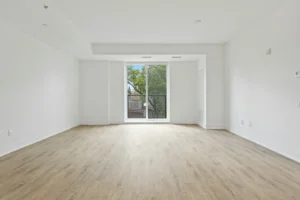
You moved into the apartment with a feeling you could not name for the first two weeks, and then one Sunday morning while the coffee was brewing you finally caught it: every room ends at a 90-degree edge where the wall meets the ceiling, and the lack of any transition between the two is the single biggest reason the place reads as builder-grade. Nicer rentals you toured in the same neighborhood had crown molding. This one does not. The lease has eleven months left. You looked up “how to install crown molding” at midnight and closed the tab when the third paragraph said “you will need a compound miter saw”.
Peel-and-stick crown molding is the rental category that solves a problem the trim contractors keep to themselves. A clean install puts a high-end architectural detail at the top of every wall without a single nail, a single mitered cut, or a single power tool. A bad install reveals every minor wall waver, lifts at the inside corners within months, and pulls paint off the ceiling when you remove it.
I installed my first peel-and-stick crown run in a Chicago living room three years ago, on a hunch and a Saturday afternoon. Three rentals later, I have run the install in two living rooms, one bedroom, one home office, and one short mantel surround that turned out to be the best decor move in the whole apartment. Below are the six brands I would actually order, the install moves that decide whether the molding reads as carpenter-installed or renter-installed, and the categories I would not buy again.
What “peel-and-stick crown molding” actually means
The phrase covers three real product families. They all install the same way (peel a backing, press to the wall-and-ceiling joint) and all promise damage-free removal, but the materials and the visual results are not interchangeable.
Flexible plastic crown strips are the dominant category. Lightweight extruded plastic (around 0.030 gauge), formed into a crown profile, factory-painted white, sold in lengths typically 5 feet per strip with pre-formed corner pieces that handle inside and outside joints without any cutting on your part. 3M-grade adhesive backing, paintable surface. This is the category Easy Crown Molding built its catalog around, and it is the rental-safe pick: light enough that adhesive failure does not become a falling-molding problem, dense enough that the profile reads as wood from any normal viewing distance.
Polystyrene crown strips are the heavier alternative. Closed-cell polystyrene foam (denser than craft foam, lighter than real wood) extruded into crown profiles, factory-painted white, sold in 8-foot strips with separately-sold pre-mitered inside-corner pieces. The category is anchored by American Pro Decor’s Trim Fast line at Home Depot and the RELIABILT peel-and-stick line at Lowe’s. Slightly more visually substantial than the flexible-plastic tier because of the denser body, slightly less forgiving on uneven walls because of that same density.
Decorative trim strips at smaller profiles sit alongside the crown category. Same materials (flexible plastic, polystyrene) cut at 2-inch or smaller profiles, sold as decorative trim for mantel surrounds, window frames, or chair-rail-style installs at mid-wall height. Worth knowing about for single-element installs rather than whole-room ceilings.
Four specs that separate the picks from the duds
Profile depth. Real crown molding profiles run 2.5 to 4.5 inches deep (the measurement from the wall surface to the deepest point of the molding profile). Profiles under 2 inches read as decorative trim rather than as crown molding; profiles over 4 inches start to look out of scale in a low-ceiling rental (most rental ceilings sit at 8 feet, and a 4-inch crown on an 8-foot wall reads top-heavy). The right rental profile sits in the 2.5 to 3.5 inch range.
Corner-piece system matters more than any other spec because the corners are where DIY installs fail. Brands that ship pre-formed inside-corner pieces let you butt-cut each strip with a utility knife and slot the corner piece into the joint. Brands that do not ship corner pieces require miter cuts at 45 degrees, which puts you back in the saw-and-protractor world the peel-and-stick category was supposed to save you from. The honest test is the listing detail: a brand that ships corner pieces with the molding is the brand worth ordering; a brand that says “miter-cut to fit” is the brand to skip.
Adhesive class. Branded crown molding uses 3M-grade pressure-sensitive adhesive with a published bond rating. Cheap brands use unspecified rubber adhesive. The 12-month corner-lift check is the real test: residential-grade PSA holds through a heating-season humidity cycle on the wall-and-ceiling joint; cheap rubber adhesive lifts at the inside corners (where the joint is most stressed) within months.
Paintable surface is non-negotiable for any room where the ceiling paint is not standard contractor flat white. The molding ships in factory white; if your ceiling is off-white, eggshell, or any non-white tone, you will need to paint the molding to match.
The 6 picks
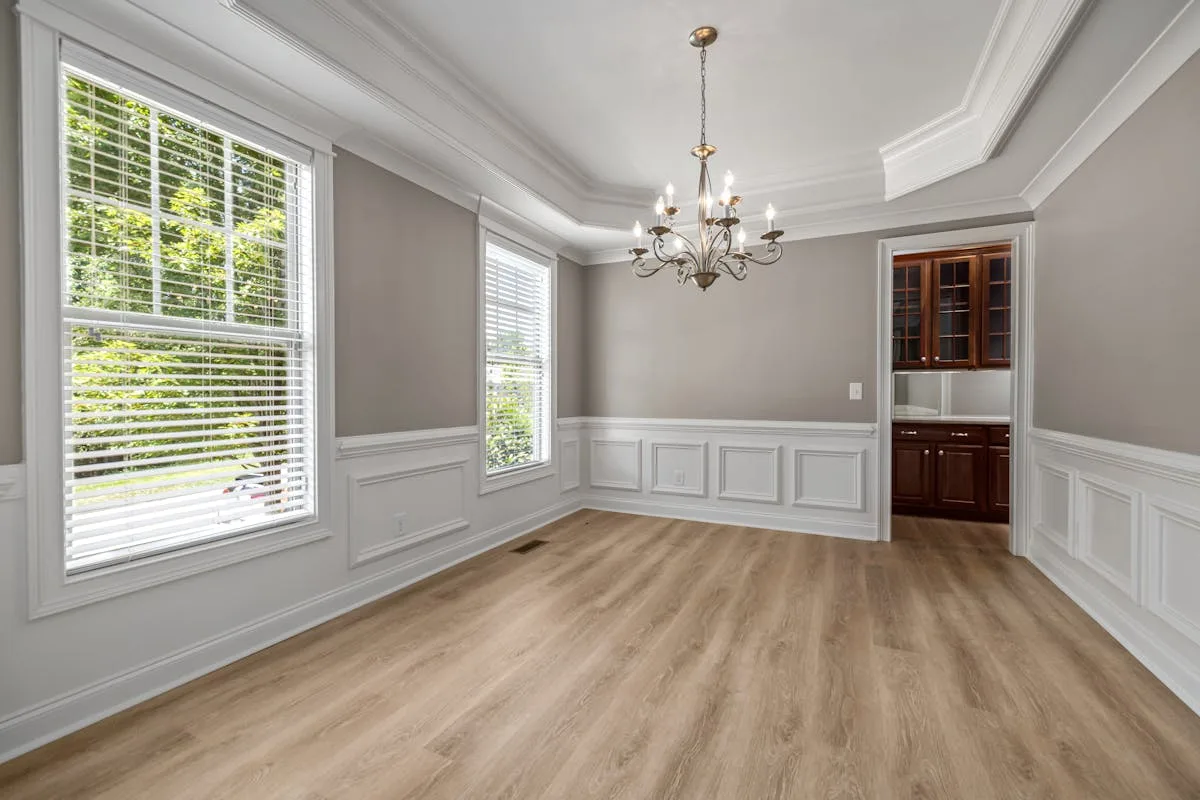
What to watch: a butt cut here is just a straight crosscut with a utility knife, no angle, no saw, the same cut you would make to shorten a yardstick. The corner pieces are slightly more visible up close than a mitered joint would be (the corner piece itself is a small molded chunk that bridges the two wall strips). From any normal viewing distance the corner reads clean; for an Architectural Digest photo, real miter cuts are still the only solution.
What to watch: the polystyrene rigidity that gives the install its visual weight is also what makes it slightly less forgiving on a wavy rental wall. The strip bridges minor waves rather than following them, which is what you want visually, but if the wall is enough out of plumb that the strip refuses to sit flat at the wall-ceiling joint, the flexible plastic alternative (Easy Crown) will conform better.
What to watch: pricing this low usually means the corner pieces are sold separately or the SKU assumes miter cuts. The 3-inch profile holds up visually fine from any normal viewing distance; the install effort can spike if the SKU you grab does not include corners. Verify in the store, not online.
What to watch: the 4-inch profile is wrong on an 8-foot ceiling (it makes the wall look shorter, not taller). If you are not sure whether your ceiling is over 9 feet, measure before ordering; the wrong profile turns a room that should read as taller into one that reads as cramped.
What to watch: many of these strips ship with slight surface dimpling that needs a coat of primer and a coat of ceiling paint to fully disappear, so plan on painting the molding regardless of the ceiling color. Plus the corner-piece situation is the biggest unknown in the budget tier; if the listing photos do not show pre-formed corners, the install will involve miter cuts and you should be ready for that.
What to watch: this is the right scale for single accents (mantel, window frame, chair rail), not for a whole-room ceiling install. The 2-inch profile reads as decorative trim from across the room, not as crown molding. If the install is meant to read as crown around an 8-foot ceiling, the 3-inch profile is the right pick instead.
What I would actually skip
Three categories underperformed for me or for installs I followed, and I would not order any of them again.
The first is unbranded Amazon “self-adhesive crown molding” under $2 per linear foot. These are usually 1.5 mm foam with rubber adhesive, often shipped without corner pieces and with the listing requiring miter cuts. The foam compresses visibly when handled, lifts at corners within months on the wall-and-ceiling joint, and the rubber adhesive frequently pulls paint on removal. The price gap against the branded budget tier (RELIABILT, hardware-store polyurethane) is small; the install gap separates a wall that looks finished from one that looks like a sticker fell off.
The second is printed-foil “wallpaper crown molding” strips: a foil or paper printed with a crown-molding pattern, sold as a peel-and-stick band. From across the room they read as wallpaper, not as molding (no profile depth means the visual is flat, and at any raking light the lack of depth is obvious). If you want a flat decorative band at the top of the wall, the right product is a wallpaper border, not a fake crown.
The third is Royal Mouldings and other traditional PVC crown sold as renter-friendly. Royal Mouldings makes excellent PVC crown profiles, but the brand’s install method is nail-up with finish nails or a brad nailer, not peel-and-stick. PVC crown is the right answer in a kitchen where humidity and grease would shorten the adhesive life of polystyrene or flexible plastic; it is the wrong answer in a rental where you are not putting nails through the wall. Use polystyrene (American Pro Decor) or flexible plastic (Easy Crown) in a kitchen and accept the slightly shorter adhesive life as the trade for keeping the deposit.
Where peel-and-stick crown molding actually pays off in a rental
Five rooms where the install math works.
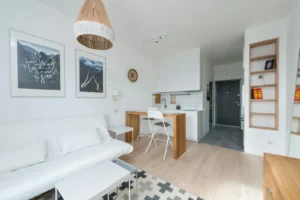
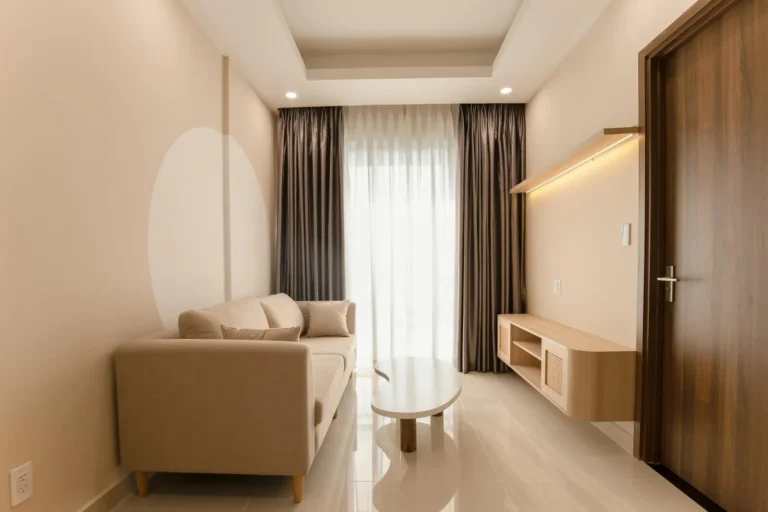
Living room. The room with the biggest payoff from a crown install. The ceiling reads taller, the wall paint reads more deliberate, and the photos of the room come out looking like a considered space. A 12-by-14 foot living room is the most common rental size and lands at $250 to $350 in flexible plastic or polystyrene plus corner pieces.
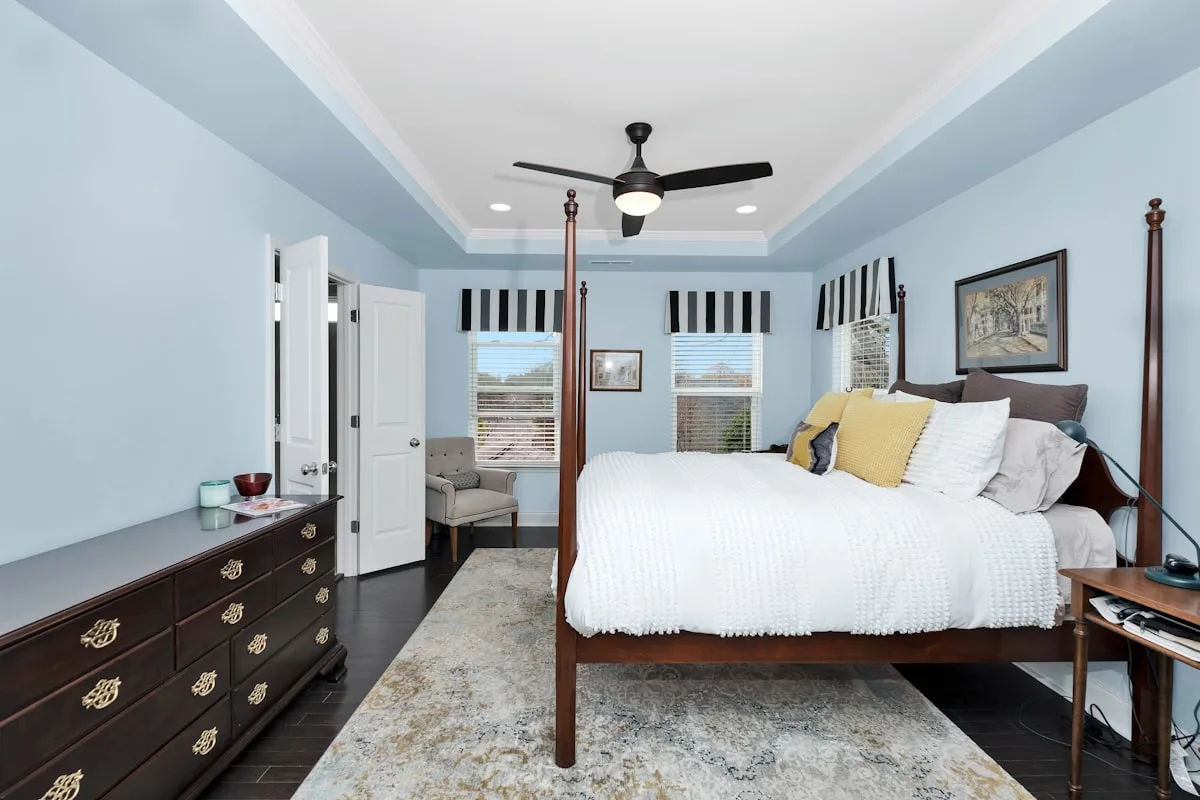
Primary bedroom. Crown around the headboard wall and across the room reads as a higher-end build than the rental actually is. The install effort is the same as the living room, and the room is the one you wake up in every day.
Home office. The Zoom-visible ceiling line behind your desk is one of the most-looked-at surfaces in any one-bedroom rental. A crown install on the wall-and-ceiling joint behind the desk specifically (rather than around the whole room) lands at $40 to $80 and changes the visual frame of every Zoom call.
Dining nook. Often the smallest room in a one-bedroom rental and the easiest install (short wall runs, simple corner geometry). A 6-by-8 foot dining nook lands around $80 to $120 in molding plus corner pieces, takes under two hours, and reads as a small dining room rather than as a corner of the kitchen.
Mantel surround or window frame (decorative install). Where the 2-inch decorative trim earns its place. A single mantel surround or window frame install lands at $60 to $120 and reads as a built-in feature of the apartment rather than as a peel-and-stick add-on.
Install moves that protect your deposit
Measure the walls before you order. Crown molding orders waste roughly 10 percent of material to cuts and corner-piece fits. Measure each wall to the nearest half-inch, add 10 percent, and round to the nearest full strip. A 12-by-14 foot living room (52 linear feet of wall) needs about 58 linear feet of strip, which lands at 12 Easy Crown 5-foot strips or 8 American Pro Decor 8-foot strips. Corner pieces are sold per corner; count the corners separately.
Cure the paint at least thirty days before the install. Adhesive bonds to fully cured paint; day-old paint releases the adhesive on removal and brings the paint with it. The wall-and-ceiling joint is the most stressed bond line in the install because of the joint geometry, so the cure-time rule matters more here than for a flat wall decal.
Snap a chalk line on the wall, not on the ceiling. The chalk line marks the bottom edge of the molding at a consistent height along the wall. Marking on the wall lets you check the line for level before any adhesive is exposed; marking on the ceiling makes a level check almost impossible because most ceilings are not square to the floor.
Install corner pieces first, then fill the runs. The corner pieces are the fixed reference points; the strips are cut to fit between corners. Installing corners first means each strip is measured against installed corners rather than against open ends, which produces a tighter fit.
Press, do not slide. Foam and plastic crown molding smear the PSA if slid along the wall rather than pressed straight on. A clean perpendicular press lands the molding where you placed it and gives the adhesive its full bond strength.
Caulk the wall-and-molding seam with a renter-safe paintable caulk. DAP Alex Plus in white (or color-matched to the wall) fills the small gap that minor wall waves leave between the strip and the wall. At move-out, the caulk peels off cleanly with the strip if you warm the strip first. The seam at the ceiling-and-molding side does not usually need caulk because the strip’s top edge is the molding profile itself rather than a flat edge.
Removal protocol for deposit safety
Warm each strip with a hairdryer on low for thirty to forty-five seconds along the wall-side bond line, then peel slowly at a shallow angle away from the wall. The warmth softens the PSA without overheating the wall paint or the ceiling paint.
If a strip resists at a corner, warm that corner for another fifteen seconds rather than yanking. The corner pieces are bonded slightly more aggressively than the strip runs because of the geometry; expect them to take longer than a flat-strip removal.
If a small amount of caulk residue is left on the wall after the strip removal, a Goo Gone wipe followed by a clean dry microfiber removes it without paint damage. Most paintable caulks peel off in long strips with the molding rather than leaving a residue at all.
If a small amount of PSA residue remains on the wall after the strip removal, the same Goo Gone protocol clears it. Test on a hidden corner first; some flat and matte latex paints can dull or develop shiny spots from citrus solvents. I have removed two crown installs at move-out across the team, both came down clean with no paint pulls, and the walkthroughs did not flag the install in either case.
How peel-and-stick crown molding pairs with the rest of a renter install
Crown molding is the architectural detail that lets the rest of the room read as deliberate. A bare living room with no decor and a crown install reads as “minimalist, considered”. A bare living room with no crown reads as “still moving in”. The companion installs: a single accent wall (the peel-and-stick wall panels roundup covers the panel approach, the peel-and-stick wallpaper ideas guide covers the wallpaper approach), a quiet floor treatment (the waterproof peel-and-stick floor tile guide covers the bathroom version), and a decorated ceiling line if the ceiling is the actual eyesore. If the ceiling itself needs work, the peel-and-stick ceiling tiles roundup covers the install above the crown.
The order of installs matters: paint first (any wall or ceiling paint that the lease allows), then ceiling treatment, then crown, then any wall-side accent. Doing crown before the wall paint cures will pull paint at removal; doing crown after a wall-panel install leaves a visible seam where the panel meets the crown.
Frequently asked questions about peel-and-stick crown molding
Does peel-and-stick crown molding actually look like real crown molding?
Branded flexible plastic and polystyrene crown molding with a 3-inch profile, installed level and caulked at the wall seam, reads as real crown molding from any normal viewing distance. Up close (within 18 inches), flexible plastic reads as plastic (slightly softer edges than wood, slightly more flexible to the touch), but the visual at any room-viewing distance is functionally indistinguishable from wood-and-paint crown. The polystyrene tier (American Pro Decor) reads a tier closer to real crown because the body is denser.
Do I need to miter-cut peel-and-stick crown molding?
Not if you buy a brand that ships pre-formed corner pieces. Easy Crown Molding ships corner pieces with their kits; American Pro Decor Trim Fast sells pre-mitered inside corner pieces as a separate SKU at Home Depot. The corner pieces handle both inside and outside corner joints, and the strip lengths are butt-cut with a utility knife rather than mitered. If you buy a SKU that does not include or sell corner pieces (some RELIABILT patterns, most unbranded Amazon options), you will need a miter saw or a miter box to cut 45-degree joints, which puts you back in the saw-and-protractor zone the category was supposed to eliminate.
Will peel-and-stick crown molding damage the wall or ceiling on removal?
Branded flexible plastic and polystyrene with 3M-grade or comparable PSA, installed on cured paint, removed with the warm-and-peel protocol, almost never pulls paint. The two failure cases I have seen across team installs both involved either uncured paint (under thirty days) or unbranded rubber-adhesive molding. The wall-and-ceiling joint is more stressed than a flat wall, so the cure-time and brand-choice rules matter slightly more here than for a flat decal.
How much does a peel-and-stick crown molding install cost for a small living room?
A 12-by-14 foot living room (52 linear feet of wall, four inside corners) lands at $250 to $350 in flexible plastic (Easy Crown) or polystyrene (American Pro Decor Trim Fast, RELIABILT) plus corner pieces. The hardware-store budget tier comes in cheaper at $150 to $250 if you find a SKU with included corners. Add $15 to $25 for caulk and primer. The install effort is roughly three hours for a level, walked-through-once apartment.
Can I install peel-and-stick crown molding myself, or do I need help?
The install is a one-person job for any room under 200 square feet. The strip lengths are short enough (5 to 8 feet maximum per strip) to handle alone, and the chalk-line reference plus the corner-piece system means the install is closer to wallpaper hanging than to carpenter work. For larger rooms, a second pair of hands speeds up the strip placement (one person holding, one pressing) but the install does not require it. The skill required is at the level of someone who has hung a curtain rod (alignment, level check, patience); no carpentry experience is needed.
For the 90-degree wall-and-ceiling joint that has been bothering you since week two, Easy Crown 3-inch flexible plastic is the call on an 8-foot ceiling and American Pro Decor Trim Fast polystyrene is the call when you want a slightly more substantial body. If the room you are upgrading also has a popcorn ceiling, the peel-and-stick ceiling tiles roundup covers the install above the crown, and the peel-and-stick wall panels roundup covers the install below.
The builder-grade ceiling line does not have to stay builder-grade for the whole lease. Snap a chalk line, install the corners first, fill the runs, and the Saturday afternoon between coffee and dinner leaves you with a room that reads as deliberate rather than as still-moving-in. The deposit comes back. The crown stays in your move-out photos as proof of the install that came down clean.