This post contains affiliate links. If you buy through one I may earn a small commission at no cost to you.
You got the keys, did the slow walk-through, and somewhere between the living room and the closet you did the renter’s math. The couch only fits on one wall. The dining table and the desk are going to be the same table. And every idea you saved on Pinterest seems to assume you have a spare wall, a drill, and a landlord who does not read the lease. A small apartment is not a big apartment with the corners cut off. It is its own kind of puzzle, and once you stop fighting it, it gets a lot more fun to solve.
The good news is that small spaces reward the people who actually plan them. In a 2,000 square foot house you can get away with buying things and figuring it out later. In 500 square feet every piece has to earn its spot, which means a small apartment that has been thought through often feels calmer and more finished than a big one that has not. Below is the whole approach, room by room, written for renters who cannot drill, cannot repaint, and would like the deposit back in one piece.
The short version: keep the floor as clear as you can, because visible floor is what reads as space. Let the big pieces pull double duty, then push storage up the walls instead of crowding the middle of the room. Stick to one light palette and repeat it. And lean on the renter-friendly hardware, Command hooks, peel-and-stick, tension rods, that goes up without a single hole.
Almost every idea in this guide is a version of the same handful of moves, so it helps to know what your eye is actually reacting to when a room feels cramped versus open.
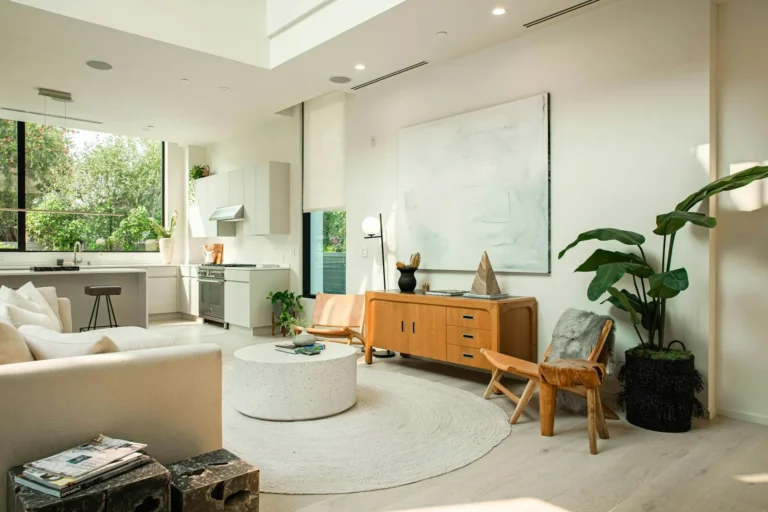
Visible floor is the big one. A room looks as large as the floor you can see, not as large as the square footage on the lease. Put furniture on legs, leave a few inches of clearance underneath, keep a clear path from the door, and your eye travels and the room breathes. A piece that meets the floor as one solid block does the opposite, which is why a leggy mid-century sofa can feel lighter than a chunky overstuffed one taking up the exact same footprint.
Then there are sightlines. You want your eye to land on something calm when you walk in, not on the side of a bookshelf or the back of a chair. Float pieces a few inches off the wall, angle nothing into the walkway, and keep the tallest stuff toward the edges so the center stays open.
Color does quiet work too. Small rooms cannot hold five competing color stories, so pick a light base, white, warm greige, soft sand, then two or three accent shades you repeat in the throw pillows, the art, and a rug. Repetition reads as intentional. A different bold color in every corner reads as a room that has not finished moving in.
And almost nobody uses the vertical space, because we picture a home as a floor plan and forget there are eight or nine feet of bare wall climbing over our heads in every room. Tall shelves, art hung high, curtains mounted near the ceiling rather than just above the window. Every one of those moves tells the eye the room is taller than it is. We get into the renter-safe ways to do it further down.
If you are furnishing your very first place and the list of what to even buy feels overwhelming, start with our first apartment checklist and come back here for the decorating. This guide assumes the basics are handled and you are ready to make the place feel like yours.
The living room: your hardest-working room
In a small apartment the living room is rarely just a living room. It is the home office, the dining room, the guest room when someone crashes, and the only room most visitors ever see. That means it carries more weight than its square footage suggests, and it is worth getting right first.
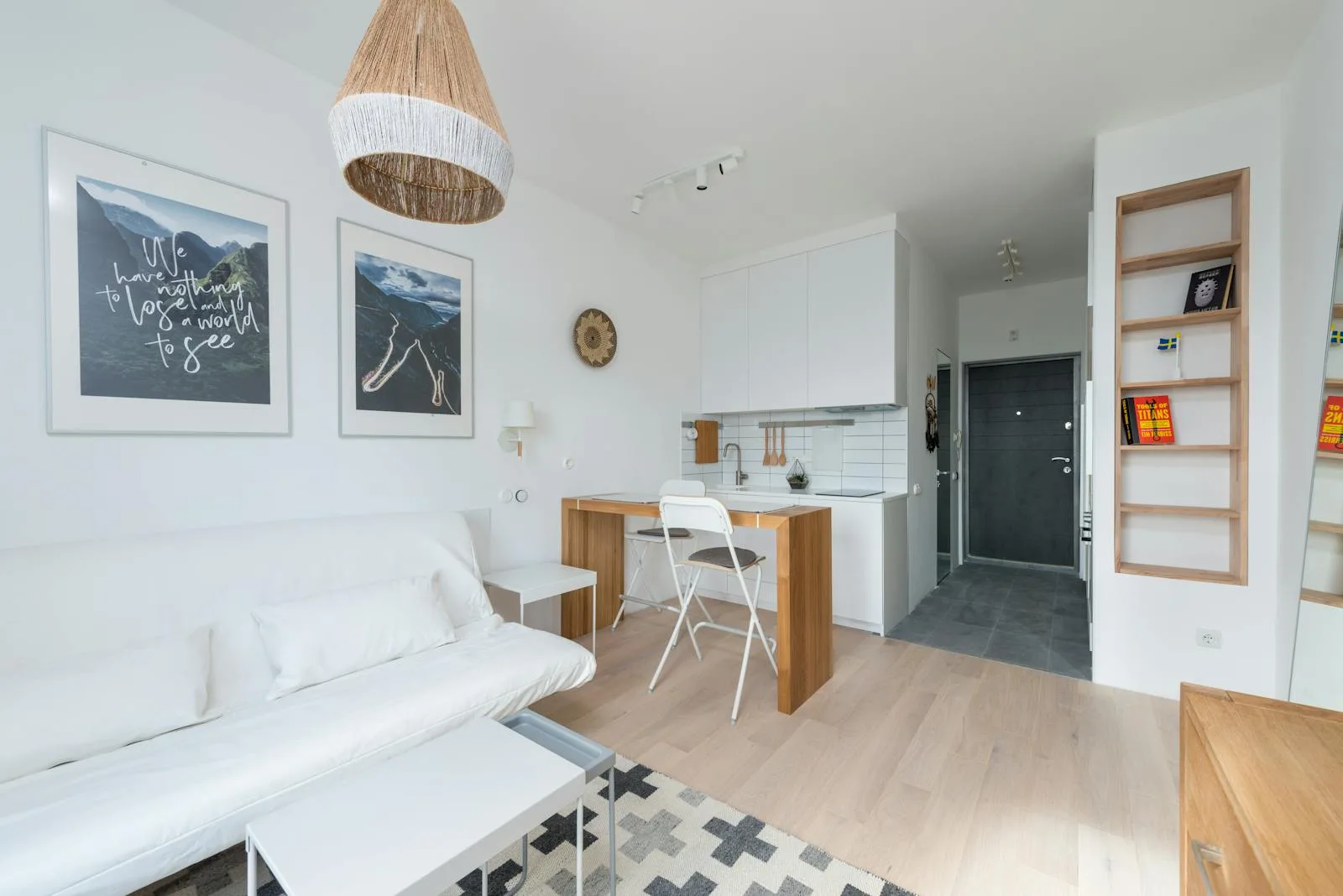
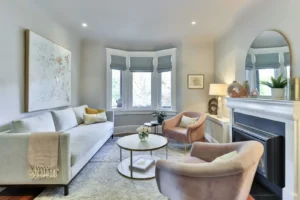
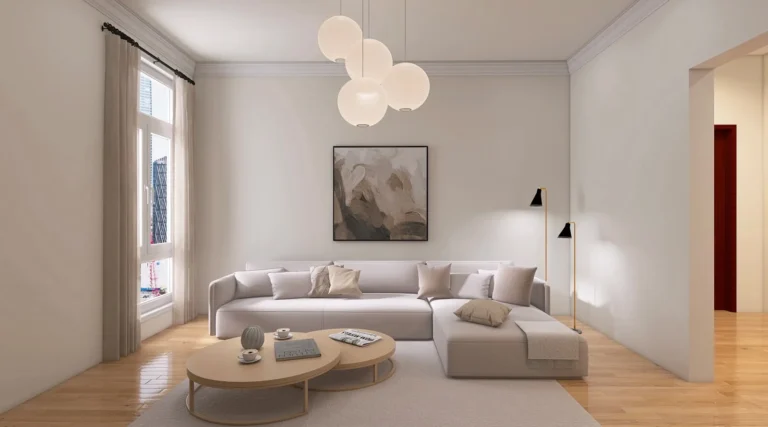
Start with the sofa, because it sets the scale for everything else. The instinct in a small space is to grab the most compact couch on the page, but a too-small sofa floating in the middle of the wall often looks more awkward than a properly scaled one. Aim for a piece that fills most of its wall with a little breathing room on each side, sits on visible legs, and has a low back so it does not wall off the room. An apartment-size sofa or a small sectional that tucks into a corner both work, and the corner version doubles as a soft divider if your living and sleeping areas share a room.
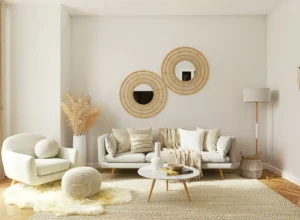
Use a rug to draw the edges of the living zone. In an open layout, a rug that sits under the front legs of your seating is what tells the eye where the living room is, no wall required. Size up rather than down here, a rug that is too small makes everything floating on it look like it is shrinking.
Then go vertical with storage and display so the floor stays open. A pair of tall, narrow shelves flanking the TV holds more than one wide low unit and pulls the eye up. Floating shelves, a slim console behind the sofa, nesting tables you can fan out when company comes and slide back together when they leave. Anything that gets stuff up and off the rug keeps the center of the room clear. For the full version of this room, including layouts for the awkward narrow living rooms most apartments hand you, see our guide to small apartment living room ideas.
The bedroom: calm, even when it is also everything else
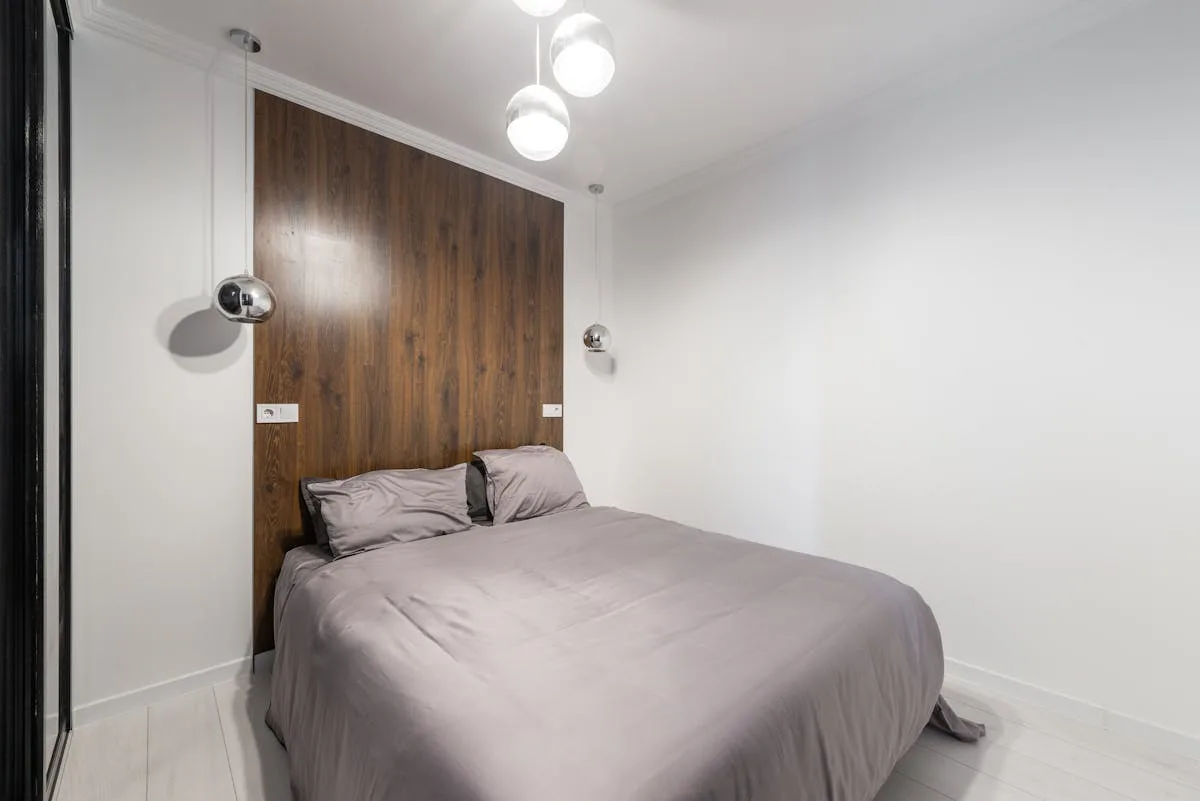
A small bedroom has one job your brain really cares about, which is reading as restful. That gets harder when the same ten by eleven feet also has to hold your clothes, your books, and sometimes your desk. The fix is to be ruthless about what sits on the floor and generous about what goes up the walls.
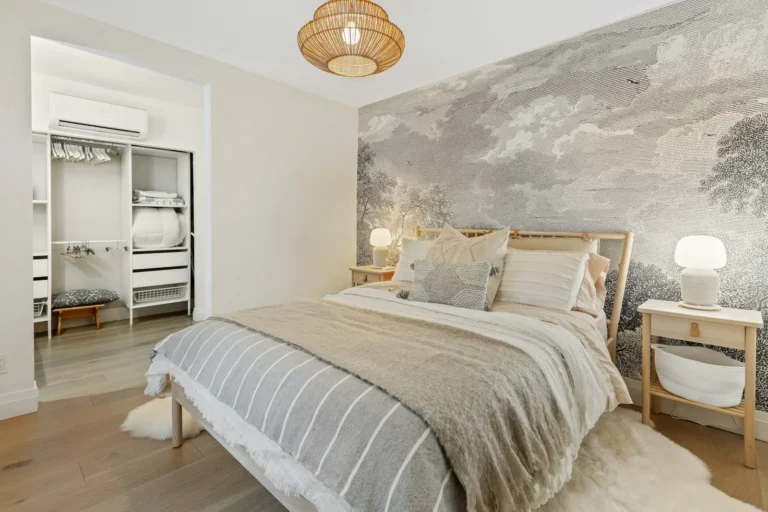
The bed is the biggest decision. Pick the right size honestly, a queen jammed wall-to-wall with no room to walk around it usually feels worse than a full with breathing room on both sides. Then claim the space underneath. A storage bed frame with drawers, or just a set of flat under-bed storage bins if you already love your frame, turns dead space into real hidden storage and lets you skip a bulky piece of furniture entirely.
Keep nightstands small or skip them for wall-mounted shelves and a clip-on reading light, which frees up the floor on both sides of the bed and looks deliberately spare instead of crowded. Hang curtains high and wide, mounted close to the ceiling and extending past the window frame, so the wall reads taller and the window reads bigger. And resist the urge to fill every surface. A nearly clear nightstand and one piece of art over the bed will out-calm a room covered in stuff every time.
If your bedroom is its own room, lucky you, lean into making it the one fully restful space in the apartment. If you are working with a true one-room layout, the rules shift, and we cover that whole situation in one bedroom apartment decorating ideas and, for the no-walls version, our studio apartment ideas guide.
The entryway you do not technically have
Most apartments do not come with an entryway. You open the door and you are standing in the living room, or worse, in the kitchen. But the spot where you walk in still does real work, it is where keys, mail, shoes, and bags either land neatly or pile into chaos, and it is the first thing you and every guest see. Building a small “drop zone” out of the few feet you do have makes the whole place feel more put together.
You do not need much. A narrow console table or a wall-mounted shelf for keys and mail, a small entryway mirror that bounces light and doubles as a last-look-before-you-leave, a few hooks for bags and a jacket, and a tray or bowl for the pocket stuff. If you have zero floor to spare, the whole thing can live on the wall and the back of the door. A mirror near the entrance does double duty, since it makes the tightest entry feel less like a hallway and more like a room. The full kit, including the no-floor-space version, is in our guide to apartment entryway ideas.
The kitchen: counters are the whole battle
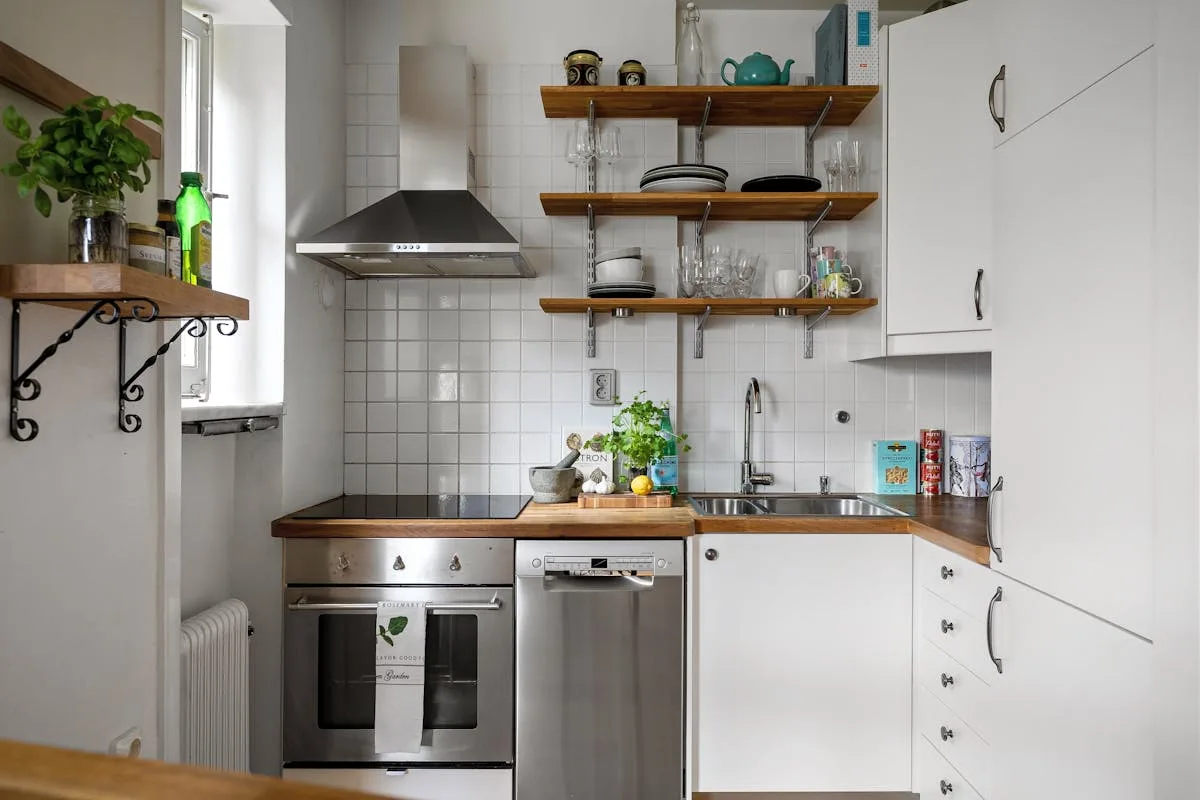
Small apartment kitchens are almost always short on two things, counter space and storage, and decorating one is really about winning back both without renovating something you do not own. The move is up and out, get things off the counter and onto walls, doors, and the few vertical inches you are not using.
A magnetic knife strip on the wall clears the block off the counter. An over-the-sink dish rack turns the sink into drying space you were not using. Stackable shelf risers add a second usable level inside cabinets, and a couple of over-the-door organizers on the inside of the pantry door hold the spices and wraps that were eating shelf space. None of it touches the structure, and all of it wins back the counter that makes a tiny kitchen feel workable instead of frantic. For the full kitchen, see our small apartment kitchen ideas guide. For more on squeezing storage out of nothing, our small apartment storage ideas guide goes deep on every room.
Walls: your biggest free square footage
When the floor is full, the walls are where a small apartment still has room to grow, and they are the cheapest place to add personality. The catch for renters is doing it without a wall full of holes you have to spackle on move-out day.
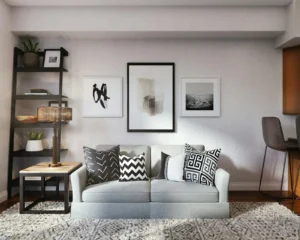
Hang art a touch higher and lump it together rather than scattering single small frames, a tight gallery cluster reads as one intentional piece instead of clutter. Lean a large mirror against the wall to bounce light and fake depth. Run a slim picture ledge so you can swap art and photos without new holes every time. And use the wall for function too, a pegboard or a row of hooks turns blank vertical space into storage for everything from headphones to the cast-iron pan.
The renter-safe part is in the hardware. Command strips and picture-hanging strips hold a surprising amount when you match the weight rating and follow the cure time, and they are made to release without pulling paint if you remove them slowly the way the package says. For heavier or higher-stakes pieces, adhesive hooks rated with some headroom over the actual weight are safer, and you should not push the rating. We test a hidden corner first with anything sticky, and you should too, since old or textured paint behaves differently than a fresh wall. For more wall ideas, see our apartment wall decor ideas guide, and for a deeper run at all the no-damage decor moves, see renter-friendly decor.
Furniture that does two jobs
The single biggest lever in a small apartment is buying fewer, smarter pieces. Every item that does two jobs is a second item you do not have to find floor space for, and in a tight footprint that compounds fast.
A storage ottoman is a footrest, a coffee table with a tray on top, extra seating, and a bin for blankets, all in one cube. A lift-top coffee table turns the couch into a desk or a dinner spot. A drop-leaf or folding table seats four for dinner and folds to a slim console against the wall the rest of the week. A bench at the foot of the bed holds linens and seats you while you put on shoes. A daybed works as a couch through the day and opens up to sleep a guest at night.
Buy these on purpose rather than collecting single-use furniture by accident, and a one-room apartment can quietly do the work of three. If your whole place is one room, this principle is the entire game, and our studio apartment ideas guide builds a layout around it. For the specific pieces worth buying, see our best space-saving furniture roundup.
Decorating on a budget
Small apartments are kind to a small budget, because you simply need less of everything. The trick is spending where it shows and saving where it does not.
Spend on the things you touch and see every day, the sofa, the mattress, the one good lamp that makes the room feel warm at night. Save on the swappable layer, throw pillows, art, plants, a rug, where a thrift-store frame and a five-dollar pothos do as much for the room as anything pricey. Lighting is the highest-impact cheap upgrade most renters skip, swap a harsh overhead for two or three warm lamps at different heights and the same apartment looks like a different, more expensive place after dark.
And shop your own place first. Repotting a plant, regrouping the art you already own into one cluster, or moving the rug to a new room often does more than a new purchase. The goal is a space that looks gathered over time, not bought in one anxious weekend. For more ways to stretch a small budget, see our cheap apartment decor guide.
December brings its own version of the problem: a tree and a wreath have to fit into the same square footage. Our apartment Christmas decor guide keeps it to clips and tension rods, and the small Christmas tree ideas post sizes the tree to the corner you actually have.
Pick one look and let it decide the small calls
A small apartment reads as finished when it commits to a single look instead of sampling five. Whatever you pick, cozy, modern, warm and collected, let it quietly settle the smaller questions for you: which throw pillow, which lamp, which frame. The decisions get easier and the rooms start pulling in one direction. If you are not sure what your style even is yet, our guide to building an apartment aesthetic walks through finding one and carrying it through a small space without it tipping into clutter.
The small wins worth buying, room by room
Six small buys, one per room, that punch above their price in a tight apartment. None of them needs a drill, most of them tuck away, and every one solves a problem a small place creates. The price ranges below are rough, for budgeting only and quick to drift with sales; the big furniture lives in the room guides linked above.
Frequently asked questions
What colors make a small apartment look bigger?
A light base, soft white, warm greige, pale sand, on the walls and the largest pieces keeps a room feeling open, since light surfaces recede and dark ones close in. Carry that base across rooms and add color only in the small, swappable stuff. One painted accent wall is fine if you can, but most renters get the same effect with light curtains, a big mirror, and a pale rug.
Where should I start when decorating a small apartment?
Start with the room you use most, usually the living room, and the biggest piece in it, usually the sofa, since that sets the scale for everything else. Get the large furniture placed and the floor clear first, then layer in rugs, light, art, and the small stuff.
How can renters decorate without damaging the walls?
Lean on Command strips and picture-hanging strips matched to the actual weight, adhesive hooks rated with headroom over what you are hanging, tension rods, and peel-and-stick products, and test anything sticky on a hidden corner first. These hold real weight and are designed to release without pulling paint when you remove them slowly, though older or textured walls are always worth a test patch.
What is the biggest mistake people make in a small apartment?
Crowding the floor with too many single-use pieces. One oversized or too-small sofa, a bulky single-purpose coffee table, and a few floor-hogging accent chairs eat the open floor that makes a room feel spacious. Fewer pieces that each do two jobs almost always feels bigger.
How do I make a small apartment feel cozy and not cramped?
Warm, layered lighting at different heights, soft textures in pillows and a throw, and one consistent palette turn small into cozy rather than cramped. The difference is intention. A cramped room is full by accident, a cozy one is full on purpose.
Small, on purpose
A small apartment is never going to be the place with the spare room and the walk-in closet, and that was never the assignment. The assignment is a space that fits the life you actually live, where the couch is on the right wall, the floor is clear enough to breathe, and the few things you own are the things you chose. Work it room by room, lean on the renter-safe tricks, and the place you signed for because it was what you could afford starts to feel like the one you would have picked anyway.
Get the renter's first-apartment checklist
Small-space decor ideas for renters, straight to your inbox.
The space under your bed is a closet you are not using. 8 renter-friendly under-bed storage picks sorted by clearance and contents, the one to skip, and the measurement to take first.
This post contains affiliate links. If you buy through one I may earn a small commission at no cost to you. The rental bathroom floor was a grid of small peach-pink tiles from sometime around 1996, set in yellowing white grout, and the landlord had said in the lease walkthrough that I was welcome to…
A small apartment feels cramped because the stuff has nowhere to live. 9 organizing principles, from going vertical to keeping surfaces clear, that make a tiny rental feel twice its size.
Manage Consent
To provide the best experiences, we use technologies like cookies to store and/or access device information. Consenting to these technologies will allow us to process data such as browsing behavior or unique IDs on this site. Not consenting or withdrawing consent, may adversely affect certain features and functions.
Functional
Always active
The technical storage or access is strictly necessary for the legitimate purpose of enabling the use of a specific service explicitly requested by the subscriber or user, or for the sole purpose of carrying out the transmission of a communication over an electronic communications network.
Preferences
The technical storage or access is necessary for the legitimate purpose of storing preferences that are not requested by the subscriber or user.
Statistics
The technical storage or access that is used exclusively for statistical purposes.The technical storage or access that is used exclusively for anonymous statistical purposes. Without a subpoena, voluntary compliance on the part of your Internet Service Provider, or additional records from a third party, information stored or retrieved for this purpose alone cannot usually be used to identify you.
Marketing
The technical storage or access is required to create user profiles to send advertising, or to track the user on a website or across several websites for similar marketing purposes.