This post contains affiliate links. If you buy through one I may earn a small commission at no cost to you.
Decorating an apartment on a budget is a strange kind of pressure. You scroll through rooms that clearly cost a paycheck to put together, look at the actual number in your account after rent, and quietly decide the place will just have to stay bare for a while. It does not. A small apartment is genuinely kind to a small budget, because you need less of everything, and the gap between a cheap-looking room and a pulled-together one is mostly about where you spend, not how much.
The whole game is spending on the few things that set the tone and saving on the layer that just decorates. Get that split right and a room furnished on a shoestring can look more considered than one someone threw money at in a single anxious weekend. Here is how to decorate a small apartment on a budget without it reading as cheap.
The short version: spend on the big things you touch every day and save on the swappable layer, light the room with warm lamps instead of the harsh overhead, shop secondhand before you buy new, add softness with textiles and plants, fake the expensive surfaces with peel-and-stick, and shop your own place before you spend a dollar.
The single rule that keeps a budget room from looking cheap is knowing which dollars matter. Spend on the things you use and see constantly, the sofa, the mattress, the one good lamp, since those set the comfort and the tone of the whole place and a flimsy version shows fast. Save on the swappable layer, the throw pillows, the art, the rug, the small stuff, where a thrifted find or a budget throw pillow cover does as much for the room as anything pricey.
Cheap is fine. Cheap-looking is the enemy, and the two are not the same. What usually gives cheap away is the shiny plastic finish, the thin slippery fabric, and the matched five-piece set that screams showroom, so steer around those and a modest sofa dressed with good textures and warm light reads far better than an expensive one under a bare bulb.
2. Light is the cheapest upgrade with the biggest payoff
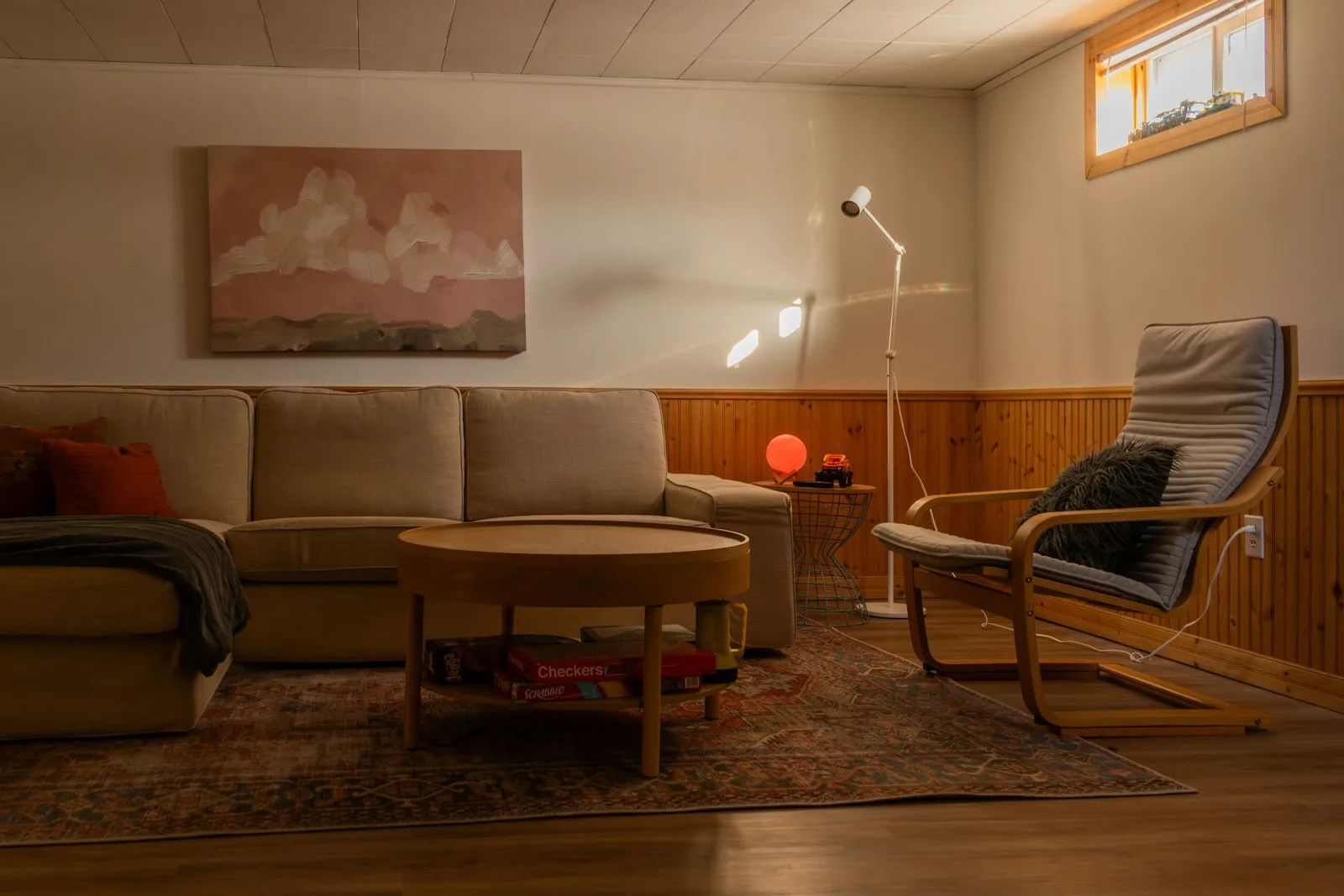
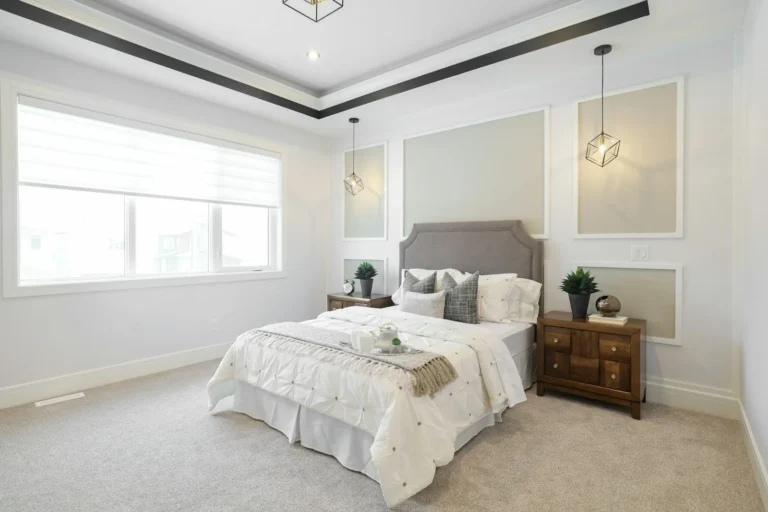
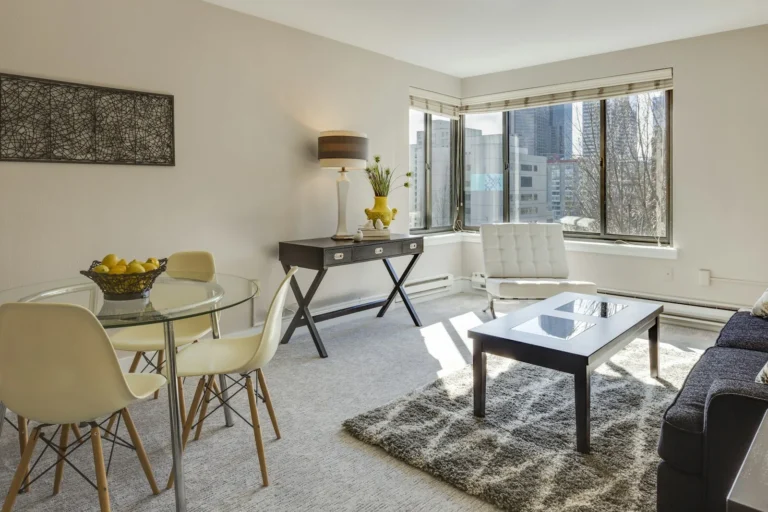
If you do one thing on this list, fix the lighting. Twenty dollars on a couple of lamps and warm bulbs rewrites a room more than almost anything else you could buy for the money, and most renters never get around to it. That single harsh ceiling light is what makes an apartment feel like a leasing office, and ignoring it after dark transforms the room. Add a floor lamp in a corner, a table lamp on a console, and maybe a small accent light on a shelf, and you get warm pools of light at different heights instead of one flat glare.
Spend the few dollars on warm white bulbs while you are at it. The cool blue-white ones make a room feel like a waiting area, the warm ones make it feel lived in, and they cost the same. A string of warm LED lights along a shelf or window adds a soft glow for almost nothing.
3. Shop secondhand before you buy new
The fastest way to make a budget go further is to buy things that already exist. Thrift stores, estate sales, Facebook Marketplace, and the curb on moving weekend are full of solid wood furniture, frames, lamps, and decor at a fraction of retail, and older pieces are often better built than the flat-pack equivalent. A real wood dresser or a solid side table for twenty dollars beats a particleboard one at full price on both looks and lifespan.
Buy the bones secondhand and spend your cash on the few new things that have to be new, like a mattress. A can of paint or new cabinet and drawer knobs can update a tired thrifted piece into something that looks deliberately chosen rather than handed down.
4. Add softness with textiles
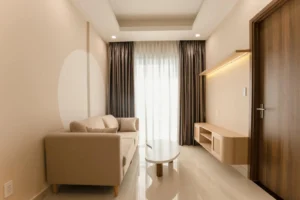
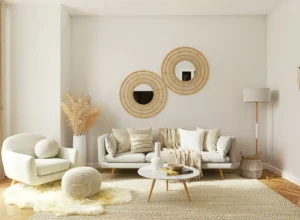
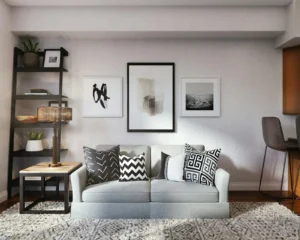
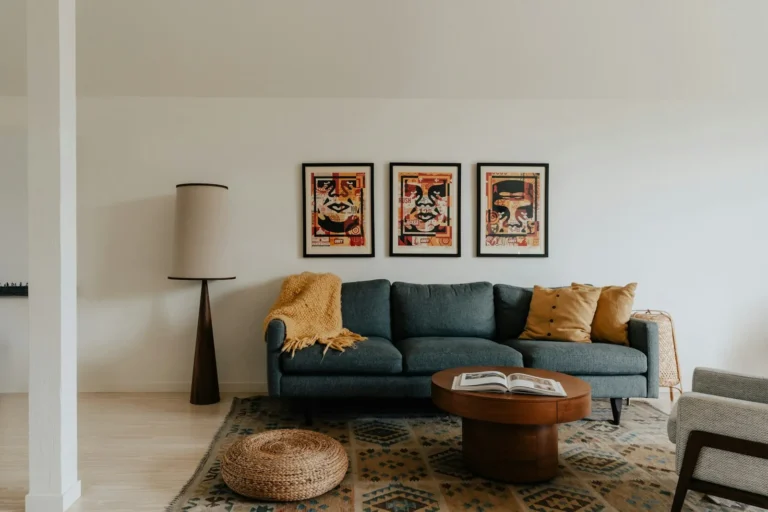
Soft layers are what make a room feel warm and finished, and they happen to be some of the cheapest decor you can buy. A couple of throw pillows and a knit throw blanket tossed on the sofa add color and texture for very little, and swapping just the covers lets you change the whole look by season without buying new inserts. A budget area rug anchors a seating zone and warms a cold rental floor.
Curtains are the sleeper upgrade here. A pair of simple floor-length curtains hung high and wide, near the ceiling and past the window frame, makes the window look bigger and the ceiling taller, and it softens the hard rental box for the price of a couple of panels.
5. Let plants do the expensive-looking work
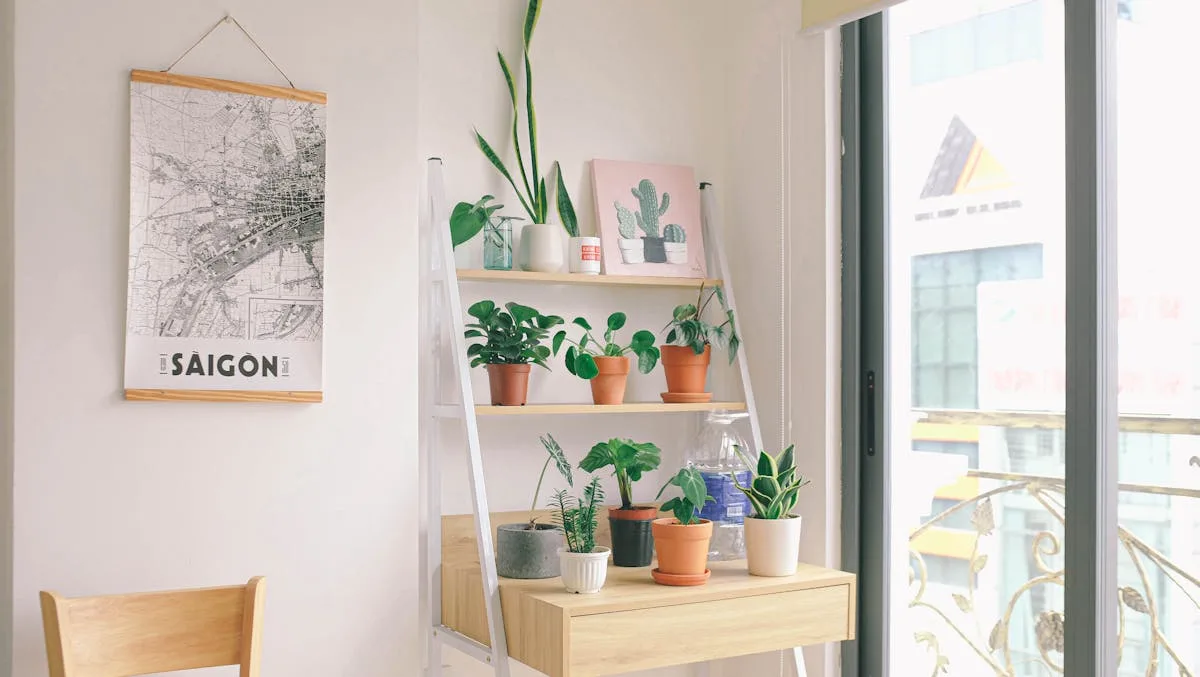
Greenery is the budget decorator’s secret weapon, because a few plants add life, color, and that lived-in, cared-for feeling that money cannot quite buy. A trailing pothos or a snake plant costs a few dollars, forgives a forgetful owner and low light better than most houseplants, and fills an empty corner or shelf better than another piece of furniture. Group a few at different heights for the look of a much more expensive room.
If your light is bad or your plant track record is honest, one good faux plant in a nice pot gets you the same softening with zero upkeep. The pot matters more than the plant here, so spend the little money there.
6. Fake the expensive surfaces
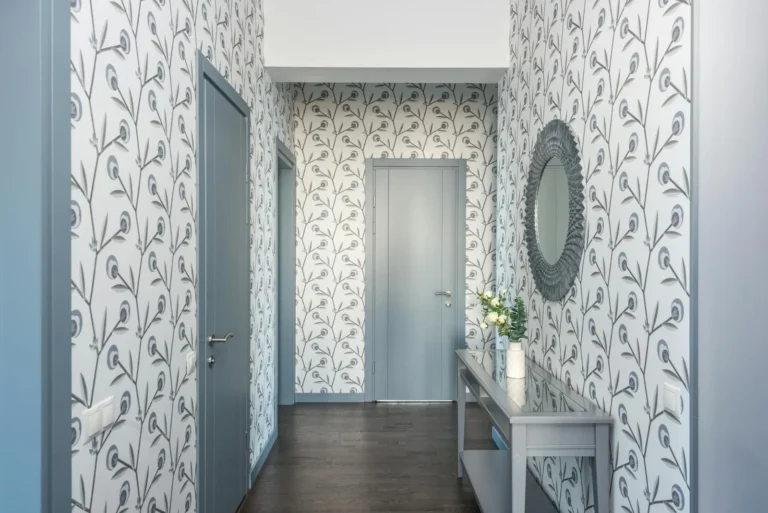
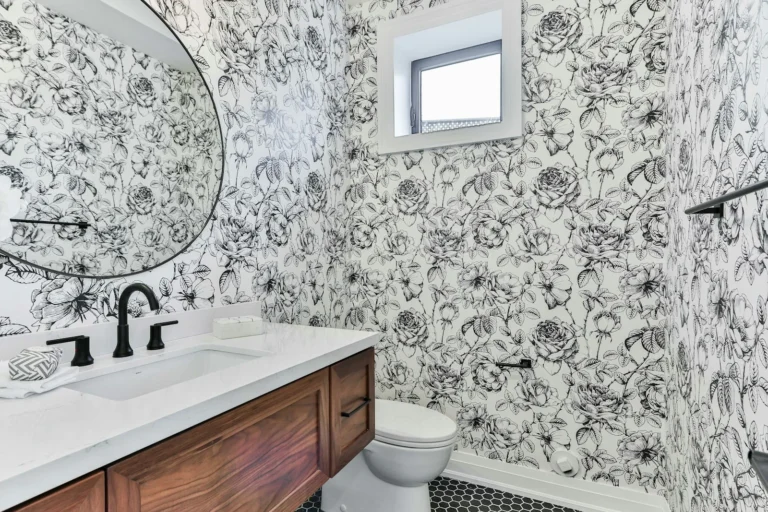
A lot of what reads as cheap in a rental is the landlord-grade surfaces, the dated backsplash, the scuffed counter, the bare beige wall, and you can change all of it for the length of a lease without renovating a thing. Peel-and-stick wallpaper on one accent wall transforms a room for the cost of a few rolls and peels off clean. Contact paper covers a tired counter or shelf, and a peel-and-stick backsplash lifts a dingy kitchen.
These removable surfaces punch far above their price and come right back off at move-out on most walls, which is exactly the renter-friendly territory our renter-friendly decor guide covers in full. Test a hidden patch first, then enjoy a big change for cheap while you are there.
7. Shop your own apartment first
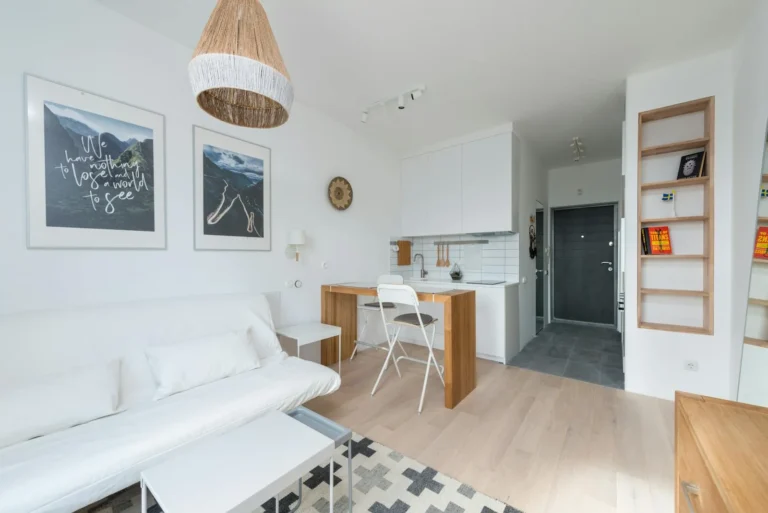
Before you spend anything, spend an afternoon rearranging what you already own, because it is free and it works more often than you would think. Move the rug to a different room, regroup the scattered art into one cluster on a single wall, repot a struggling plant, turn the sofa to face the window, and clear the surfaces down to a few chosen things. A room reads as expensive when it looks gathered over time and edited with care, not when it is full of new stuff.
Half of looking pulled-together is just editing, removing the clutter that makes any room feel cheap regardless of what it cost. Once you have shopped your own place, the few things you actually need to buy get a lot clearer, and a clear plan keeps a budget from leaking on impulse decor that does nothing.
8. Finish with a few small, intentional touches
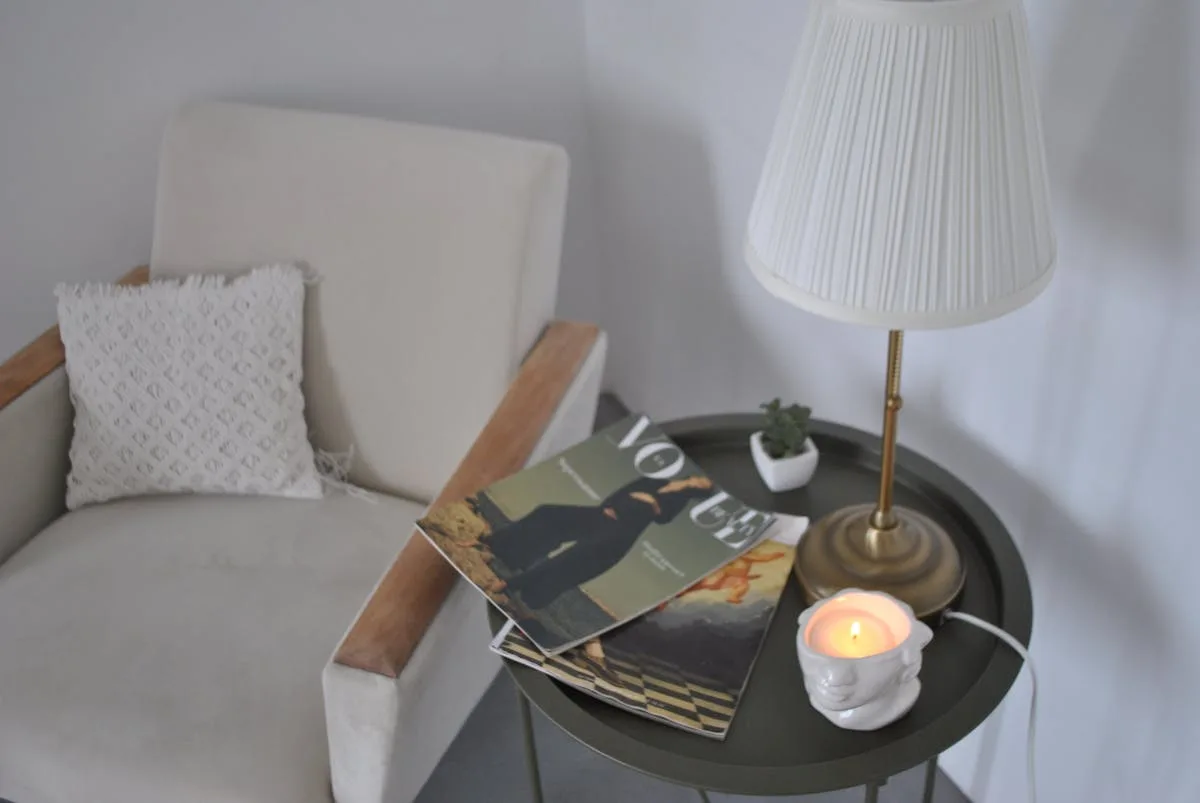
The last layer is the cheap one that ties it together. A set of matching frames on the wall or a shelf, a decorative tray that corrals the remotes or the coffee-table clutter into something deliberate, a candle or two, and a stack of books you actually like all read as a room someone styled. None of it costs much, and together it is the difference between bare and finished.
The trick is restraint. A few chosen objects read as intentional, every surface covered reads as clutter, and clutter is what makes a room look cheap no matter the price tags. If you are not sure what look you are even going for, our guide to building an apartment aesthetic helps you pick a direction so your cheap finds all pull the same way.
Work in that order, the big warm pieces first and the small finishing touches last, and a tight budget stretches a surprisingly long way. The budget is one constraint among several in a small apartment, so for the full room-by-room approach, head back to our small apartment decorating ideas guide.
Frequently asked questions
How can I decorate my apartment cheaply?
Spend on the big things you use daily and save on the decorative layer. Fix the lighting with warm lamps, shop secondhand for furniture and frames, add softness with budget pillows, throws, and curtains, bring in a few cheap plants, and fake the expensive surfaces with peel-and-stick. Then edit hard, since a clutter-free room reads as intentional rather than cheap.
How do I make cheap decor look expensive?
Cohesion and restraint do most of the work. Stick to one light palette, keep surfaces edited down to a few chosen objects, hang art at the right height, and warm the room with layered lighting instead of an overhead bulb. Spend the little money you have on the pot, the frame, and the lampshade, the parts that show, and the cheap thing inside them reads as deliberate.
What is the cheapest way to make an apartment feel cozy?
Warm, layered lighting and soft textiles are the cheapest path to cozy. A couple of warm-bulb lamps, a throw blanket, a few pillows, and curtains hung high turn a bare rental into a comfortable room for very little. Add a plant or two and the space feels cared-for, which is most of what cozy actually is.
Where should I spend money and where should I save when decorating?
Spend on what you touch and use every day, the sofa, the mattress, the lighting, since cheap versions of those show and wear fast. Save on the swappable decorative layer, the pillows, art, rugs, and accessories, where budget and thrifted options look just as good and let you change the room cheaply over time.
How can renters decorate on a budget without losing the deposit?
Stick to removable and freestanding decor. Peel-and-stick wallpaper, contact paper, and removable hooks change the look and come off clean on most walls, secondhand furniture is freestanding by nature, and textiles, lamps, and plants add nothing you have to undo. Test any adhesive on a hidden patch first, since older, textured, or freshly painted walls can lift, and the walls come back the way you found them.
Cheap to buy, not cheap to look at
A small budget is not the thing standing between you and an apartment you love, it just changes the order you do things in. Put your money where it shows, lean on secondhand and removable everywhere else, light it warm, soften it with plants and fabric, and edit out the clutter, and a room you furnished for almost nothing ends up looking like one you planned. The bare beige box you moved into starts feeling like a home, and your account survives the process, which is the only version of decorating that actually works on a budget.
Get the renter's first-apartment checklist
Small-space decor ideas for renters, straight to your inbox.
Peel-and-stick ceiling tiles cover popcorn, stains and water marks in a rental without nails. Seven picks that hold, three to skip, and the install moves that protect your deposit.
This post contains affiliate links. If you buy through one I may earn a small commission at no cost to you. You took a shower in the rental bathroom, walked out to brush your teeth, and noticed the seam above the toilet. The roll you put up six weeks ago, the one that looked perfect…
Eight small apartment living room ideas that keep the floor clear and the room working, from sofa sizing to renter-safe wall decor.
Manage Consent
To provide the best experiences, we use technologies like cookies to store and/or access device information. Consenting to these technologies will allow us to process data such as browsing behavior or unique IDs on this site. Not consenting or withdrawing consent, may adversely affect certain features and functions.
Functional
Always active
The technical storage or access is strictly necessary for the legitimate purpose of enabling the use of a specific service explicitly requested by the subscriber or user, or for the sole purpose of carrying out the transmission of a communication over an electronic communications network.
Preferences
The technical storage or access is necessary for the legitimate purpose of storing preferences that are not requested by the subscriber or user.
Statistics
The technical storage or access that is used exclusively for statistical purposes.The technical storage or access that is used exclusively for anonymous statistical purposes. Without a subpoena, voluntary compliance on the part of your Internet Service Provider, or additional records from a third party, information stored or retrieved for this purpose alone cannot usually be used to identify you.
Marketing
The technical storage or access is required to create user profiles to send advertising, or to track the user on a website or across several websites for similar marketing purposes.