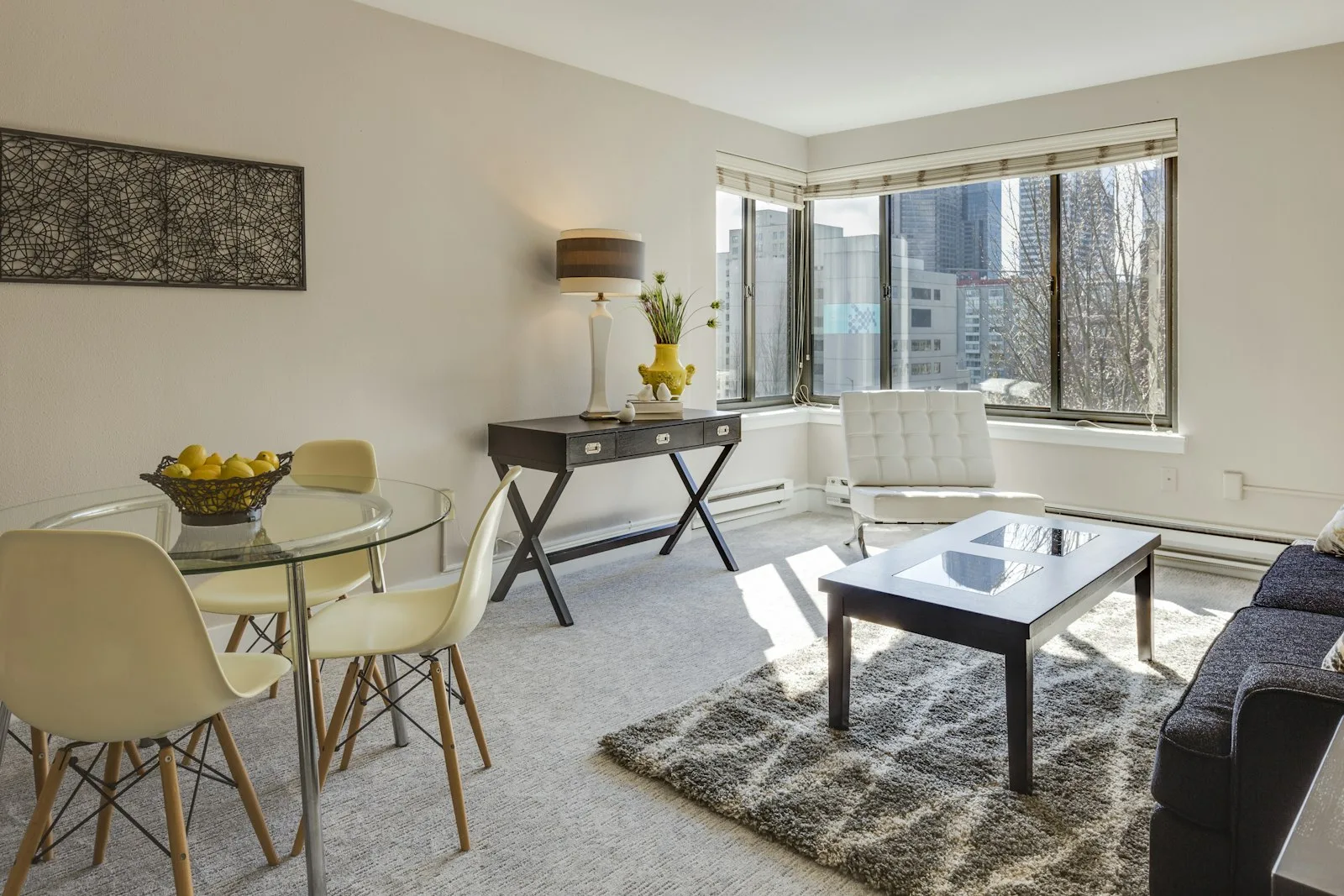
Small Apartment Living Room Ideas That Actually Work in a Tight Space
This post contains affiliate links. If you buy through one I may earn a small commission at no cost to you.
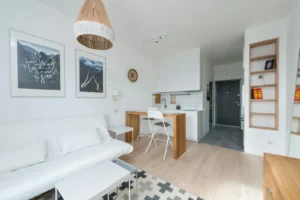
The living room is the part of a small apartment that has to do the most pretending. It is a lounge when you want to watch something, a dining room when someone comes over, an office five days a week, and the one room every visitor judges the whole place by. And you usually get somewhere between 100 and 200 square feet to pull all of that off, often in a shape that was clearly drawn by someone who never had to fit a couch in it.
So the goal here is not a magazine living room. It is a living room that holds your real life without feeling like a waiting area, leaves you a clear path to the kitchen, and still looks like a room you chose. These are the moves that get you there.
The short version: scale the sofa to fill its wall instead of hiding in the middle of it, keep furniture on legs so the floor stays visible, anchor the zone with a properly sized rug, push storage up the walls, and let a couple of pieces do double duty so you are not furnishing one room four times.
1. Pick the sofa for the wall, not the floor plan
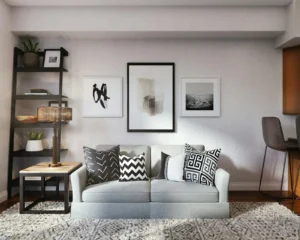
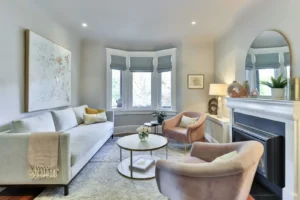
Most small living rooms have exactly one wall the sofa can live on, so start there. The instinct is to buy the smallest couch you can find, but a too-small loveseat marooned on a long wall looks more awkward than a sofa scaled to the space. Measure the wall, leave a little air on each side, and fill the rest.
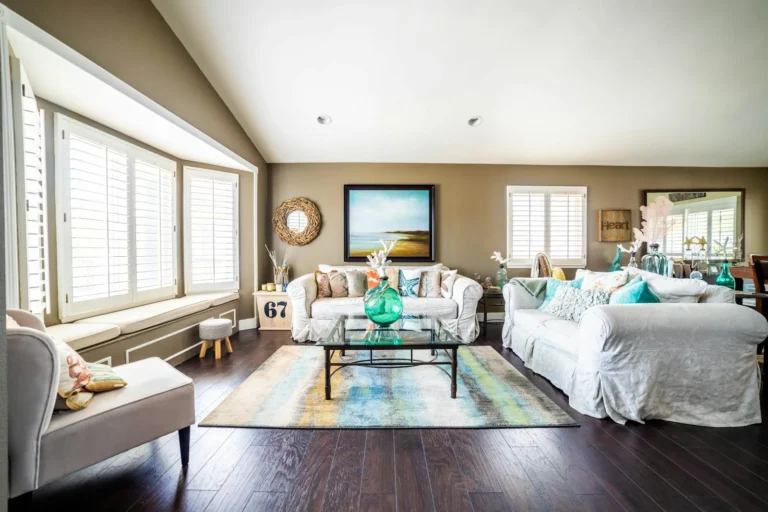
A low back keeps the room feeling open, since a tall-backed sofa walls off everything behind it. Legs matter too, a few inches of visible floor underneath makes the whole piece feel lighter. An apartment-size sofa is built to these proportions, and a small sectional with a chaise tucked into a corner gives you more seating per square foot plus a soft edge that helps zone an open layout.
2. Let one rug do the zoning
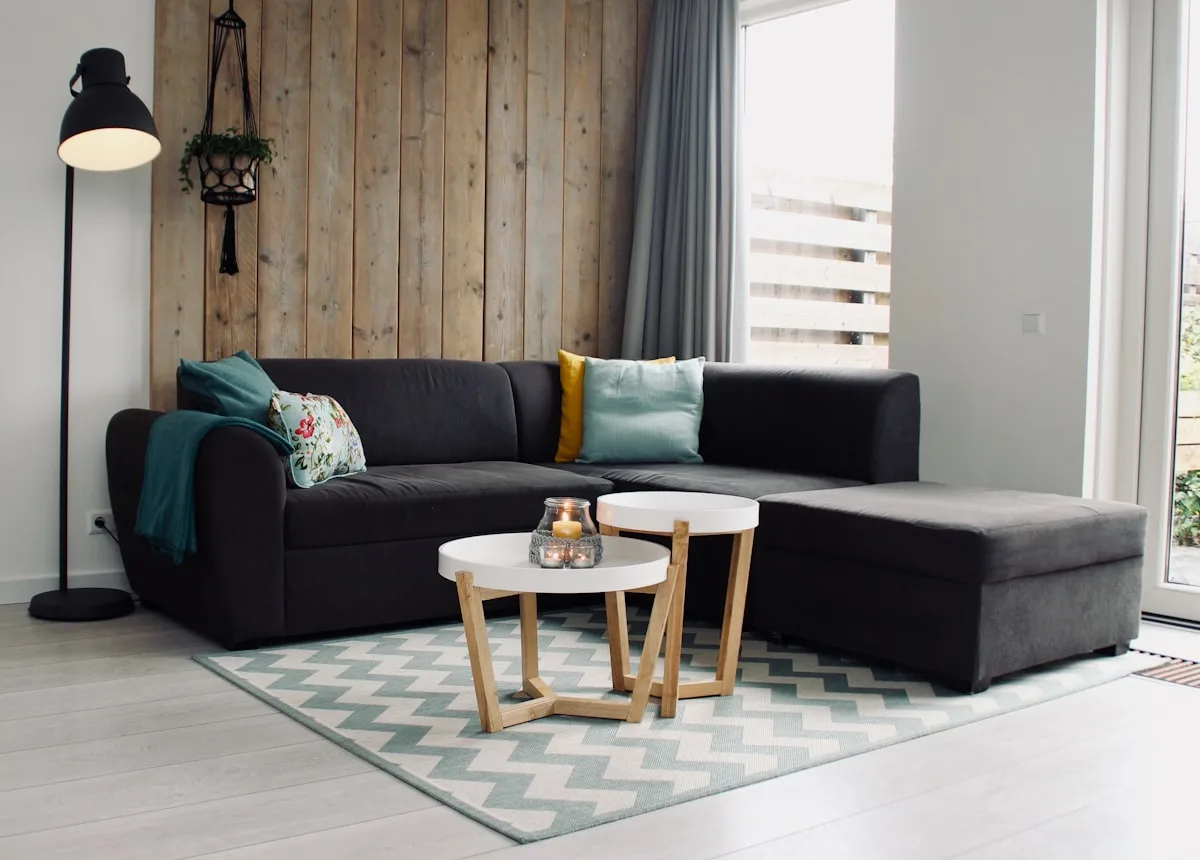
In an apartment where the living room flows into the dining area or the entry, a rug is what tells your eye where the living room actually is. No wall required. Slide it under at least the front legs of your seating so the sofa, chairs, and coffee table read as one connected group instead of furniture scattered across a floor.
The common mistake is going too small. A rug that floats in the middle like a postage stamp shrinks everything sitting around it. Size up until it reaches under the main pieces, and the whole zone instantly looks intentional. A flatweave or low-pile area rug is easy to vacuum and easy to move when the layout inevitably changes.
3. Float the layout off the walls, just slightly
Shoving every piece flat against the walls feels like it should open up the middle, but it usually leaves a dead pool of space in the center and a cramped perimeter. Pulling the sofa even a few inches off the wall, angling a chair, and letting the rug define the group gives the room depth and makes it feel arranged rather than lined up.
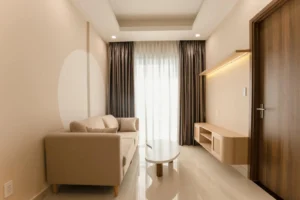
In a really narrow living room, work with the shape instead of against it. Run the sofa along the long wall, use a slim console table behind it to catch keys and a lamp, and skip the bulky armchair in favor of a small accent chair or a pouf you can pull over when you need it.
4. Make the coffee table earn its keep
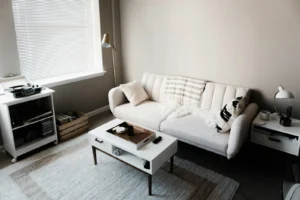
The coffee table sits dead center, so it is the easiest piece to upgrade from single-use to hard-working. A storage ottoman is a footrest, a soft coffee table with a tray on top, a spot for guests to perch, and a hidden bin for blankets and remotes, all in one cube. A lift-top coffee table rises to couch height so you can work or eat from the sofa, which matters a lot when the couch is also your desk and your dining chair.
If even a coffee table feels like too much in the walkway, a set of nesting tables fans out when you have company and slides back into one small footprint when you do not.
5. Go vertical with storage and display
When the floor is spoken for, the walls are where a small living room grows. Two tall, narrow bookshelves flanking the TV hold more than one wide low unit and pull your eye up, which makes the ceiling feel higher. Floating shelves keep books and plants off the floor entirely. A slim media console with closed storage hides the cable mess that makes a small room read as cluttered.
The rule is up, not out. Every basket, book, and gadget you can get onto a wall or a shelf is floor you just bought back.
6. Light it in layers, not one harsh overhead
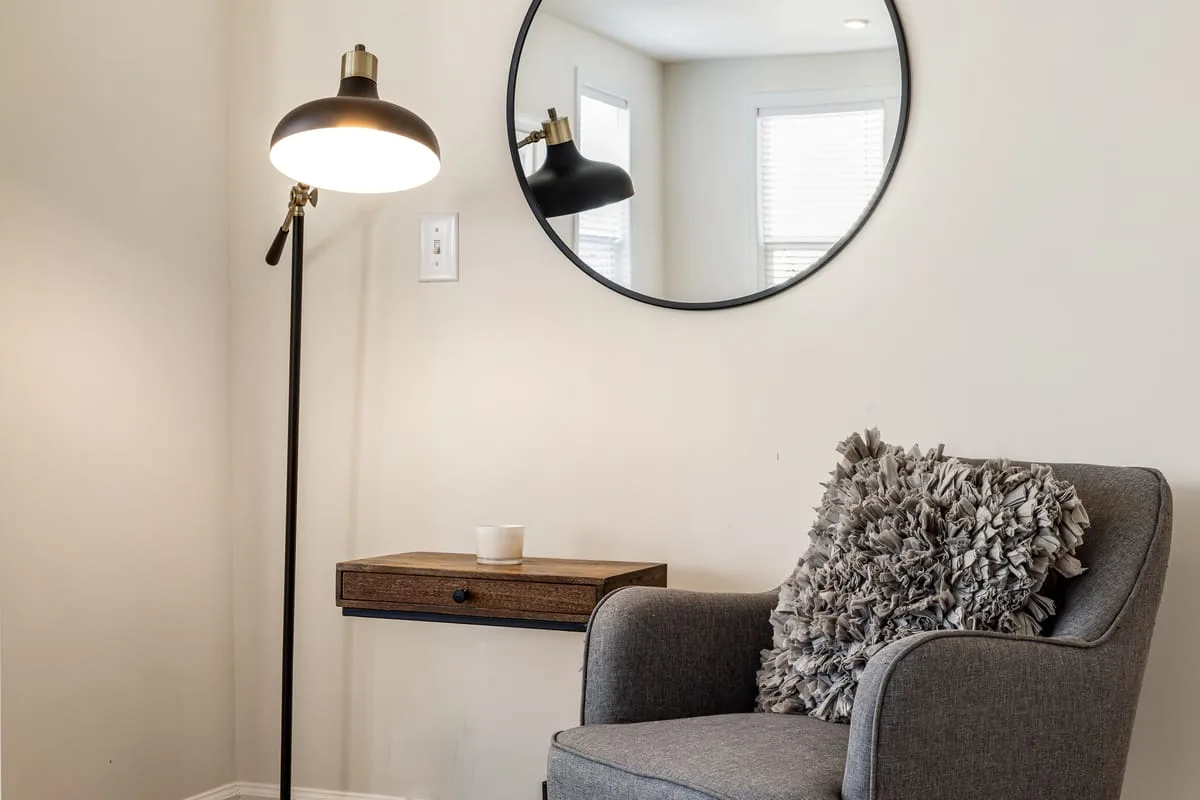
Almost every apartment comes with a single hard ceiling light that makes the room feel like a leasing office. The cheapest, fastest upgrade to a small living room is to ignore it after dark and light the room in layers instead. A floor lamp in a corner, a table lamp on the console, and maybe a small accent lamp on a shelf give you pools of warm light at different heights. The same room looks warmer and more expensive the second the overhead is off.
Warm bulbs over cool ones, every time. Cool white reads institutional, warm white reads like a home.
7. Use a mirror to fake square footage
A large mirror is the oldest small-space trick because it works. Leaned against the wall or mounted across from a window, it bounces daylight deeper into the room and gives the eye somewhere to travel, so a tight living room reads bigger and brighter than it is. One generous mirror beats a wall of tiny ones, which just read as busy.
8. Hang it all without a single hole
The reason a lot of these ideas stop at “lean it against the wall” is that most of us cannot drill. Good news, almost none of this needs a hole. Hang art with picture-hanging strips matched to the weight, mount floating shelves and lighter pieces with heavy-duty adhesive hangers, and run curtains on a tension rod inside the window frame so the wall stays untouched. Test anything adhesive on a hidden patch first, since old or textured paint can lift. For the full no-damage playbook, see our guide to renter-friendly decor.
You do not need all eight of these at once. Get the sofa and rug right first, since they set the scale and the zone, then layer in vertical storage, warm light, and a mirror as you go. This room is one piece of the larger puzzle, so for the rest of the apartment, room by room, head back to our small apartment decorating ideas guide.
The living-room pieces worth buying
Six pieces that turn those principles into a room, every one freestanding or renter-reversible and none of them needing a wall anchor. Treat the prices as ballparks, not live quotes.
Frequently asked questions
How do you arrange a living room in a small apartment?
Put the sofa on the longest usable wall, anchor the seating group with a rug that reaches under the front legs, and keep a clear walkway to the rest of the apartment. Pull pieces a few inches off the walls so the room has depth instead of a hollow center.
What size sofa is best for a small living room?
One that fills most of its wall with a little space on each side, sits on visible legs, and has a low back. Apartment-size sofas and small corner sectionals are sized for this. A sofa that is too small often looks more awkward in the room than one scaled correctly.
How can I make my small living room look bigger?
Keep the floor visible with leggy furniture, use one light and consistent palette, add a large mirror to bounce light, and pull the eye up with tall shelves and high-hung curtains. Clutter on the floor reads as small, clear floor reads as space.
How do I fit a dining or work area into a small living room?
Let furniture double up. A lift-top coffee table works as a desk or dining surface from the couch, and a drop-leaf table against the wall folds out for meals and folds flat the rest of the time. A console behind the sofa can also serve as a slim desk.
Can I decorate a rental living room without damaging the walls?
Yes. Picture-hanging strips, adhesive hooks rated with headroom over your item’s weight, and tension rods for curtains all hold real weight and are made to release without pulling paint when you remove them slowly. Test adhesives on a hidden corner first, since older or textured walls behave differently, and you can hang art, shelves, and curtains without a single hole.
One room, four jobs, no chaos
A small living room is asking a lot of itself, and that is fine. Give it the right-sized sofa, a rug that draws the line, light that warms it up after dark, and a couple of pieces that quietly do two jobs, and the room stops feeling like a compromise. It just feels like yours, working as hard as you do and still looking like a place you would happily come home to.