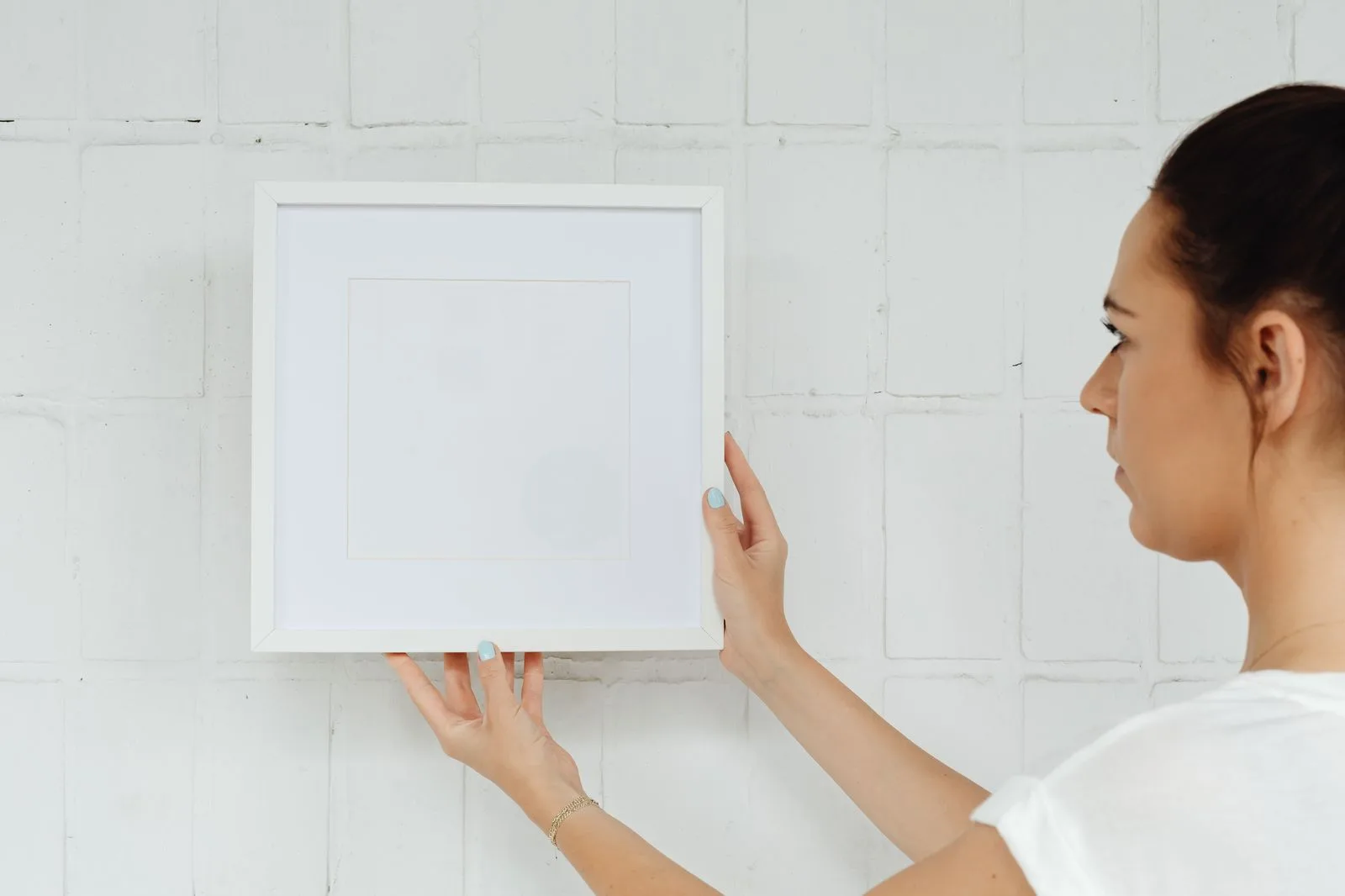
You are standing in the middle of your rental holding a framed print, you do not own a drill, and the lease says no holes larger than a picture nail. Maybe the apartment has plaster walls and the last person who tried to push a tack into one chipped the corner. Maybe your kitchen wall is concrete and three earlier tenants gave up entirely. Whatever you are looking at, there is a way to hang the thing on it without making a single hole. Most renters get this slightly wrong because they pick the method first and the wall last, when it should be the other way around.
Start with how to read your wall, then look at the nine methods below, then jump to the section that maps each method to the kinds of things you actually want to hang.
The wall type changes which methods will work. Most US rental apartments built after 1970 have drywall (also called sheetrock or gypsum board). Older buildings, especially in northeastern US cities, often have plaster on lath. Concrete and brick walls show up in mid-rise apartments, basements, and some industrial conversions. Each one behaves differently under adhesive.
A quick tap-and-push test takes ten seconds. Push the head of a thumbtack lightly against the wall. If it sinks in easily and you can leave a tiny dimple, you have drywall. If you feel a hard resistance and the tack barely marks the surface, it is plaster. If the tack stops immediately with a metallic-feeling thud, you have concrete or brick under a thin paint layer.
Drywall takes adhesive strips and hooks beautifully when the paint is cured. Plaster takes them with slightly weaker grip and benefits from extra cure time on the strip. Concrete and brick (painted) work with adhesive in cool, dry rooms but lose grip in humidity; in damp rooms you may need tension-mount alternatives instead. The same Command strip rated for 16 pounds on smooth drywall will hold roughly 10 to 12 pounds on plaster and 8 to 10 on painted concrete in our experience.
9 ways to hang things without nails (or drilling)
Nine methods, ordered roughly from lightest-duty to heaviest-duty.
1. Washi tape (for paper and very light items)
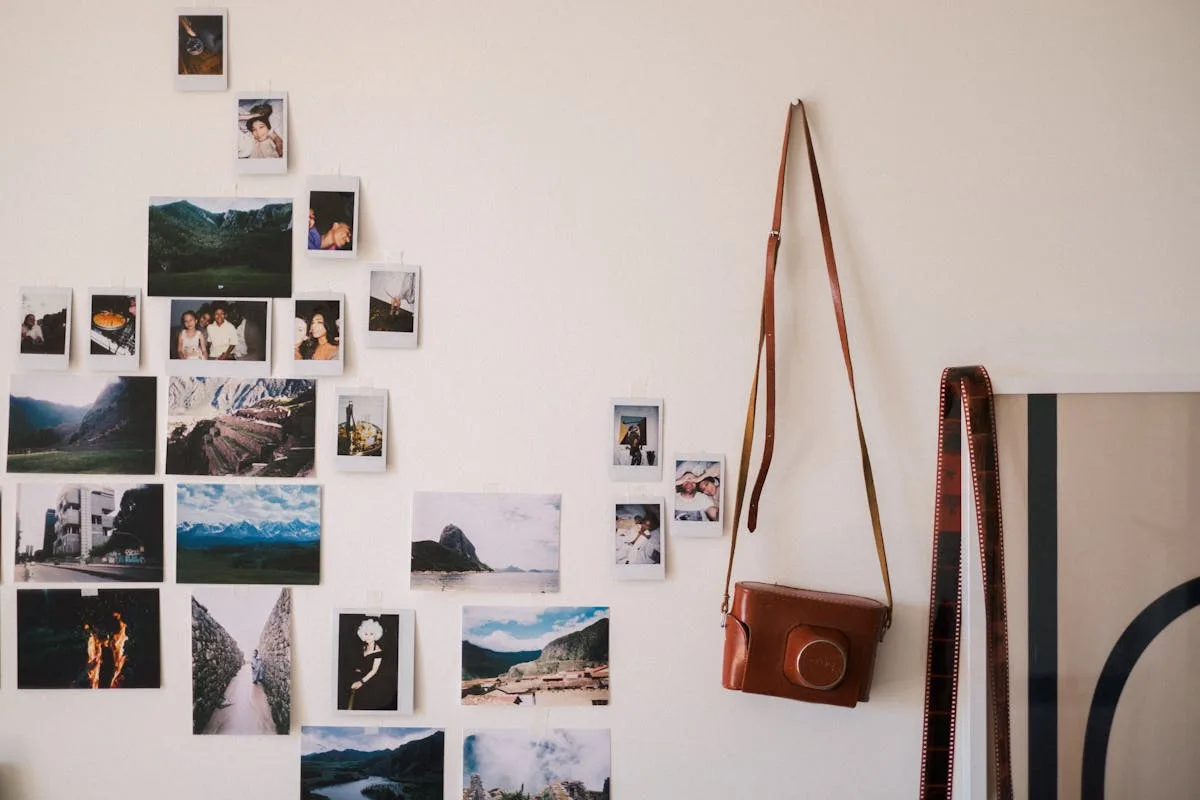
Rice-paper tape with low-tack adhesive. Holds a postcard, a paper print under 8×10, a small flat fabric piece. Cannot carry weight beyond that. See our washi tape wall decor guide for the specific use cases washi handles well.
2. Command picture-hanging strips (for framed art up to 16 pounds)
Velcro-style adhesive strips that lock together and release with a downward pull on a hidden tab. The large size holds up to 16 pounds per pair on smooth painted drywall. Small for prints under 8×10, medium for 8×10 to 16×20, large for 16×20 to 24×36 with mat and glass. Always apply to a clean wall (rubbing-alcohol wipe), press for 30 seconds, wait one hour before loading weight.
3. Command hooks (for hanging objects up to 15 pounds)
Adhesive-backed hooks rated by size. Small holds 0.5 to 3 pounds (keys, masks), medium holds 3 to 5 pounds (light wreaths, mugs), large holds 7.5 to 15 pounds (coats, totes, heavier wreaths). Press for 30 seconds, wait an hour before hanging.
4. Monkey hooks and Hercules hooks (for medium-heavy frames, with a pinhole)
These are technically not no-damage. The hook pierces drywall through a small pinhole and supports up to 50 pounds. The pinhole is smaller than a standard picture nail (closer to a needle than a nail) and is usually accepted by landlords as “normal wear” because it does not damage the paint. Best for renters whose lease allows pinholes but not nails, and for hanging anything heavier than Command rated weight.
5. Adhesive-backed metal hooks (for medium objects up to 10 pounds)
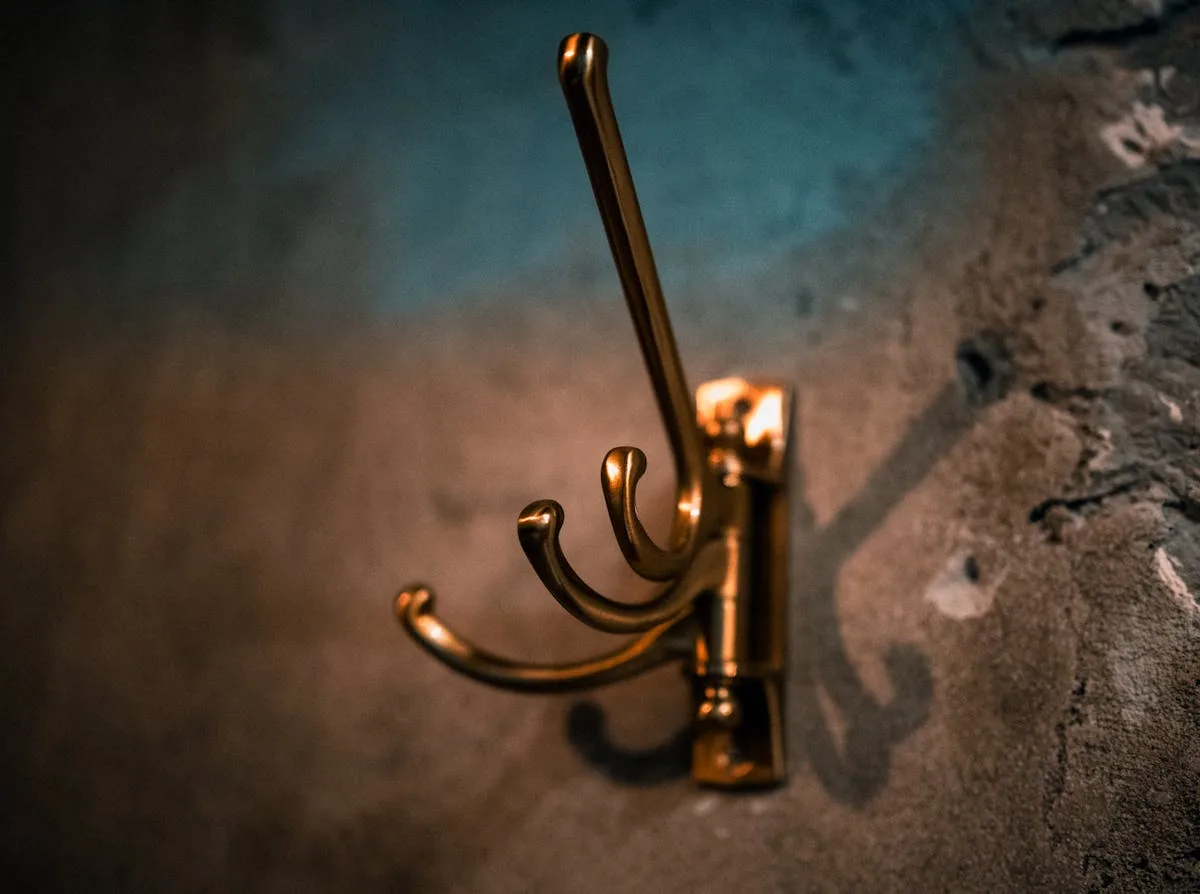
Brands like Sugru, 3M, and Scotch offer industrial-grade adhesive hooks with metal arms. These hold more than plastic Command hooks (often rated 8 to 10 pounds) and are better for things like robe hooks on a bathroom door or a coat hook in an entryway. Same install rules: clean wall, press, wait.
6. Magnetic strips (for small metallic items)
A magnetic strip (kitchen knife rack style) mounted with adhesive backing or wedged into a tight corner holds small metallic items: knives, kitchen tools, small frames with magnetic backers, postcards in metal clips. The wall surface needs adhesive grip; the magnetic strip itself does the holding.
7. Tension rods and tension-mount shelves (for shelving and curtains)
Spring-loaded rods that compress between two parallel surfaces. A tension rod across a window frame becomes a curtain rod. A tension shelf between two bookcases turns dead air into extra storage. Tension shelves hold 5 to 15 pounds of books and styled objects without ever touching the wall. The catch: works only where two parallel surfaces exist, which is fewer corners than you think when you start looking.
8. Removable mounting putty and museum putty (for 3D objects)
A reusable putty (3M Strips, Quakehold, Funtak) holds small 3D objects flush to a wall: a small ceramic dish on a wall as a tray, a postcard taped under glass, a propped lightweight figurine. Holds 1 to 3 pounds, lifts off cleanly with a fingernail. Not for anything bigger than a small picture frame.
9. Lean, do not hang
The largest pieces in your rental do not need to be hung at all. A floor mirror under 50 pounds leans against the wall with zero stress on the drywall. A large framed canvas or print leans on top of a low cabinet or dresser. Secure the top edge to the wall with one adhesive bumper or a dab of museum putty so the piece does not “walk” outward from vibration. This is the laziest method on the list and one of the most effective.
What to hang with what (by object type)
Use the method that matches the weight and the wall. Quick lookup.
Framed prints and photos (under 16 pounds)
Command picture-hanging strips, medium or large pairs. Apply to a clean wall, press 30 seconds, wait an hour. For frames over 16 pounds (large gallery prints with thick wood frames), switch to monkey hooks if your lease tolerates pinholes, or lean the piece.
Mirrors
Under 5 pounds: Command picture-hanging strips. Under 10 pounds: heavy-duty Command strips, doubled up. Under 50 pounds: monkey hooks. Over 50 pounds: lean against the wall on top of a cabinet, secure the top edge with adhesive bumpers. Floor mirrors taller than 4 feet always lean; do not try to hang.
Shelves
Tension-mount shelves between two parallel surfaces (between bookcases, between built-ins, in a closet). French cleats with adhesive backing exist but are unreliable on rental walls; tension or floor-standing bookcases are safer. For decorative wall shelves under 5 pounds of load, heavy-duty Command shelf brackets handle it.
Hanging plants
Adhesive-backed ceiling hooks (Command makes a dedicated outdoor-rated line) hold up to 5 pounds of live weight, which is plenty for a small trailing pothos or a smaller hanging planter. For heavier plants (larger philodendrons, mature hanging baskets), use a tension rod across a window or doorway and clip the plant to that rod.
Curtains
Tension rods are the default for renters. A spring-loaded rod across a window frame holds a curtain panel without touching the wall. For heavier curtains (blackout, lined velvet), use a tension rod rated for higher weight, or a magnetic-mount rod if your window frame is steel.
Wreaths and seasonal decor (under 5 pounds)
Command hooks (large or medium, depending on weight) on the wall or door. For a front door wreath, the outdoor-rated Command hook handles weather better than indoor versions. Suction-cup hooks work on glass doors but should be considered short-term (they release in low humidity).
Coat racks and entryway hooks
Adhesive multi-hook strips (3M, Command large hook variety) on a wall hold a hat, a bag, and a jacket per hook. For higher-capacity entryway storage (multiple winter coats), an over-the-door hook organizer carries the load without touching the wall.
Installation tips (the things specs do not tell you)
The thing that actually determines whether your hook stays up is not the brand. It is the 90 seconds you spend prepping the wall before the strip ever touches it. Wipe the exact spot with a rubbing-alcohol pad. Skin oils, dust, and residue from a previous install kill bond strength on contact, and the package never says so on the front.
Check the paint age while the wall dries. Anything painted in the last 30 days is still curing, and adhesive applied to uncured paint bonds to the paint film instead of the wall, which pulls paint on removal three months later. Wait 30 days minimum, 60 if you want to be safe.
Then press for the full 30 seconds the package tells you to. Wait an hour before hanging any weight. Most failures trace back to people skipping that hour. Cold rooms (below 60°F) reduce tack on first contact; humidity above 70% weakens the adhesive within days. The sweet spot is a normal indoor 68°F afternoon.
Getting it level on the first try
The other secret no package mentions: stick a strip of painters tape on the wall first, mark the top edge of the frame on it with a pencil, then use a small bubble level to draw the level line. The Command strip goes on directly above the line. Adjust before the strip fully bonds (you have about 30 seconds of repositioning time). Crooked frames are the most common renter regret with Command products, and it costs you a fresh pair of strips every time you redo it.
Removal: how to take everything off without taking paint with it
This is where the deposit actually gets saved or lost, and your move-out manager will notice the difference at 60 seconds with a flashlight. Three rules cover most cases.
For Command strips and hooks, find the bottom stretch-release tab and pull straight down, parallel with the wall, slowly. The strip elongates and releases from the adhesive without tearing paint. If the strip resists, do not yank; warm the area gently with a hair dryer on low for 30 seconds, then pull again.
For washi tape and tension rods, just lift them off. Washi peels at a low angle in one motion; tension rods unscrew at the spring.
For monkey hooks, pull the hook straight out of the wall. The pinhole closes nearly invisibly. If it does not, a tiny dab of spackle and a swipe of touch-up paint blends it before move-out inspection.
If adhesive residue remains on the wall after Command removal, a damp microfiber cloth with rubbing alcohol lifts it. Avoid Goo Gone on painted walls without a test patch in a hidden spot.
Frequently asked questions about hanging without nails
Will Command strips really hold a heavy frame?
Command picture-hanging strips in the large size are rated for 16 pounds per pair on smooth painted drywall, applied per spec (clean wall, 30-second press, one-hour wait). Most framed prints under 20×30 inches with mat and glass fall well below that weight. For oversized frames (24×36 and up) or heavy wood frames, double up two pairs of large strips, or switch to monkey hooks.
What is the difference between a monkey hook and a regular nail?
A monkey hook (also sold as Hercules hook or hangman) is a thin curved metal hook designed to pierce drywall through a single small hole no wider than a needle. It supports 50 to 100 pounds depending on the brand. A regular picture nail makes a wider hole, often visible after removal. Most landlords accept monkey-hook pinholes as normal wear; many do not accept nail holes without a deposit charge.
Can I hang a TV mount without drilling?
Not safely. TVs are heavy, dynamic loads (they get bumped, weight shifts when cords pull), and no adhesive system on the market is rated for that combination. The renter-safe alternative is a free-standing TV stand, a corner-mount tension pole (some brands market floor-to-ceiling TV mounts), or a TV cabinet that sits flush against the wall.
Do adhesive strips work on textured walls?
Less reliably than smooth drywall. Texture (orange-peel, knockdown) means adhesive only contacts the high points of the surface, so bond strength drops 20 to 40 percent versus smooth walls. For textured walls, use Command strips rated above the weight you actually need, or switch to monkey hooks where the wall allows.
How long do Command strips actually hold?
In normal indoor conditions on smooth, cured paint, Command strips reliably hold for three to five years before any noticeable adhesion loss. Direct sunlight, daily temperature swings (windowsills, near heating vents), and humidity (bathrooms) shorten this to 1 to 2 years. Replace strips proactively if you notice any edge lift.
That framed print in your hands has nine paths up onto the wall, and the right one depends on the wall under the paint and the weight in the frame. Pick the method that matches both, install it on a clean cured surface, and the only thing your move-out manager finds when you leave is the same wall you found when you moved in. When you are ready to think about what to actually hang in each room, our renter-friendly wall decor guide covers the ideas; for a bigger statement, removable wallpaper for renters walks through accent-wall installs that go up without drilling.
The hooks and strips handle the hanging; for the walls, floors, and surfaces they sit on, see our renter-friendly decor hub.
Get the renter's first-apartment checklist
Small-space decor ideas for renters, straight to your inbox.
Peel-and-stick crown molding adds high-end ceiling trim to a rental with no saw, no nails, no miter cuts. Six picks that hold and an install walkthrough.
This post contains affiliate links. If you buy through one I may earn a small commission at no cost to you. You took a shower in the rental bathroom, walked out to brush your teeth, and noticed the seam above the toilet. The roll you put up six weeks ago, the one that looked perfect…
Decorate a rental apartment without losing your deposit. Walls, floors, ceiling, bathroom, plus a 30/60/90 playbook and a 7-rule deposit-saver checklist.
Nine housewarming gift basket ideas for a new apartment, from a kitchen starter basket to a coffee lover basket, plus how to pack a basket so it looks full.
This post contains affiliate links. If you buy through one I may earn a small commission at no cost to you. The first apartment where I tried this was a 540-square-foot Chicago studio with a galley kitchen and a bathroom roughly the size of a coat closet. The bathroom floor was beige sheet vinyl, lifting…
You signed the lease, walked into the empty studio, and clocked the wall you cannot drill into. The long one across from the kitchenette, the one your couch has to live against. Everything you put on that wall is going to be either Command-strip light, or it is not going up at all. And the…
Manage Consent
To provide the best experiences, we use technologies like cookies to store and/or access device information. Consenting to these technologies will allow us to process data such as browsing behavior or unique IDs on this site. Not consenting or withdrawing consent, may adversely affect certain features and functions.
Functional
Always active
The technical storage or access is strictly necessary for the legitimate purpose of enabling the use of a specific service explicitly requested by the subscriber or user, or for the sole purpose of carrying out the transmission of a communication over an electronic communications network.
Preferences
The technical storage or access is necessary for the legitimate purpose of storing preferences that are not requested by the subscriber or user.
Statistics
The technical storage or access that is used exclusively for statistical purposes.The technical storage or access that is used exclusively for anonymous statistical purposes. Without a subpoena, voluntary compliance on the part of your Internet Service Provider, or additional records from a third party, information stored or retrieved for this purpose alone cannot usually be used to identify you.
Marketing
The technical storage or access is required to create user profiles to send advertising, or to track the user on a website or across several websites for similar marketing purposes.