This post contains affiliate links. If you buy through one I may earn a small commission at no cost to you.
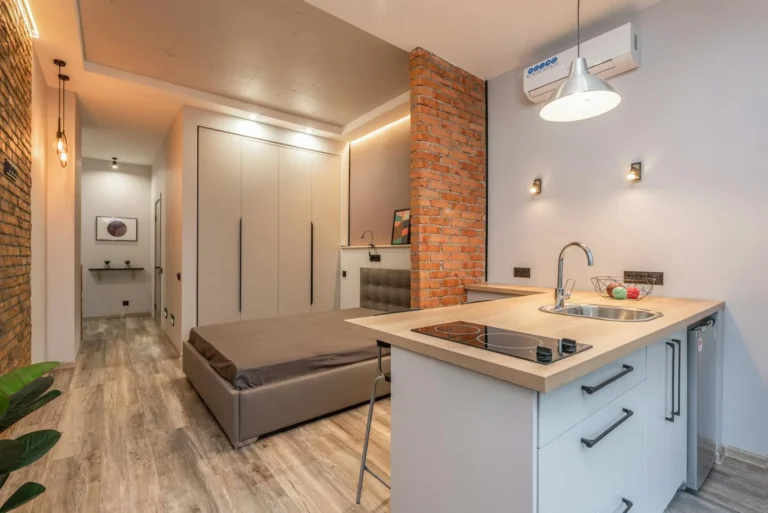
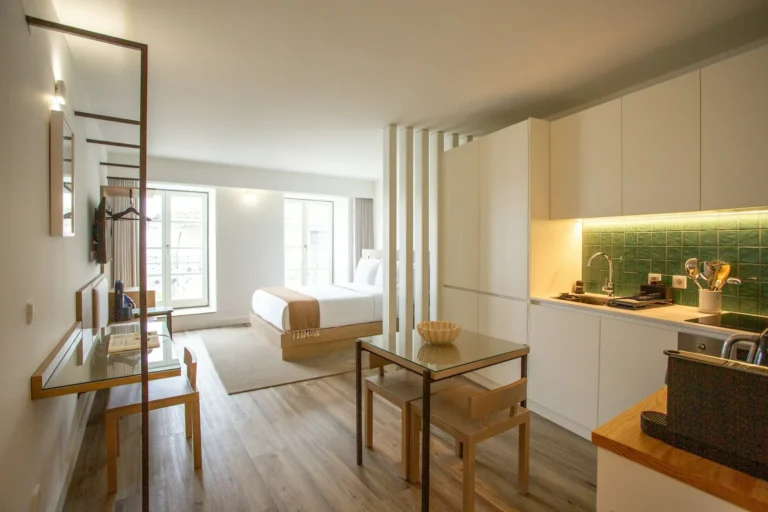
A studio is one room asked to be four. You sleep, work, eat, and unwind in the same square footage, and when none of it is separated, the whole place reads as one big bedroom with a couch in it. The fix is not a wall, which your lease forbids anyway. It is a handful of soft dividers that tell your eye where one part of the room ends and the next begins, so the same space starts to feel like a small, deliberate home instead of a dorm.
The best part is that none of this requires permission, power tools, or anything you cannot take with you. Below is how to divide a studio apartment using furniture you already have, a few renter-friendly add-ons, and the kind of visual tricks that cost nothing at all.
The short version: divide a studio by drawing edges, not building walls. Anchor each zone with its own rug, float your sofa so its back becomes a wall between the living and sleeping areas, and add a freestanding screen, a leaning shelf, or a ceiling-track curtain where you want a stronger line. Different lighting and a tall plant finish the job, and all of it moves out with you.
You divide a studio by giving each activity a clear edge, even with no walls between them. Decide where the sleeping, living, and working zones go, then use rugs, furniture placement, and a divider or two to mark the borders. The goal is for someone standing in the doorway to read three or four distinct areas instead of one undefined room.
Start by deciding which corner sleeps. The bed wants the quietest spot, usually away from the door, and once it has a home the other zones arrange themselves around it. We map this out floor plan by floor plan in our studio apartment layout ideas guide, and the moves below are how you actually draw the lines once you know where each zone lives.
Use rugs to give each zone an edge
The cheapest, most effective divider in any studio is a rug. A rug under your living area draws a clear box around the sofa and coffee table, and a second rug under the bed gives the sleeping zone its own footprint. The eye reads the edge of a rug as the edge of a room, so two or three well-placed rugs can split a single space into distinct areas without a single physical barrier.
Keep the rugs in the same color family so the room still reads as one cohesive home rather than a patchwork, the same way a tight palette holds together the looks in our apartment aesthetic guide.
Float your furniture to build invisible walls
Most people shove every piece of furniture against the walls, which actually makes a studio feel smaller and more like a single room. Pulling pieces away from the walls is how you build dividers out of furniture you already own.
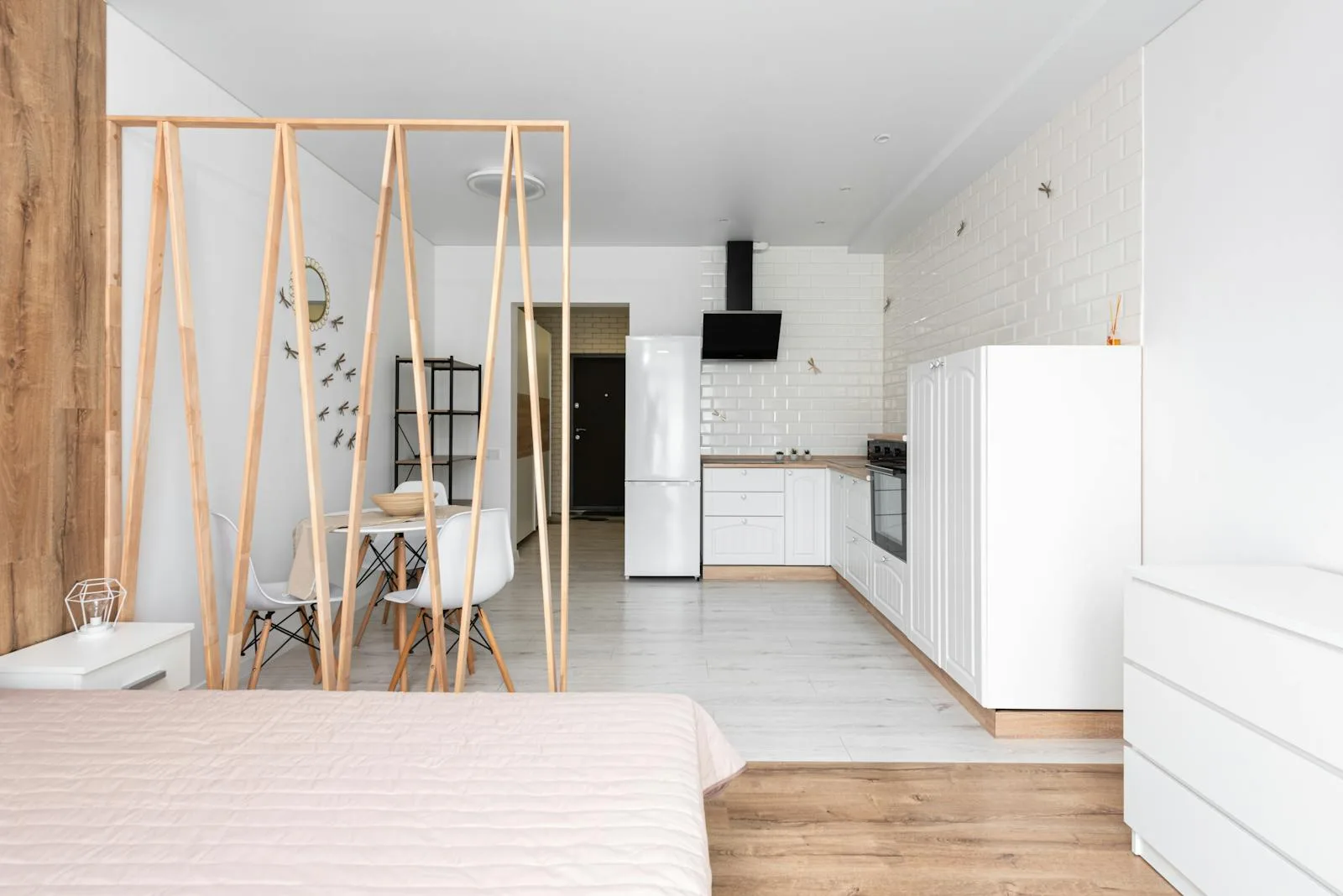
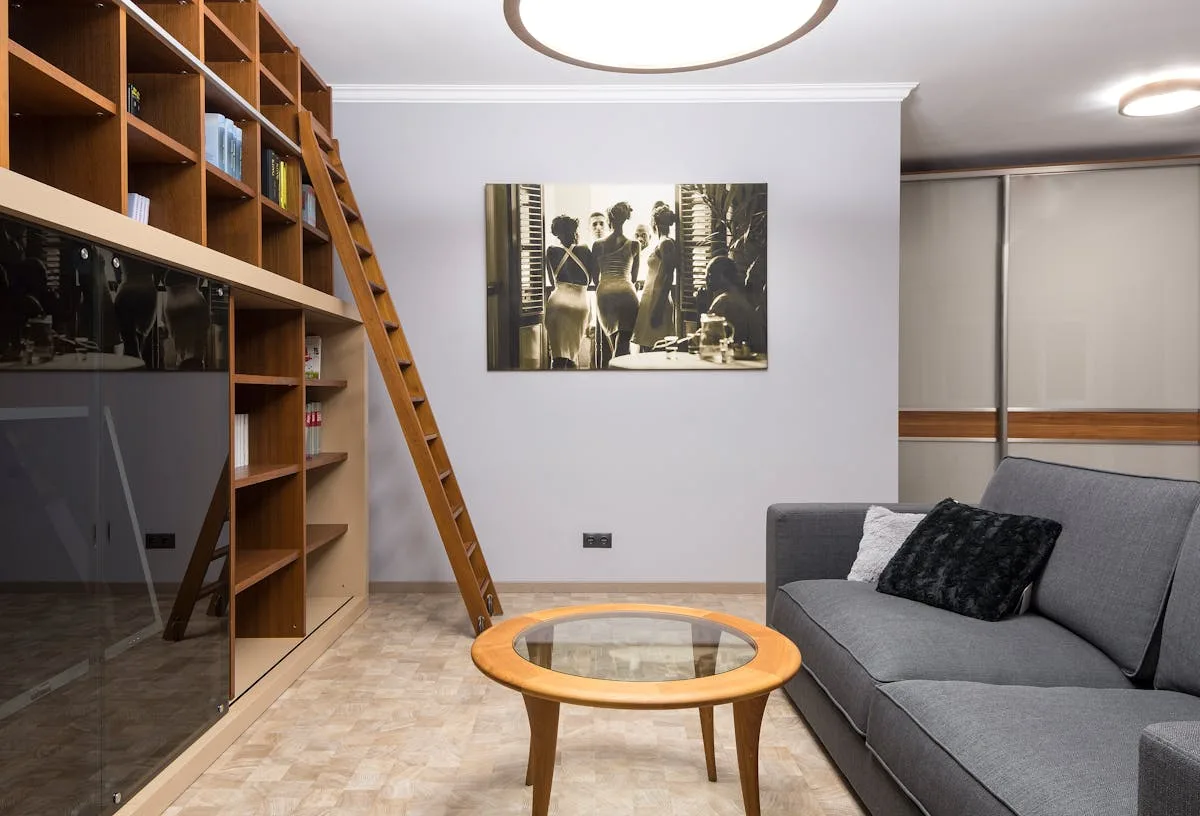
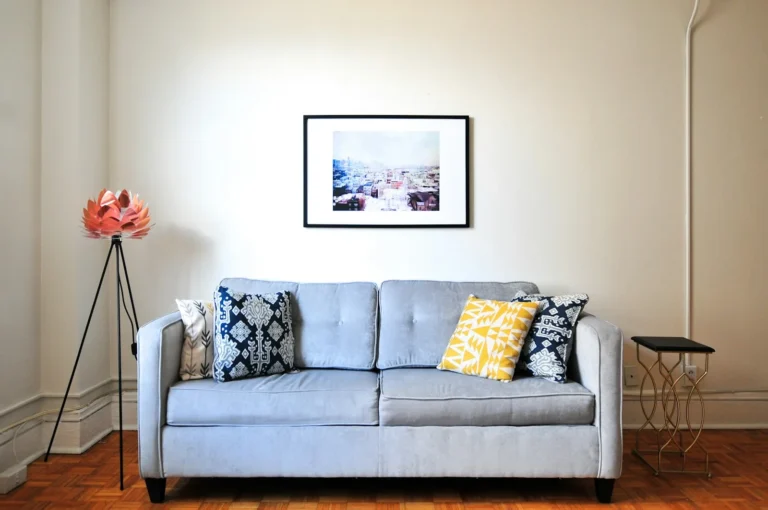
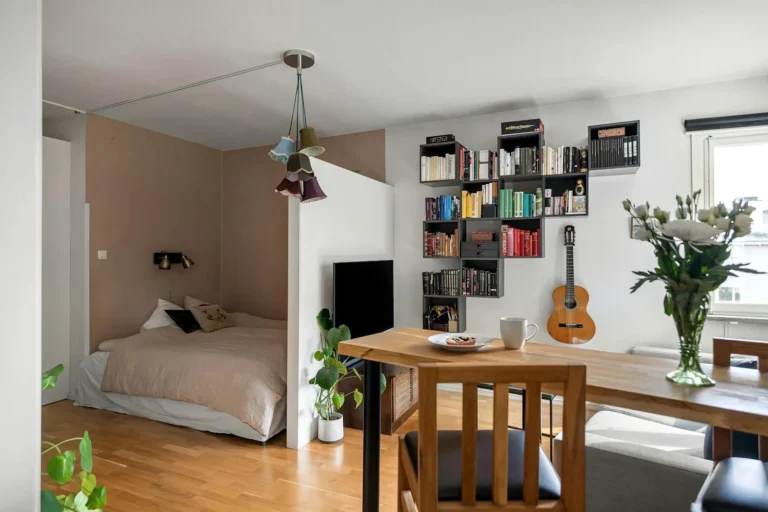
Float the sofa so its back faces the bed, and that back becomes a wall between the living and sleeping zones. Slide a console table behind the floated sofa and the line gets stronger, plus you gain a surface for a lamp and your keys. A bookshelf turned perpendicular to the wall does the same job with more presence, and an open-backed shelf unit splits the room while still letting light pass through, so you separate the zones without making either side feel boxed in. There is more on choosing pieces that work this hard in our studio apartment furniture guide.
Add a renter-friendly divider where you want a real line
Sometimes you want an actual barrier, especially to hide the bed from the front door or a video call. The renter-friendly versions need no drilling.
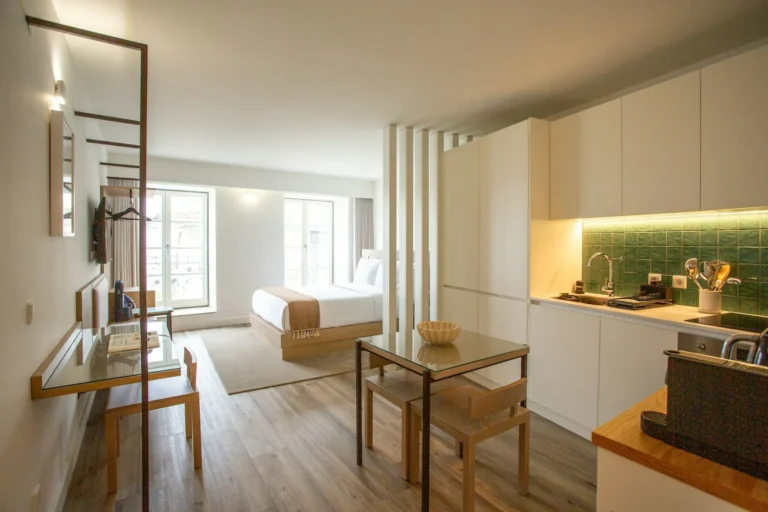
A freestanding folding screen is the simplest one, a moveable panel you place wherever you want a visual stop and fold away when you do not. For a softer divide, hang a curtain on a tension rod or a ceiling-mounted track, which lets you close off the sleeping zone at night and open the room back up by day. A room divider curtain on a track is one of the most flexible tools a renter has, since it creates a true separation that disappears when you slide it open. All of these leave at most a couple of small ceiling-track screws, which keeps them squarely in renter-friendly decor territory.
Use light and greenery to reinforce the zones
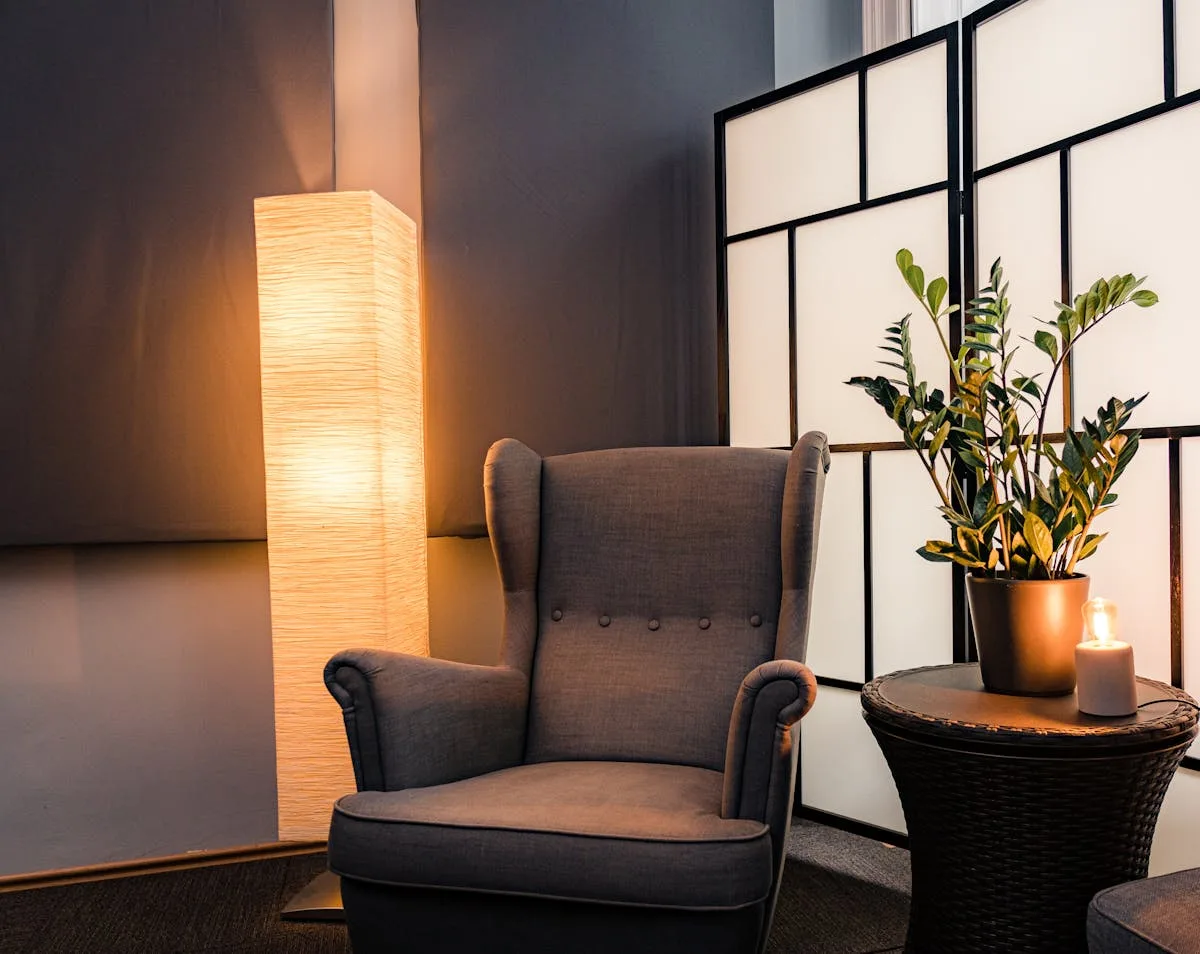
Once the edges are drawn, lighting makes them feel intentional. Give each zone its own light source: a warm floor lamp by the reading chair, a small lamp on the nightstand, a brighter task light over the desk. When the bedroom corner is lit differently from the living corner, your brain files them as separate rooms, the same way it does in a place with actual walls. The one harsh ceiling fixture doing all the work, by contrast, flattens everything back into a single bright box.
A big leafy plant works as a soft divider too. A tall fiddle-leaf fig, a fanned-out areca palm, or a couple of them clustered on a stand will mark off a corner without blocking light or your view across the room, and it is the only divider here that also cleans the air and warms the place up.
How do you separate a sleeping area in a studio?
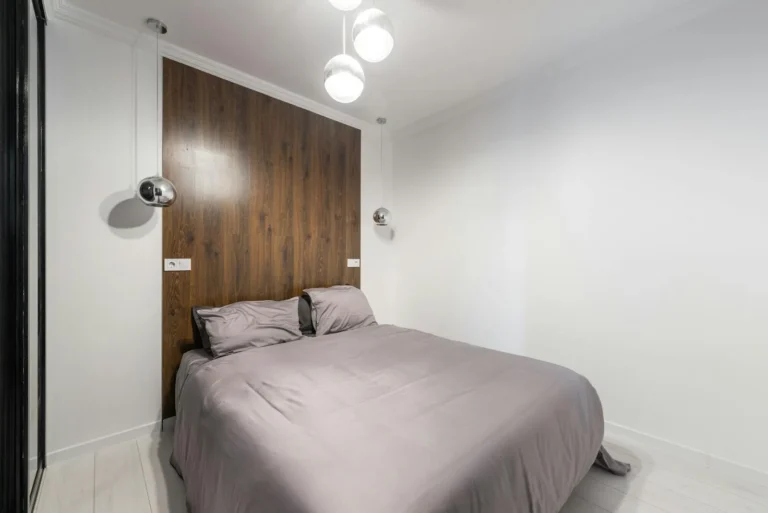
Lead with the bed placement, then layer dividers around it. Put the bed in the corner farthest from the door, define it with its own rug, and screen it from the rest of the room with a floated bookshelf, a folding screen, or a ceiling-track curtain you can draw at night. If your ceiling allows it, a loft bed lifts the sleeping zone entirely out of the living space, which is the most complete separation a studio can get short of a wall. Either approach gives the bed a sense of being its own room, which is what makes a studio feel restful instead of exposed.
Frequently asked questions
How do you divide a studio apartment without building walls?
Use soft dividers that mark edges instead of blocking the room. Rugs give each zone a footprint, a floated sofa or bookshelf acts as a low wall, and a freestanding screen or ceiling-track curtain creates a real visual barrier. Different lighting per zone and a tall plant finish the separation, and none of it requires construction.
What is the best room divider for a studio apartment?
It depends on how much separation you want. A floated open bookshelf divides while letting light through, a folding screen gives a moveable solid barrier, and a curtain on a ceiling track offers full separation you can open and close. For renters, all three avoid drilling into walls and move out with you.
How do you separate a bedroom in a studio apartment?
Place the bed in the quietest corner away from the door, anchor it with its own rug, and screen it with a floated shelf, a folding screen, or a ceiling-track curtain you can draw at night. A loft bed lifts the sleeping zone above the living area for the most complete separation in a small space.
Are room dividers renter-friendly?
Many are. Freestanding folding screens, leaning shelves, and tension-rod curtains need no drilling at all, while a ceiling-track curtain uses only a few small screws. These leave little to no damage and move with you, which makes them a safe choice for a rental and your deposit.
How can I make my studio feel like it has separate rooms?
Give every zone a clear edge using rugs, floated furniture, and a divider or curtain, then light each area on its own. Defined floor space, a low or partial barrier, and separate lighting together read as distinct rooms, even though the whole apartment still shares one open space.
One room, many rooms
Dividing a studio does not mean closing it in. You are giving each part of your day a place to happen, so sleeping, living, and working stop bleeding into one another. Draw the edges with rugs, build low walls out of the furniture you already own, add a screen or a curtain where you want a real line, and light each zone on its own. Do that and a single open room starts to live like a small apartment with actual rooms, all of it reversible the day you hand back the keys. Once the zones are drawn, the studio apartment ideas hub covers the rest of furnishing and styling them.
Get the renter's first-apartment checklist
Small-space decor ideas for renters, straight to your inbox.
The best studio apartment furniture does two jobs at once. Sleeper sofas, storage ottomans, drop-leaf tables, and renter-friendly picks that save floor.
Murphy bed ideas for small apartments and studios, including the freestanding wall beds that work in a rental with no mounting and no holes to patch.
Manage Consent
To provide the best experiences, we use technologies like cookies to store and/or access device information. Consenting to these technologies will allow us to process data such as browsing behavior or unique IDs on this site. Not consenting or withdrawing consent, may adversely affect certain features and functions.
Functional
Always active
The technical storage or access is strictly necessary for the legitimate purpose of enabling the use of a specific service explicitly requested by the subscriber or user, or for the sole purpose of carrying out the transmission of a communication over an electronic communications network.
Preferences
The technical storage or access is necessary for the legitimate purpose of storing preferences that are not requested by the subscriber or user.
Statistics
The technical storage or access that is used exclusively for statistical purposes.The technical storage or access that is used exclusively for anonymous statistical purposes. Without a subpoena, voluntary compliance on the part of your Internet Service Provider, or additional records from a third party, information stored or retrieved for this purpose alone cannot usually be used to identify you.
Marketing
The technical storage or access is required to create user profiles to send advertising, or to track the user on a website or across several websites for similar marketing purposes.