Decluttering Tips for Renters: How to Cut the Clutter When You Move Every Year
A renter declutters differently than a homeowner, and most decluttering advice forgets that. The standard guides assume you are in your forever home, sorting a basement and a garage over a leisurely season. You are not. You are in 600 square feet, you will probably move in a year or two, and every object you own you are going to pick up, box, carry down a flight of stairs, and pay to move. That last part is the renter’s secret weapon, and the reason your clutter problem is more solvable than a homeowner’s: you have a built-in forcing function, and it comes around regularly.
In a small space, clutter is the reason the apartment feels cramped in the first place. Every object that does not earn its keep is taking up room you are paying premium city rent for. The math is simple and a little maddening: if you are paying three dollars a square foot and a box of stuff you never open occupies two square feet, that box costs you six dollars a month to store in your own home. Decluttering a rental is not about minimalism as a lifestyle. It is about not paying rent on things you do not use.
I have moved nine times in fifteen years, which is nine forced reckonings with everything I own. Here is the method that works in a small space, the renter-specific moves that make it stick, and the honest way to deal with the stuff once you have decided it goes.
Start where the clutter hurts, not where it is worst
The standard advice says start with the easiest area to build momentum, and the standard advice is half right. In a small apartment, start with the surface or zone that bothers you most every single day: the kitchen counter you cannot cook on, the chair that has become a clothes pile, the entryway you step over. Clearing the spot that irritates you daily gives you a visible win in an hour, and that win is what fuels the rest. In a small space, momentum comes from seeing a real change, not from easing in gently. You do not need to start on a sock drawer; you need to see the counter empty and feel the room open up.
Pick one zone, set a timer for an hour, and do only that zone. A small apartment rewards this because one hour can genuinely finish a counter or a closet shelf, where in a house the same hour barely dents a room. Finishing something completely beats half-doing five things, because a finished zone stays finished and a half-done one slides back by the weekend.
Use the move as your forcing function
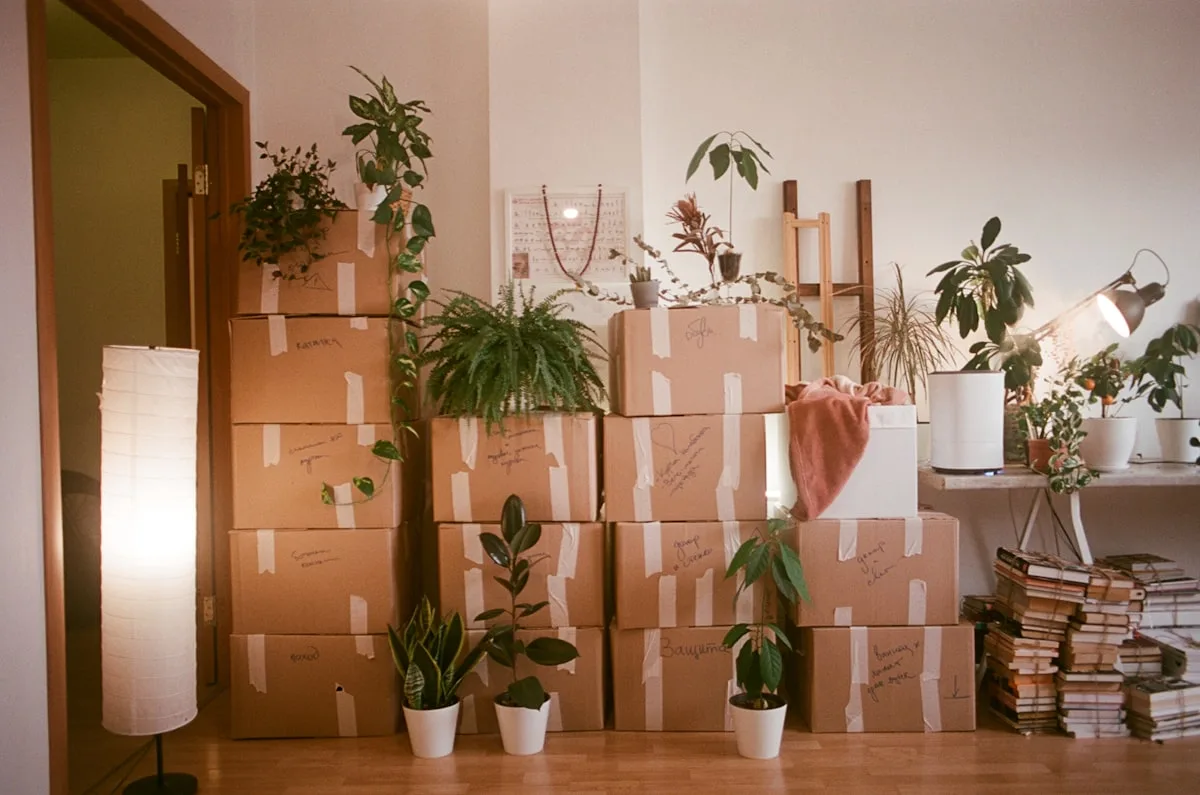
This is the renter advantage no homeowner has. You are going to move, and on moving day every object gets one honest question asked of it: is this worth boxing, carrying, and paying to transport to the next place? That question cuts through sentiment better than any decluttering philosophy, because it has a real cost attached.
You do not have to wait for the actual move to use it. Twice a year, or whenever the lease renewal notice arrives, walk the apartment and ask the moving-day question of anything you are unsure about. The lease renewal is a natural trigger: it is the moment you decide to stay another year, which is also the moment to decide what stays another year with you. Anything that fails the would-I-pay-to-move-this test goes now, while you have time to sell or donate it, instead of in the panic of the last week before a move when everything just gets dumped or hauled.
Sort into four piles, and make the maybe pile pay rent
Forget elaborate systems. Four piles handles almost everything: keep, donate or sell, trash or recycle, and maybe. The keep pile goes back into a real home, not back onto the surface. The donate and trash piles leave the apartment within the week, because a donate pile that lives by the door for a month is just clutter with a good intention attached.
The maybe pile is where decluttering goes to die, so give it a rule. Box the maybes, label the box with a date six months out, and put it in the least valuable storage you have, the top closet shelf, under the bed. If you have not opened the box by the date, it leaves unopened. You already know what is in it: things you did not need for six months. The box test works because it removes the agony of deciding in the moment and replaces it with a deadline that decides for you.
The renter categories that quietly pile up

A few categories accumulate specifically because of how renters live, and they are worth a targeted pass.
Boxes and packaging. Renters keep original boxes “for the move,” and they breed in closets. Keep the boxes for genuinely fragile or valuable electronics if you want; recycle the rest. You can get moving boxes free from any liquor store the week you actually move.
Furniture that does not fit the next place. The bookshelf that fit the last apartment perfectly is a gamble in the next one. Be honest about the pieces you are keeping out of inertia, especially the big ones, because they are the most expensive things to move and the most likely to not fit. Sometimes the right move is selling a piece before the move and buying for the new space.
Duplicate kitchen gear. Small kitchens collect duplicate tools and single-use gadgets that a full-size kitchen could hide and a galley cannot. The quesadilla maker, the third spatula, the mugs from three apartments ago. A small kitchen is the one room where decluttering directly buys you working space.
Clothes you moved last time and never unpacked. If a box of clothes survived the last move unopened, that is the move telling you something. Those are the clearest donate candidates you own.
Paper. Manuals, old leases, expired warranties, the paper that fills a drawer. Almost all of it is online now. Keep the current lease and tax documents; recycle the manuals you can find as a PDF in ten seconds.
Deal with the outflow like a city renter
Deciding something goes is half the job. Getting it out of a small apartment without a car or a garage is the other half, and it is where good intentions stall.
For donations, find the drop-off that is genuinely on your route, not the one across town you will never get to. Many cities have donation bins or thrift stores within walking distance; some charities do pickups if you have a larger load. The rule is the same as the donate pile: if it is not easy, it does not happen, so make it easy.
For selling, be honest about your time. Listing on a resale app is worth it for genuinely valuable items, furniture, electronics, brand pieces, and a waste of an evening for a five-dollar gadget. Sell the things worth real money, donate the rest, and do not let the dream of recouping a few dollars keep a pile of small stuff in the apartment for months. The space it occupies costs more than the resale will bring.
For the things that are just trash, check your building’s rules for bulk pickup and your city’s recycling and e-waste days. A renter without a car has to plan the exit, which is exactly why the donate and trash piles need a deadline, not a someday.
Keep it from coming back
Decluttering once is easy. Staying decluttered is the hard part, and it comes down to flow. Things come into a small apartment faster than they leave, so the job is to slow the inflow and keep a steady outflow.
The one-in-one-out rule does most of the work: when something new comes in, something similar goes out. A new pair of shoes means an old pair leaves. It keeps the total roughly constant, which in a small space is the whole point. Pair it with a standing donate bag, a bag in the closet that you drop things into the moment you decide they are done, instead of starting a pile. When the bag is full, it goes to the drop-off, and the cycle never builds into a project.
And give everything that survived a real home, because clutter is mostly stuff without a place to live. That is where organizing picks up from decluttering: once you own only what you use, the small space organization principles give each thing a spot off the floor and the surfaces, and the small apartment storage ideas hub maps where, room by room. Decluttering empties the apartment; organizing keeps it that way.
Frequently asked questions about decluttering
Where should I start decluttering a small apartment?
Start with the surface or zone that irritates you most every day, like the kitchen counter or the clothes-pile chair, not the area that is technically the messiest. Clearing the daily annoyance gives you a visible win within an hour, and in a small space that emotional momentum is what carries you through the rest.
How do renters decide what to declutter?
Ask the moving-day question of anything you are unsure about: is this worth boxing, carrying, and paying to move to the next apartment? It attaches a real cost to keeping something and cuts through sentiment. Renters have this forcing function built in, since the move comes around regularly, and the lease renewal is a natural twice-a-year trigger to run the test.
What do I do with the “maybe” pile?
Box it, label it with a date six months out, and store it somewhere low-value like a top shelf or under the bed. If you have not opened the box by that date, it leaves unopened, because you have just proven you can go six months without anything in it. The deadline decides for you and removes the agony of deciding in the moment.
How do I get rid of clutter without a car?
Plan the exit before you start. Find a donation drop-off actually on your route, use resale apps only for items worth real money, and check your building and city rules for bulk and e-waste pickup. Give the donate and trash piles a hard deadline of about a week, because a pile waiting for a someday trip is just clutter with good intentions.
How do I keep clutter from coming back?
Slow the inflow and keep a steady outflow. The one-in-one-out rule keeps the total constant: when something new comes in, something similar leaves. Pair it with a standing donate bag in the closet that you fill as you go and drop off when full, so clutter never builds into a project, and give everything you keep a real home so it has somewhere to be besides a surface.
Decluttering as a renter has one advantage homeowners never get: the move forces the question, and it comes around often enough to keep you honest. Start with the zone that bugs you most, run the moving-day test, give the maybe pile a deadline, and set up a one-in-one-out flow so it stays cut. Then let the small space organization principles and the small apartment storage ideas hub give what is left a place to live.