This post contains affiliate links. As an Amazon Associate I earn from qualifying purchases.
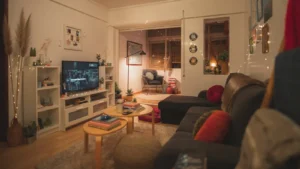
The board is all walnut and warm light: a low credenza on splayed legs, a leather lounge chair angled toward a window, a sunburst clock, a rug with one perfect geometric line. Then you price the lounge chair and it costs more than your car, the credenza is a four-figure West Elm order with a ten-week wait, and you are standing in a rental with a builder-beige box of a living room and roughly two hundred dollars to spend.
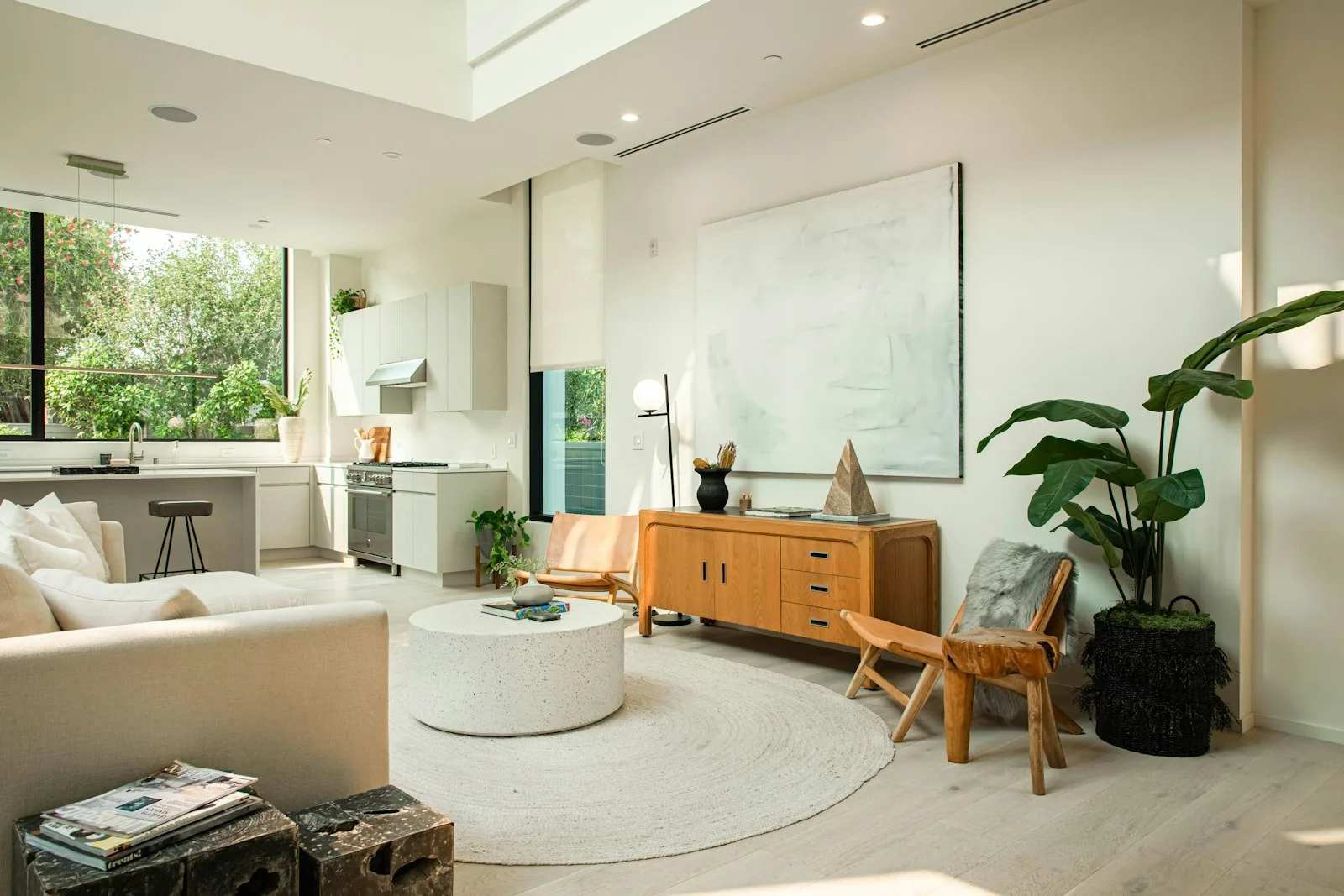
Good news: mid-century modern is one of the most rental-friendly looks there is, and one of the easiest to fake cheaply, because the whole aesthetic is built on a handful of shapes rather than on expensive materials. Clean lines, warm wood tones, furniture that stands up on thin legs, and one or two bold accent colors. Hit those notes and a thrifted dresser passes for the catalog. Miss them and a $2,000 sofa still looks like it came from a hotel lobby.
Here is the renter version, built for a small space and a small budget, with nothing that needs a drill or a deposit-eating change.
If you take one thing from this whole page, take this: mid-century modern is defined more by how furniture meets the floor than by anything else. The look is lifted. Pieces stand up on thin, often splayed, often tapered legs, so the floor runs underneath them and the room reads open. In a small apartment that visible floor is what keeps the space from feeling stuffed.
This is also the cheapest cheat in the book. A flat, boxy, leg-less dresser or cabinet, the kind that sits heavy on the floor, can be converted to mid-century in an afternoon. Replacement tapered wood legs sell in sets of four for around twenty to forty dollars, they screw or bracket onto most flat-bottomed furniture, and they turn a generic thrift-store cabinet into something that looks like it was designed in 1958. A search for tapered furniture legs will turn up angled and straight versions in a few wood tones. Buy the angled ones; the splay is the whole point.
Lift the heavy pieces and you are most of the way there before you have decorated a thing.
Buy the real thing secondhand before you buy the reproduction
Genuine mid-century furniture is often cheaper than the reproductions, which surprises people. Estate sales, thrift stores, and marketplace listings are full of it, and whoever is selling usually just wants the bulky old dresser out of the house.
A solid teak or walnut credenza from an estate sale can land at fifty to a hundred and fifty dollars. The West Elm version of the same silhouette, in veneer over particleboard, runs eight hundred and up. The old one is solid wood, ages better, and has the proportions the reproductions are trying to copy. Look under “vintage,” “teak,” “Danish modern,” and “Broyhill Brasilia” on local marketplace listings, check estate sales on the weekend, and be willing to drive across town for the right piece.
When new is the only option, that is fine, just buy the shape and skip the markup. A plain wood-tone sideboard with hairpin or tapered legs from a budget retailer takes the look as long as the silhouette is right. The aesthetic does not require a designer label. It requires legs and warm wood.
Pick one hero piece and let the rest be quiet
Every good mid-century room has one piece your eye goes to first. A leather lounge chair, a statement credenza, a tulip side table, a bold sunburst clock on the wall. Pick exactly one, spend your real money there if you are spending it anywhere, and keep everything around it calm.
The reason matters for small spaces. A room where every piece shouts mid-century turns into a furniture showroom. A room with one strong hero and a few quiet supporting pieces feels designed and gives the eye somewhere to land. If your budget allows a single splurge, an actual reproduction lounge-and-ottoman or a real vintage credenza earns it. Everything else can be thrifted and lifted on new legs.
Color comes from the textiles, not the walls
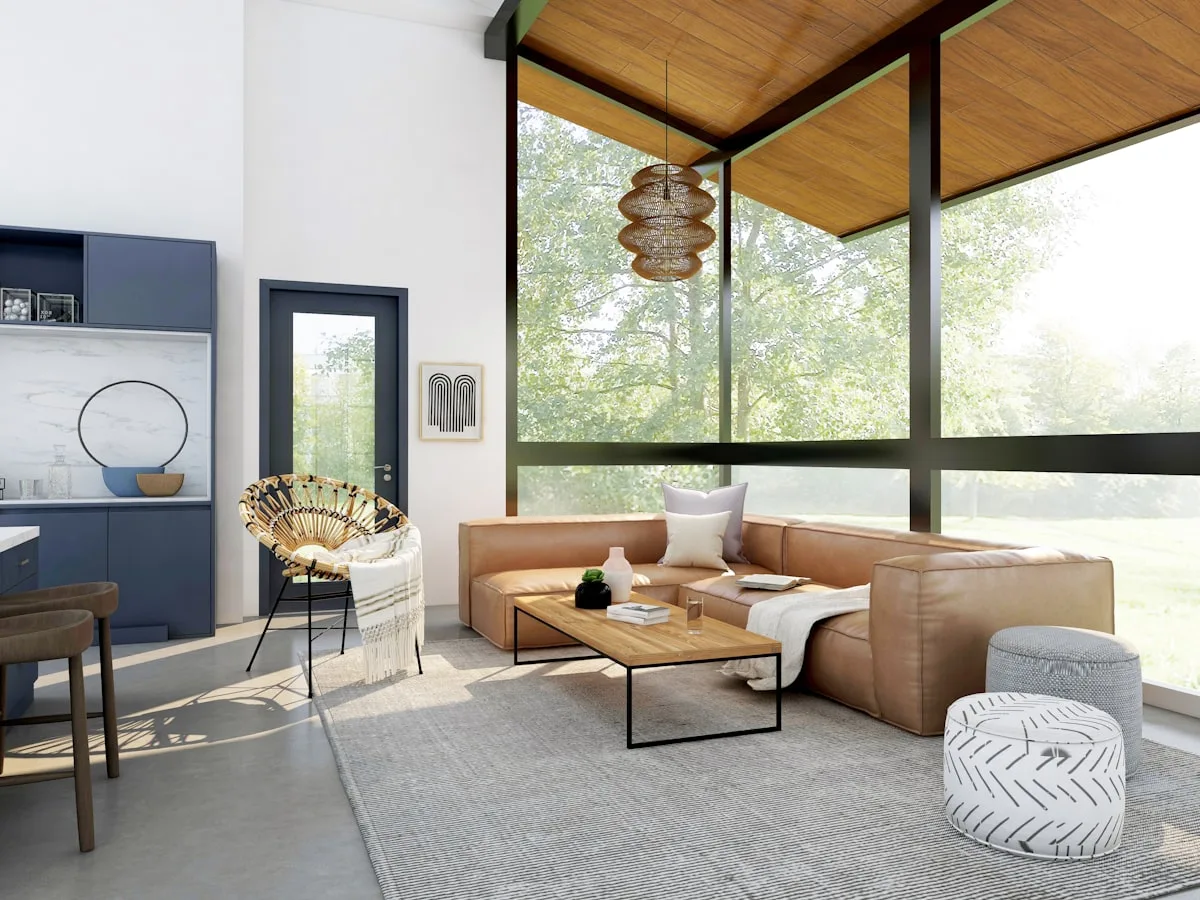
Mid-century leans on warm, saturated accent colors against neutral wood and white: mustard yellow, burnt orange, teal, olive, a little rust. As a renter you bring those in without a paint can.
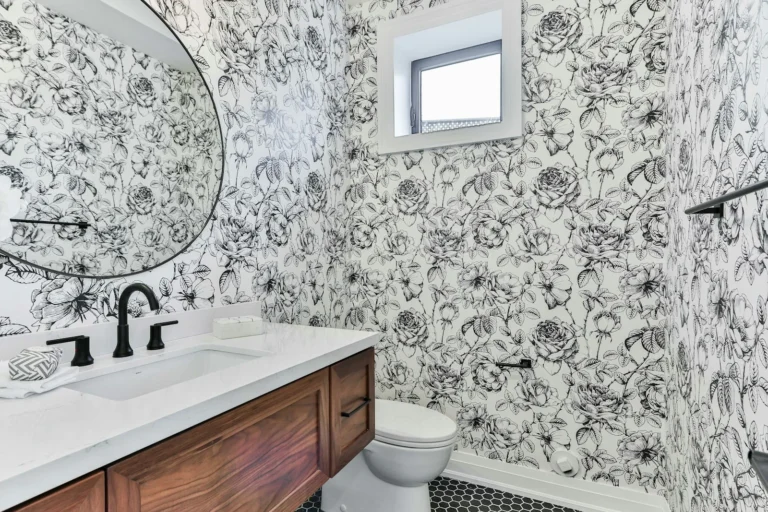
A mustard throw pillow, a burnt-orange wool blanket, a teal area rug, a geometric runner. Textiles carry the color at eye level and pack into a box on moving day. For a wall moment, a removable wallpaper in a small-scale geometric or a warm wood-grain pattern does what a painted accent wall would, behind the credenza or the bed, and peels off clean when the lease ends. One bold color repeated two or three times across the room is the rule. A rainbow of accents reads as a daycare.
Lighting: go round and warm
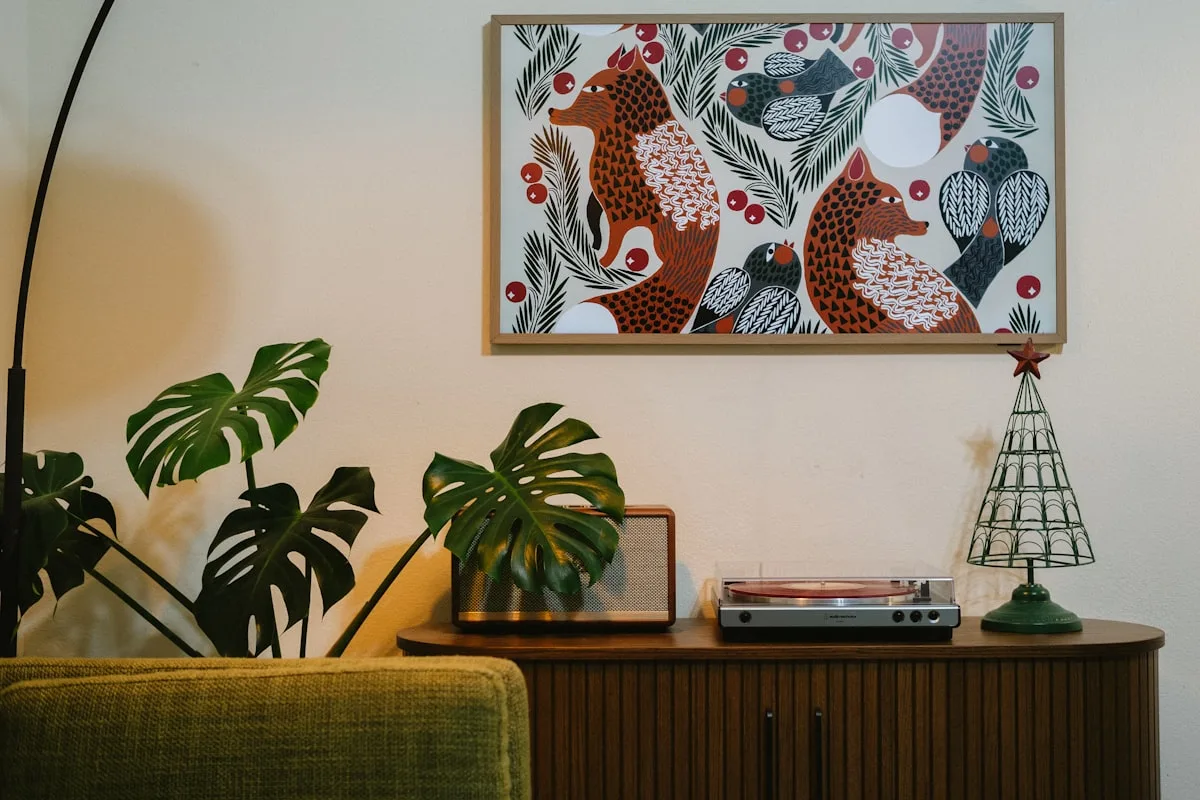
Skip the cold ceiling fixture and light the room low and warm. Mid-century gives you specific shapes to chase. A globe floor lamp, an arc lamp leaning over the sofa, a mushroom-dome table lamp, a sputnik-style fixture if you can swap the existing one and box the original. Warm bulbs in all of them. The round, atomic-era lighting silhouettes do as much aesthetic work as the furniture, and a single good arc or globe lamp runs well under a hundred dollars.
The mistake that makes it look like a catalog
The most common way a mid-century apartment goes wrong is buying a whole matching set from one store in one order. It photographs fine on the showroom floor and then feels lifeless at home, because real mid-century rooms were collected over years, not bought in a weekend. Mix wood tones instead of matching them. Put a vintage piece next to a new one. Let the rug clash slightly with the chair. The small imperfections are what separate a room someone lives in from a display someone staged.
The mid-century pieces worth buying
Six pieces that hit the mid-century notes without the catalog prices, working from the foundation up: the legs, then the walls, then the warm light, then the color in the textiles. All renter-safe, none of them drilled in. Prices are rough street ranges, not live quotes.
What it actually costs
A convincing mid-century rental living room comes together for a few hundred dollars if you thrift smart. A set of tapered legs runs twenty to forty and transforms a piece you already own. A secondhand teak credenza lands at fifty to a hundred and fifty. A warm arc or globe lamp is under a hundred. Textiles for the color story, a pillow, a throw, a rug, come from anywhere and total another hundred or so. The one place to spend, if you spend at all, is the hero piece.
Thrift the bones, lift them on new legs, add one hero and one bold color, and stop. If the warm-wood look starts feeling too retro, the same lifted, light-footed approach carries straight into a boho apartment with more plants and softer edges, or a moodier dark academia room if you want to go the other direction. The full set of looks is mapped in the apartment aesthetic guide.
Frequently asked questions about mid-century modern apartments
How do I make my apartment look mid-century modern on a budget?
Start with legs. Swapping cheap or thrifted flat-bottomed furniture onto tapered wood legs (about twenty to forty dollars a set) is the single biggest cheat, because the lifted silhouette is what defines the look. Then add warm wood tones, one bold accent color in textiles, and a round, warm lamp. Genuine vintage pieces from estate sales are often cheaper than store reproductions, so hunt secondhand before you order new.
What furniture is mid-century modern?
Low, clean-lined pieces in warm woods like teak and walnut, standing on thin tapered or splayed legs: credenzas and sideboards, lounge chairs, tulip tables, low platform beds, and slim-armed sofas. The signatures: lifted legs and warm wood, simple geometric shapes, and one or two saturated accents like mustard or burnt orange.
Is mid-century modern good for small apartments?
Yes, it is one of the best fits for a small space. The lifted legs leave the floor visible, which makes a room feel larger, and the compact, low-slung proportions suit tight square footage better than bulky overstuffed furniture. A small mid-century room reads open and intentional rather than crowded.
Can I get a mid-century look in a rental without painting?
Easily. The color in a mid-century room comes from textiles and one optional removable-wallpaper accent wall, not from painted walls. A mustard pillow, a teal rug, and a geometric throw carry the palette, and a peel-and-stick wallpaper panel behind a credenza adds a wall moment that comes off clean at move-out.
Where do I buy real mid-century furniture cheap?
Local marketplace listings, estate sales, and thrift stores are the best sources, often cheaper than new reproductions. Search terms like vintage teak, Danish modern, and specific era brands turn up solid-wood pieces people are trying to clear out. Be ready to move quickly on a good listing and to drive for the right piece, since the best ones sell within a day.
Price the lounge chair again if you want, but you no longer need it. Four tapered legs, a thrifted credenza, one mustard pillow, and a warm round lamp, and the builder-beige box is suddenly the walnut-and-warm-light room from the board, for the price of the chair’s left armrest.
Get the renter's first-apartment checklist
Small-space decor ideas for renters, straight to your inbox.
This post contains affiliate links. If you buy through one I may earn a small commission at no cost to you. You took a shower in the rental bathroom, walked out to brush your teeth, and noticed the seam above the toilet. The roll you put up six weeks ago, the one that looked perfect…
How to choose one apartment aesthetic and actually pull it off in a rental, without painting or drilling, plus a tour of the looks worth committing to.
This post contains affiliate links. If you buy through one I may earn a small commission at no cost to you. The first apartment where I tried this was a 540-square-foot Chicago studio with a galley kitchen and a bathroom roughly the size of a coat closet. The bathroom floor was beige sheet vinyl, lifting…
Manage Consent
To provide the best experiences, we use technologies like cookies to store and/or access device information. Consenting to these technologies will allow us to process data such as browsing behavior or unique IDs on this site. Not consenting or withdrawing consent, may adversely affect certain features and functions.
Functional
Always active
The technical storage or access is strictly necessary for the legitimate purpose of enabling the use of a specific service explicitly requested by the subscriber or user, or for the sole purpose of carrying out the transmission of a communication over an electronic communications network.
Preferences
The technical storage or access is necessary for the legitimate purpose of storing preferences that are not requested by the subscriber or user.
Statistics
The technical storage or access that is used exclusively for statistical purposes.The technical storage or access that is used exclusively for anonymous statistical purposes. Without a subpoena, voluntary compliance on the part of your Internet Service Provider, or additional records from a third party, information stored or retrieved for this purpose alone cannot usually be used to identify you.
Marketing
The technical storage or access is required to create user profiles to send advertising, or to track the user on a website or across several websites for similar marketing purposes.