Waterproof Peel-and-Stick Floor Tile in a Rental Bathroom: A 14-Month Renter Review (and 5 Brands That Actually Hold)
This post contains affiliate links. If you buy through one I may earn a small commission at no cost to you.
The rental bathroom floor was a grid of small peach-pink tiles from sometime around 1996, set in yellowing white grout, and the landlord had said in the lease walkthrough that I was welcome to “decorate, just no holes”. I had $180 budgeted for the floor, three hours of a Saturday afternoon, and no intention of pulling up tile in a place I did not own. Fourteen months later, the install was still on the floor, the seams along the toilet base were intact, and the only piece of the original install that failed was the half-tile I cut too aggressively at the threshold.
Below are the five brands I would order again, the install moves that turn a three-month fail into a 14-month hold, and the wet-zone scenarios where I would still leave the existing floor alone.
If you have not committed to peel-and-stick floor tile yet, the short version of the verdict: for a half-bath, a vanity floor, or a small full bath with a working exhaust fan and a level subfloor, the right brand of waterproof peel-and-stick floor tile holds for at least a lease term and removes without paint or subfloor damage. For a wet-zone shower floor, a high-humidity laundry room, or an apartment where the existing tile is uneven enough that you can feel it under socks, the answer is still no.
What “waterproof” actually means in a peel-and-stick floor tile
The category labels are loose. Three different things get sold under the same search term, and they perform very differently in a wet room.
Thin vinyl tile is the dominant subset: printed wood-look or stone-look vinyl in 12-by-12 squares, usually 1.2 to 2 mm overall thickness, with a thin UV protective coating on top rather than a true wear layer. The “waterproof” claim refers to the tile itself (vinyl does not absorb water), not the install (water can still wick under the edges).
LVT-grade peel-and-stick is the premium subset: thicker vinyl planks or tiles (about 2 to 3 mm) with a real wear layer of 6 to 12 mil and a slightly heavier body. Same install mechanism (peel the backing, press to subfloor), much harder face, dent-resistant under heavy furniture. Cost is roughly double the thin-vinyl category.
Click-lock LVT with a separate PSA underlayment is a different category that some listings confuse with peel-and-stick. The planks click together at the edges, then sit on top of an adhesive-backed underlayment film. Closer to true waterproof because the click-lock seal blocks edge wicking, but install is slower and material cost is roughly four times the simple peel-and-stick category. Not the focus of this review.
Most rental bathroom installs land in the first two categories, and the difference between them decides whether your install lasts 6 months or 18.
The 14-month install: month by month
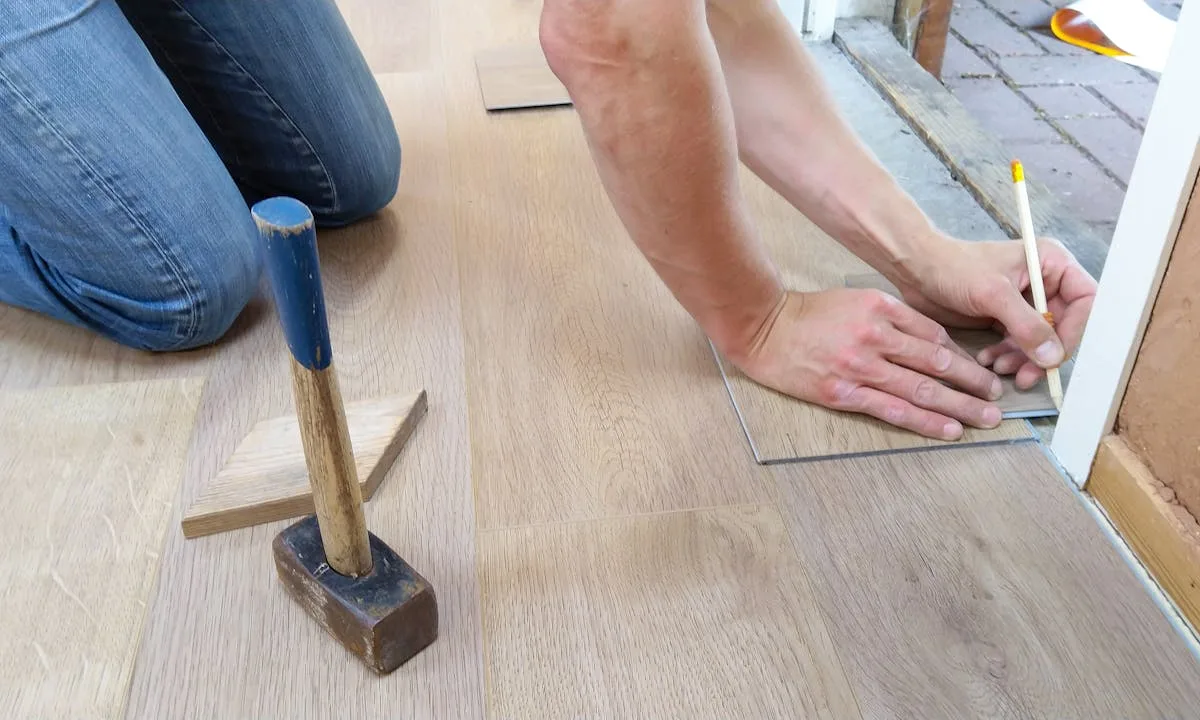
I pulled the Chicago install together over a Saturday in October. The bathroom was a 5-by-6 foot full bath with a tub-shower combination, one window, and an exhaust fan that worked reliably. The existing peach tile was level enough that I did not need a subfloor underlayment; I wiped the floor down with TSP cleaner, let it dry overnight, and started the install the next morning at the wall opposite the door.
Month 1. Install held perfectly. Tiles felt cushioned underfoot, much softer than the original ceramic. Water from the tub edge beaded on top of the tiles and wiped away with no penetration along the seams.
Month 3. First sign of wear at the threshold, the spot I had cut too tight, leaving a slightly underhung edge. A faint curl developed at one corner. I sealed it with a dab of clear silicone caulk and the curl stopped progressing.
Month 6. Install still flat, color still even, no further edge issues. One tile near the toilet base showed a slight depression where I had stood for several minutes brushing teeth. The depression did not become permanent; the vinyl rebounded over twenty-four hours. One unexpected thing: the bathroom smelled noticeably less of grout after about month two, because the vinyl is non-porous and the old grout had been absorbing humidity all by itself.
Month 9. Nothing new to report. Cleaning routine had settled into a damp microfiber once a week. The vinyl was easier to wipe than the grouted ceramic underneath had been.
Month 12. Still on the floor. I did a closer inspection along the seams to see if water from the tub had wicked in over the year, and found one seam (the one parallel to the tub edge) had a very faint discoloration about an eighth of an inch wide. The tile itself was not damaged; the seam had stained slightly.
Month 14 (move-out). Removal took roughly ninety minutes for the full 30-square-foot install. Hairdryer warming each tile for twenty to thirty seconds, peel at a shallow angle, no subfloor damage, no residue beyond a single corner I cleaned with Goo Gone. The faint seam discoloration was visible on the original peach tile underneath but disappeared with one pass of TSP cleaner. Walkthrough was clean.
The verdict: fourteen-month install life in a daily-shower bathroom with a working fan, brand was Lucida BaseCore, one install-specific failure at the cut-tight threshold, no other issues that affected deposit return.
The 5 brands worth ordering
What to watch: at $1.85 to $2.75 a square foot, this is mid-tier rather than cheap. A 30-square-foot bathroom lands at $55 to $85 in tile. Worth it if you are staying at least eighteen months in the apartment; for a six-month summer sublet, the budget tier (FloorPops or Achim below) does the job for less.
What to watch: the wear layer is at the bottom of the budget range, which is why I would not put FloorPops in a full bath with a daily shower. In a half-bath with no shower it holds at least a lease; in a daily-shower full bath, plan on 12 to 18 months and pay for Lucida instead.
What to watch: this is the lightest-spec product in the roundup. In a daily-shower bathroom, expect noticeable edge issues by month ten to fourteen and plan to pull and replace. Best as a one-year fix for a low-traffic floor, not as a two-year install.
What to watch: plank format needs a tighter starting line than tile because misalignment cascades down the length of the plank rather than around the corners of a square. Use a chalk line on the subfloor for the first plank rather than just eyeballing the wall (rental walls are rarely truly square).
What to watch: the pattern catalog rotates faster than the larger brands, so when you find a marble print that lands right, buy the boxes you need that week rather than expecting it back next month. Stickgoo, which shows up alongside Livelynine in search results, is a wall and backsplash brand only; if you see Stickgoo listed as floor tile, it is the wrong category.
Where waterproof peel-and-stick floor tile fails
A few installs in this category did not work for me, or for installs I followed from other renters.
The most obvious skip is the shower floor. Standing water at the base of a tile shower is a category of moisture that no peel-and-stick PSA holds against; pooled water at every shower use will fail the PSA along every edge within weeks, and the tile shower floor stays as it was. I have also seen laundry room installs collapse where a washing machine drain line drips or backs up; if the laundry is in a closet or alcove with any leak history, leave the existing floor alone.
Then there is the slower failure mode: uneven existing tile. If you can feel ridges under your socks while walking the floor barefoot, the peel-and-stick tile will conform to those ridges, telegraph every line of grout from the original install, and fail at high spots within months. The fix is a subfloor underlayment (1/4 inch luan plywood or similar) before the install, which adds $40 to $60 in materials and roughly an hour of install time. Worth it if you are committed. Otherwise pick a different decor route for the bathroom.
The wet-zone protocol that decides the install
Five moves that turn a three-month fail into a 12-month-plus install.
Clean the subfloor with TSP cleaner or equivalent and let it dry overnight. The PSA bonds to a clean subfloor; this is the step TrafficMaster and other manufacturers spell out in their install PDFs. Adhesive failures I have seen on installs that skipped this step almost always started at the dirtiest corner of the original floor.
Acclimate the tiles in the bathroom for twenty-four hours before install. Vinyl expands and contracts with temperature; tiles installed straight from a cold delivery van shrink slightly over the first week, opening seams. Bring the box inside, open it, leave the tiles flat overnight.
Caulk the edges along the tub, toilet base, and any wall-to-floor transition with a clear 100% silicone caulk after install. The caulk bead is the single most effective move for preventing edge water wicking, which is the most common bathroom failure mode. Total caulk cost: $4.
Leave the manufacturer’s expansion gap at the threshold and the perimeter. Most peel-and-stick tile install guides call for a 1/8 to 1/4 inch expansion gap around the room and at any threshold. A tile cut flush with no expansion room is the corner that lifts first within months. Cover the gap with a transition strip; the visual is identical and the install lasts.
Use a J-roller (or a clean rolling pin) on every tile within the first hour of install. The PSA needs even pressure to seat; the wider surface of a roller distributes pressure better than hand-smoothing.
What I would not buy again
Two products I sampled that did not make the list.
The first was an unbranded Amazon “marble look” tile at $0.50 per square foot. The protective coating was somewhere between negligible and absent (no documented spec on the listing), the PSA was rubber-based, and a swatch left on a sample piece of drywall for thirty days lifted at the corners on its own. I did not commit a real install to it; the brands above are worth the small price premium.
The second was a foam-backed floor tile sold as “cushioned waterproof”. The foam compresses unevenly under daily foot traffic and creates visible depressions within weeks. Foam panels work on walls (in the right category); they do not work on floors.
Frequently asked questions about waterproof peel-and-stick floor tile
Will waterproof peel-and-stick floor tile actually hold up in a bathroom with a daily shower?
The mid-tier and premium brands above (Lucida BaseCore tile or plank) hold for twelve to twenty-four months in a daily-shower bathroom when installed on a clean, level subfloor with edges caulked at install. The thin-vinyl tier (FloorPops, Achim Nexus) holds noticeably less in the same environment (six to twelve months), which is why I put those brands in half-bath and ultra-budget slots above. The fourteen-month install in this review was Lucida BaseCore in a full bath with daily shower use and a working fan.
Can I put peel-and-stick floor tile over existing ceramic tile?
Yes, if the existing tile is level and the grout lines are not deeper than about 1/16 inch. Clean the existing tile thoroughly with TSP cleaner first; deep grout lines telegraph through the vinyl. For installs over deeply grouted ceramic, a thin underlayment (1/4 inch luan plywood) is the right move.
How do I remove peel-and-stick floor tile without damaging the original floor?
Run the fan to drop humidity, warm each tile with a hairdryer for twenty to thirty seconds along the edge, peel at a shallow angle, clean any residual adhesive with a Goo Gone wipe (test on a hidden corner first, especially on flat or matte paint, which can dull from citrus solvents). If you sealed the edges with silicone caulk at install, cut the caulk bead along the bottom edge with a utility knife before lifting the first tile. Branded acrylic-PSA tile comes off clean; cheap rubber-PSA tile is what leaves residue.
Will my landlord charge me for waterproof peel-and-stick floor tile?
Not if you installed branded acrylic-PSA tile and removed it correctly. The five brands in this review came off clean for me; the cheap unbranded tile I tested separately is where the deposit risk actually lives. Document the original floor condition with photos before install for the move-out walkthrough.
How much does it cost to do a small bathroom in peel-and-stick floor tile?
A typical 30-square-foot rental bathroom lands at $30 to $40 in ultra-budget tile (Achim Nexus), $30 to $45 in half-bath thin vinyl (FloorPops), $40 to $60 in budget marble (Livelynine), or $55 to $85 in LVT-grade (Lucida BaseCore tile or plank). Add $4 for silicone caulk and $5 to $10 for a transition strip; total tool spend is under $20 if you already own a utility knife and a level.
For the bathroom walls (the next move after the floor), the peel-and-stick wallpaper for bathroom review covers what holds up next to a daily shower. If you are also looking at the rest of the floor in the apartment outside the bathroom, the peel-and-stick floor tile review covers brands for kitchens and living rooms in the same first-person honest format. And for the backsplash above the vanity, the peel-and-stick backsplash review covers that category in the same review style.
The peach-pink grid from 1996 is still on the floor under the install, and the photo of the new floor stays in the camera roll as evidence that a Saturday afternoon, $80 of vinyl, and four dollars of silicone caulk turn the bathroom into a floor I picked, not a floor I inherited.