This post contains affiliate links. If you buy through one I may earn a small commission at no cost to you.
The standard rental closet is a cruel joke: one rod, one shelf above it, a door that barely clears the clothes, and that is the whole storage plan for your entire wardrobe. Half the rod height is empty air under the short hanging items, the shelf is a precarious tower of folded things that avalanche when you pull one out, and the floor is a pile of shoes you step on in the dark. Nobody designed it. It is just the cheapest thing the builder could install.
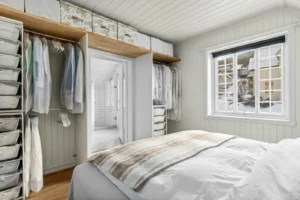
The good news is that a reach-in closet is mostly wasted vertical space, and you can claim almost all of it without a drill, a stud finder, or anything your landlord would notice. The fixes are not about buying a closet system bolted to the wall. They are about working the space you have in zones: the rod, the air under the rod, the door, the shelf, and the floor. Hit all five and a closet that held a season holds the whole year.
I have organized closets in six rentals, including one studio with a closet so shallow the door would not close over a winter coat on a fat hanger. Below is the zone-by-zone system and the picks that make each zone work, plus the one trick that frees the most space for the least money.
The single biggest waste in a reach-in closet is the empty air under your shirts. A second rod hung below the first turns one level of hanging into two, and for short items, tops, folded pants, skirts, you roughly double the capacity in the same footprint.
What to watch: it only works for short items, so plan to keep a length of the top rod single for long pieces. Measure the drop of your longest shirt to set the lower rod, since hanging it too high wastes the gain and too low drags the clothes on the floor.
Zone 2: Reclaim the rod you already have
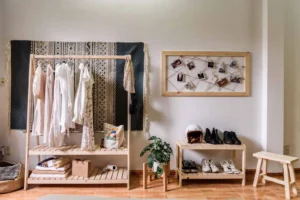
Before you add anything, the fastest free win is changing what your clothes hang on. Bulky plastic and wood hangers eat rod length; slim ones give it back.
What to watch: buy one consistent type so everything hangs at the same height and the rod looks even. The very cheapest velvet hangers can have thin hooks that bend under heavy coats, so use sturdier hangers for the heaviest pieces.
Zone 3: Use the back of the door
The closet door is a full sheet of vertical storage facing into the room, and most people store nothing on it. An over-door organizer claims it for shoes, accessories, or small folded items.
What to watch: a louvered or thick door may not take a standard over-door hook, so check your door before ordering. For a fuller breakdown of the door-back move and what holds on it, the over-the-door storage guide covers racks and organizers for every door in the apartment.
Zone 4: Divide the shelf
The top shelf is usually one open span where folded stacks lean and collapse. Dividers turn it into bays, and a riser adds a second level to the dead air above the stacks.
What to watch: match the divider type to your shelf. Wire-shelf clip-on dividers do not fit a solid wood shelf and vice versa, so check which shelf you have. The slot width also has to suit what you are filing, since a wide gap lets thin items lean anyway.
Zone 5: Claim the floor
The closet floor is prime real estate buried under loose shoes. A low set of drawers or a stack of bins turns it into closed storage and gets the shoes off the ground.
What to watch: measure the floor width and the height under the lowest hanging clothes before buying, so the drawer unit fits under the wardrobe and the top drawer still opens. If you added a second rod, the lower clothes set the height the drawers have to clear.
What to watch: a tall rack eats the floor height a drawer unit wants, so pick one or the other for the floor and put the rest on the shelf or the door. Clear stack boxes are great for storage but slow for daily shoes, since you have to unstack to reach the bottom pair.
The one trick that frees the most space
If you only do one thing, switch every hanger to slim velvet and add the second rod. Those two moves together, neither of which touches a wall, routinely take a packed reach-in from overflowing to half-full, and they cost under fifty dollars combined. Everything else, the dividers, the door organizer, the floor drawers, is refinement on top of that base. The mistake is buying organizers before doing the two free-ish wins, because a hanging shelf cubby in a closet still full of bulky hangers just adds clutter to clutter. Do the rod first.
This whole system ties back to the small apartment storage ideas hub, which maps the rest of the apartment the same way, room by room, so the closet is one solved zone in a place that has a plan.
Frequently asked questions about apartment closet organization
How do I organize a small rental closet without drilling?
Work it in zones using only hanging and freestanding pieces: a hanging double-rod off the existing bar, slim hangers to reclaim rod space, an over-door organizer on the door, dividers on the shelf, and a slim drawer unit on the floor. None of them attach to the wall, so there is nothing to patch at move-out.
What is the best way to double closet space in an apartment?
Add a hanging second rod under the existing one and switch every hanger to slim velvet. The lower rod doubles hanging capacity for short items, and slim hangers reclaim several inches of rod. Together they often take a packed closet to half-empty for under fifty dollars, with no installation.
Do slim velvet hangers really save space?
Yes, noticeably. They are a fraction of the thickness of standard plastic or wood hangers, so you fit noticeably more on the same rod, often close to a third again as many. The velvet surface also keeps clothes from sliding off onto the floor, which is its own small daily win.
How do I use the floor of a small closet?
Put a slim drawer unit or stackable bins in the dead space under the short-hanging clothes, and get the shoes onto a rack or into the door organizer. The floor becomes closed storage instead of a shoe pile. Measure the height under the lowest clothes first so the drawers still open.
Should I buy a closet system for a rental?
Usually not. Bolt-in closet systems mean drilling into walls you do not own and patching at move-out, and they do not move with you. The hanging and freestanding pieces here give most of the same capacity, leave no marks, and come with you to the next apartment.
A rental reach-in is small, but it is mostly empty air pretending to be full. Do the two free-ish wins first, slim hangers and a second rod, then divide the shelf, claim the door and the floor, and a closet that overflowed has room to spare. For the rest of the place, the small apartment storage ideas hub maps every room, and the small bedroom storage ideas guide covers the walls and the space the closet cannot hold.
Get the renter's first-apartment checklist
Small-space decor ideas for renters, straight to your inbox.
This post contains affiliate links. If you buy through one I may earn a small commission at no cost to you. The rental bathroom floor was a grid of small peach-pink tiles from sometime around 1996, set in yellowing white grout, and the landlord had said in the lease walkthrough that I was welcome to…
Renters declutter differently: you move every year or two, so the move is your forcing function. A method that works in a small space, plus how to get the stuff out without a car.
Peel-and-stick wall decals are the rental-safest decor category there is. Eight picks for nurseries, kid rooms, home offices and entryways, plus three to skip.
No foyer? Build a drop zone in the strip by the door with no drilling: 7 renter-friendly entryway storage picks from a slim console to adhesive hooks, plus the order to add them.
Manage Consent
To provide the best experiences, we use technologies like cookies to store and/or access device information. Consenting to these technologies will allow us to process data such as browsing behavior or unique IDs on this site. Not consenting or withdrawing consent, may adversely affect certain features and functions.
Functional
Always active
The technical storage or access is strictly necessary for the legitimate purpose of enabling the use of a specific service explicitly requested by the subscriber or user, or for the sole purpose of carrying out the transmission of a communication over an electronic communications network.
Preferences
The technical storage or access is necessary for the legitimate purpose of storing preferences that are not requested by the subscriber or user.
Statistics
The technical storage or access that is used exclusively for statistical purposes.The technical storage or access that is used exclusively for anonymous statistical purposes. Without a subpoena, voluntary compliance on the part of your Internet Service Provider, or additional records from a third party, information stored or retrieved for this purpose alone cannot usually be used to identify you.
Marketing
The technical storage or access is required to create user profiles to send advertising, or to track the user on a website or across several websites for similar marketing purposes.