This post contains affiliate links. As an Amazon Associate I earn from qualifying purchases.
The room stopped your scroll because it had something most boho rooms do not: weight. Deep terracotta and black-and-white patterned cloth, a wall of woven baskets, clay pots, a low chair draped in mudcloth, the whole thing warm and grounded instead of pale and breezy. Then you looked back at your own rental, beige and flat and a little anonymous, and wondered how much of that came from a four-figure decor budget you do not have.
Less than you would guess. Afrohemian style, the marriage of African textiles and art with bohemian layering, leans on cloth, baskets, clay, and plants rather than on big furniture, which makes it both affordable and almost entirely renter-friendly. It is boho with a stronger point of view and a richer, earthier palette, and most of what gives it that grounded feeling is textile and pattern you can roll up and take to the next apartment.
This is the renter version, built for a small space and a small budget, with a little care about where the pieces come from.
Afrohemian decor lives in its cloth, so this is where to start and where it is worth getting it right. A few traditional textiles do most of the work:
Mudcloth (bogolanfini) is the signature: handmade Malian cotton dyed with fermented mud into bold black-and-white or earth-toned geometric patterns. Draped over a chair or sofa, framed, or used as a throw, one piece grounds a whole room.
Kente brings the color: handwoven Ghanaian strip cloth in saturated golds, reds, greens, and blacks, striking as a runner, a pillow, or a framed panel.
Ankara (African wax print) is the everyday workhorse: vivid repeating prints, factory-made and inexpensive by design, that turn into cushions, curtains, and table runners easily. Here authentic means African-made and good quality rather than handwoven, so this is the one to buy by the yard without overthinking it.
Buy these from artisans and from Black-owned and African-owned shops where you can, both because the authentic handmade versions look immeasurably better than mass-produced knockoffs and because the makers are the point. Etsy, dedicated importers, and small online shops carry real mudcloth and kente; a printed polyester imitation never reads the same up close. One genuine mudcloth throw and a couple of wax-print cushions will do more for the room than a cart full of generic boho fillers.
Baskets that hang on the wall and hold your stuff
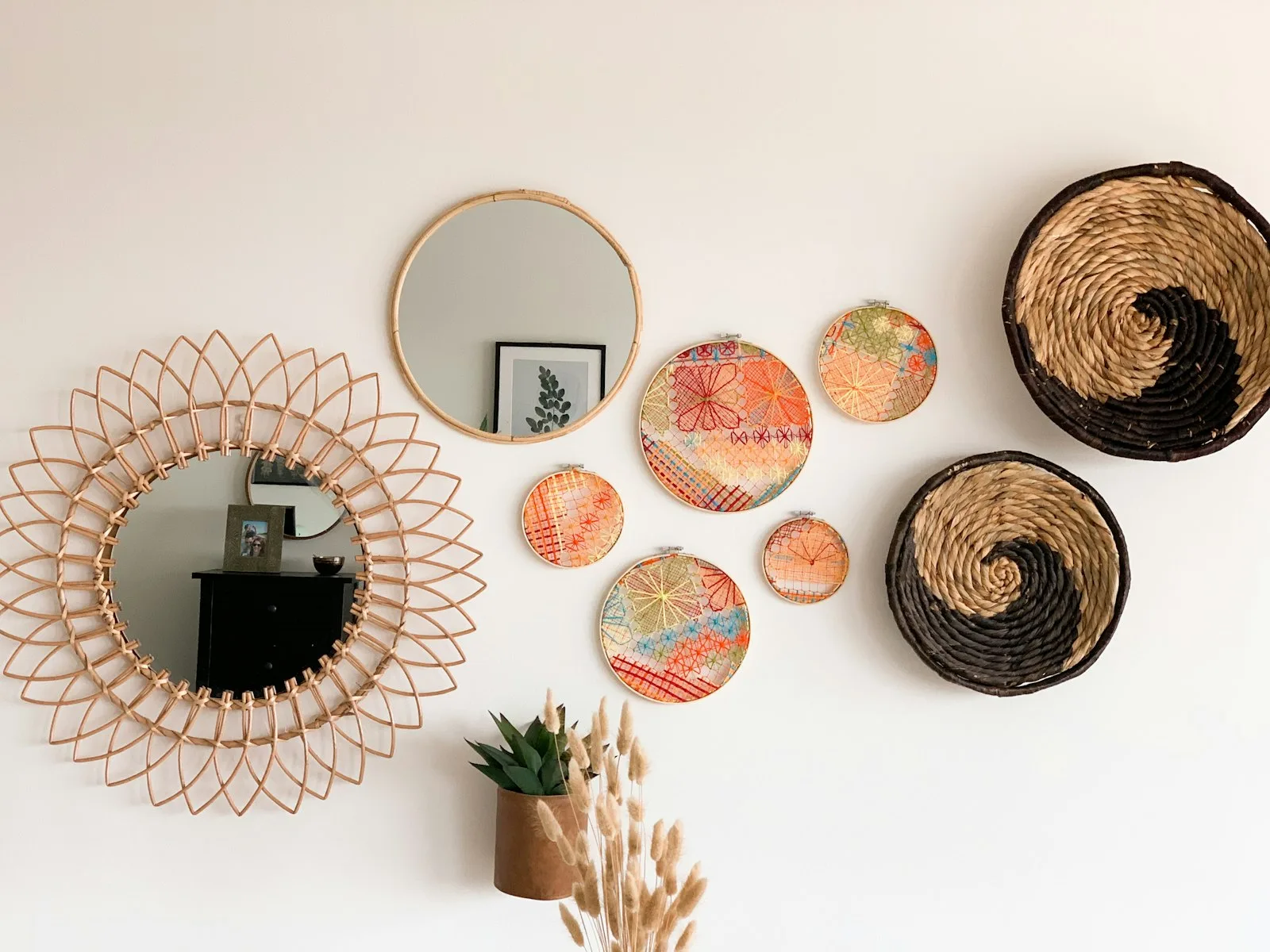
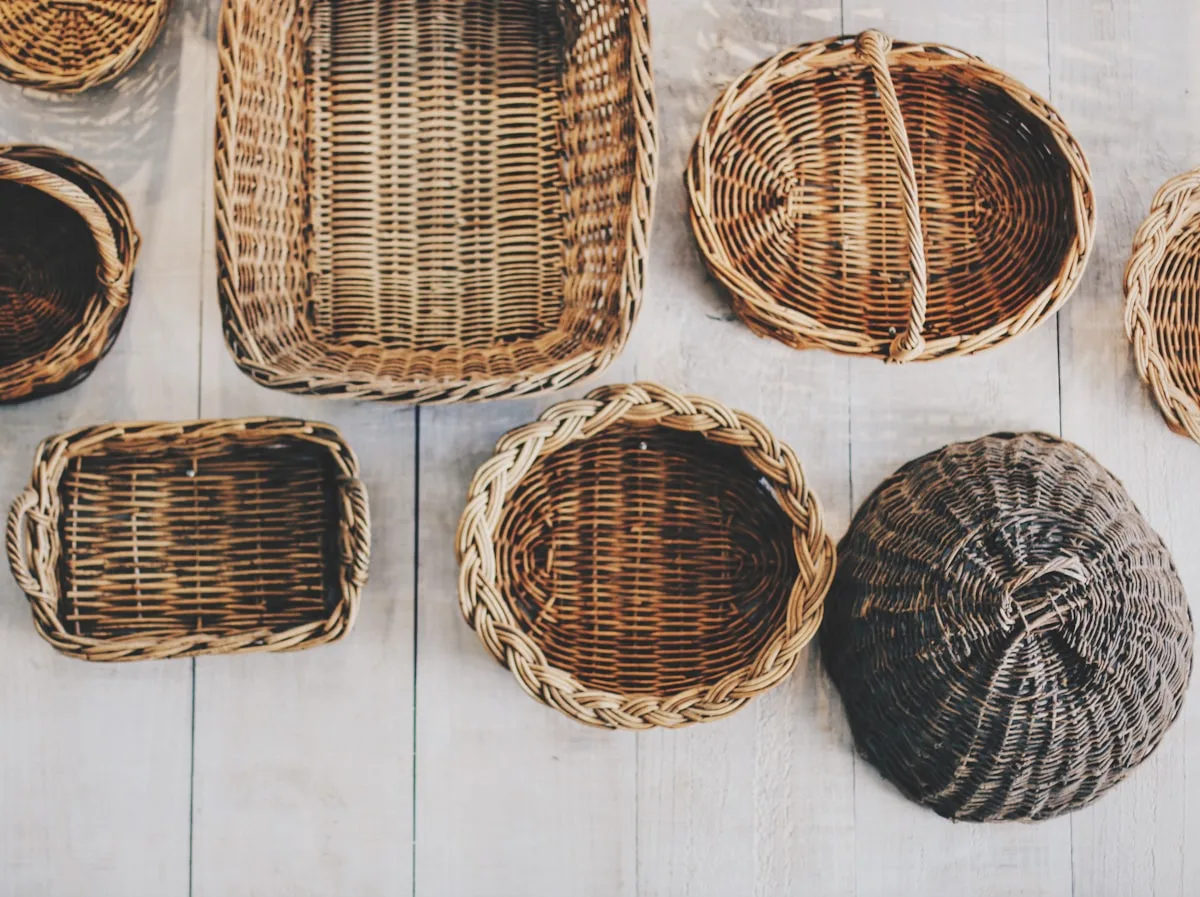
Here is the move that makes this aesthetic perfect for a small rental: the baskets work twice. A wall of woven baskets, Bolga baskets from Ghana, flat handwoven bowls, mixed sizes and weaves, is a centerpiece of the afrohemian look, and every one of them is also storage.
In a tight apartment where everything has to earn its footprint, decor that doubles as a place to stash blankets, magazines, or the eternal pile of cords is a genuine win. Hang the flat ones on the wall as art using small adhesive hooks (they weigh almost nothing), and let the deeper floor baskets hold throws and plants. You get the signature basket wall and you solve some of your storage at the same time, with no nails and no compromise.
Ground the room in a warm, earthy palette
Where plain boho stays pale and neutral, afrohemian goes deeper and warmer: terracotta, ochre, rust, deep brown, black, and clay, lifted by the bold pattern in the textiles. As a renter you build this palette without paint, the same way every aesthetic on this site does, through cloth and objects rather than walls.
A terracotta throw, ochre cushions, a black-and-white mudcloth drape, clay pots in warm tones. If you want a wall moment, a removable wallpaper in a warm geometric or a textured clay tone gives you the grounded backdrop and comes off clean at move-out. The deep palette is what separates this look from breezy boho, and it all arrives in soft, packable, deposit-safe form.
Layer in natural materials and clay
Afrohemian shares boho’s love of natural texture but tilts it earthier. Carved dark wood, rattan, jute, and especially clay and terracotta: unglazed pots, a clay vessel as a centerpiece, wooden stools and bowls, beaded garlands. These warm, handmade-feeling materials reinforce the grounded mood and, like everything else here, turn up secondhand and in import shops for very little. A carved wooden stool doubles as a side table or a plant stand, which is the kind of double duty a small apartment rewards.
Plants, generous and sculptural
Greenery belongs here as much as in any boho room, and the warmer palette gives it a particular look: bigger, more sculptural plants in terracotta and woven pots. A tall snake plant, a rubber plant, a sprawling pothos, set in clay or tucked into a floor basket. Keep them hardy so a dim apartment and a busy schedule do not undo them, and let a couple of them get large enough to feel architectural rather than decorative.
What it actually costs
Afrohemian is mid-range to build, cheaper than a furniture-led look and a bit more than plain boho, because the authentic textiles are worth paying a fair price for. A real mudcloth throw runs forty to ninety, a kente pillow or panel twenty to fifty, wax-print cushions or fabric by the yard much less. Bolga and woven baskets are ten to forty each, and they replace storage you would otherwise buy anyway. Clay pots, wooden stools, and plants come cheap from import shops, thrift, and marketplace. Spend on a couple of genuine textile pieces and let everything else fill in slowly.
Start with one real mudcloth, build the basket wall, ground the palette in terracotta, and let the plants grow in. If you want the lighter, paler version of this layered warmth, plain boho apartment decor is the cousin a shade breezier, and a moodier dark academia room trades the earth tones for library greens. The full set of looks is mapped in the apartment aesthetic guide.
Frequently asked questions about afrohemian decor
What is afrohemian style?
Afrohemian style blends African textiles, patterns, and craft, mudcloth, kente, wax print, woven baskets, carved wood, with the layered, plant-filled approach of bohemian decor. Compared to plain boho it has a stronger point of view and a warmer, more grounded palette of terracotta, ochre, and deep earth tones. The look is rich, textured, and personal rather than pale and breezy.
How do I decorate an afrohemian room on a budget?
Spend on one or two authentic textiles and fill in cheaply around them. A real mudcloth throw or a kente pillow anchors the room, and from there baskets, clay pots, wooden stools, and plants come inexpensively from import shops, thrift stores, and marketplace. The woven baskets double as storage, so they replace things you would have bought anyway. Build it slowly rather than in one order.
Where can I buy authentic African textiles and decor?
Buy from artisans and Black-owned or African-owned shops whenever you can. Etsy, dedicated African textile importers, and small specialty stores carry genuine handmade mudcloth, kente, and Bolga baskets, which look far better than mass-produced imitations. Real handwoven and hand-dyed pieces have a depth that printed polyester versions cannot match, and the makers are central to what the style is about.
Is afrohemian decor renter-friendly?
Very. The look is built on textiles, baskets, clay, and plants rather than on big or permanent pieces, so almost nothing requires a nail or a paint can. Flat baskets hang on adhesive hooks, mudcloth drapes over what you already own, an accent wall can come from removable wallpaper, and the whole palette arrives in soft, packable form that moves with you.
How is afrohemian different from boho?
Both layer textiles, plants, and natural materials, but afrohemian draws specifically on African textiles and craft and runs a warmer, earthier, more saturated palette. Where boho tends pale, neutral, and breezy, afrohemian is grounded in terracotta, ochre, deep brown, and bold black-and-white pattern, with a clearer cultural point of view in the mudcloth, kente, and basketwork at its center.
The grounded room that stopped your scroll was mostly cloth and baskets and clay, not a budget you cannot reach. Hang the baskets, drape the mudcloth, fill the clay pots with something green, and the anonymous beige rental turns warm and rooted. And when the lease is done, the whole look rolls up and comes with you.
Get the renter's first-apartment checklist
Small-space decor ideas for renters, straight to your inbox.
How to choose one apartment aesthetic and actually pull it off in a rental, without painting or drilling, plus a tour of the looks worth committing to.
Manage Consent
To provide the best experiences, we use technologies like cookies to store and/or access device information. Consenting to these technologies will allow us to process data such as browsing behavior or unique IDs on this site. Not consenting or withdrawing consent, may adversely affect certain features and functions.
Functional
Always active
The technical storage or access is strictly necessary for the legitimate purpose of enabling the use of a specific service explicitly requested by the subscriber or user, or for the sole purpose of carrying out the transmission of a communication over an electronic communications network.
Preferences
The technical storage or access is necessary for the legitimate purpose of storing preferences that are not requested by the subscriber or user.
Statistics
The technical storage or access that is used exclusively for statistical purposes.The technical storage or access that is used exclusively for anonymous statistical purposes. Without a subpoena, voluntary compliance on the part of your Internet Service Provider, or additional records from a third party, information stored or retrieved for this purpose alone cannot usually be used to identify you.
Marketing
The technical storage or access is required to create user profiles to send advertising, or to track the user on a website or across several websites for similar marketing purposes.